Showing posts with label winemaking. Show all posts

Thursday, January 12, 2017

Southern California Wine Country’s Women Create Their Own Heritage In Temecula Valley

The Wine Institute of California estimates that between 15-20% of California winemakers are women, which is an increase of 5-10% from the early 1990’s. Women winemakers are producing standout wines in California’s Temecula Valley.


“Uncorking Bottles Was Always In The Equation”
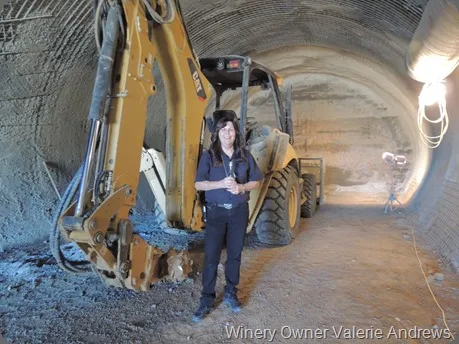

Photo Courtesy of Visit Temecula Valley
According to the Gallup Poll’s Annual Consumption Habits Poll, 52% of women consumers say they drink wine more often than any other beverage compared to only 20% of men so it makes sense this historically male dominated field is becoming an appealing option for women. Temecula Valley Southern California Wine Country is no exception. Talented women like Olivia Bue, winemaker at Robert Renzoni Vineyards and Winery, Valerie Andrews owner of Temecula Hills Winery and Oak Mountain Winery, and Cindy Palumbo owner of Palumbo Family Vineyards and Winery achieve success while raising families, giving back to the community, and inspiring other women in the industry.

Olivia Bue, winemaker for Robert Renzoni Vineyards and Winery, first got into wine through family. “I grew up in Encinitas, surrounded by a family who loved wine. Uncorking bottles was always in the equation at every family gathering; wine was our conduit to laughter and love. Around the age of 16, a close family friend who had enrolled at the UC Davis School of Viticulture and Enology told me about the program and experience. The moment I received my acceptance letter I made an easy decision to pack my bags and head up to Davis,” says Bue. She is undaunted by the physical labor and long hours, motivated by those who doubted her or judged her because she is young and female.

Bue advises women interested in entering the winemaking field to taste wine as much a possible, discuss wines with others, take classes and be patient. “Winemaking is such an art,” says Bue. “Yes, there is a lot of heavy manual labor and endless hours during harvest, but taking the time to understand your region’s complexities is something that takes time and a love of the art. Any gender can accomplish that!” Bue is especially passionate about Temecula Valley wines. “The more wines I taste outside of Temecula Valley, the more confident and proud I become of our region’s path. We are going in such a strong direction forward and I continue to be impressed at the quality of wines being made in Temecula Valley.”

Growing Grapes And Communities


Valerie Andrews, co-owner and co-founder of Oak Mountain Winery and Temecula Hills Winery, got her start in Temecula back in 1999 when she and her husband, Steve, moved to a 10-acre ranch just on the edge of Temecula’s wine country. They built Temecula Hills Winery on the property, which opened in 2001, and then Oak Mountain Winery on a separate property which opened in 2005. The vines were hand-planted by Valerie, Steve and their children in 2000. Now in her second decade of her wine career, Valerie is deeply loved by the community and consumers and admired and respected by her colleagues.

In addition to operating the wineries, Valerie’s community involvement runs deep. She balances her time running the day-to-day business operations at both wineries as well as serving on the board for the De Portola Wine Trail and on the hospitality committee for the Temecula Valley Winegrowers Association. Valerie also founded Cause Fur Paws, a non-profit organization whose mission is assisting animals with diabetes and helping senior citizens with companion pets. Cause Fur Paws Inc., helps low income pet owners pay for 100% of their medical needs. Dog labeled wines and hand crafted cork tiaras can be found at Oak Mountain Winery with proceeds going to help local animals in need. In addition, Oak Mountain is the site of numerous dog events and charity fundraisers throughout the year.

Passion-Driven Wines


Co-owner of Palumbo Family Vineyards and Winery, Cindy Palumbo has been in the valley since 1994. She first started at Callaway and Hart wineries with Joe Hart and John Moramarco. Now co-owner of Palumbo Family Vineyards and Winery, a 13 acre, 2500- case-per-year winery, with her husband Nick Palumbo, Cindy is very active in all aspects of the business. They are committed to small-lot, handcrafted wines from varieties grown on the property. She has also been instrumental in implementing sustainable farming and has helped to create more than just a winery but a "whole farm approach" to their agricultural activities believing that a winery should first and foremost be considered an agricultural entity. She is very active in the community and donates both time and money to local charities, including Big Hearts for Little Hearts of Temecula Valley, as well as the proceeds from her children's books, the Farm Boy Series. The series is a collection of entertaining children’s books that teach about sustainable farming. In addition to working full time at the winery and authoring children’s books, Cindy has been deeply involved with teaching children to farm in a sustainable manner through a local 4-H program.

Whether by virtue of their family wine ties, passion, or drive, Bue, Andrews, and Palumbo are producing some of the valley’s best wines all while serving as pillars of leadership in Temecula Valley’s wine and farming community. These women are paving the way for future women winemakers and winery owners in Temecula Valley.

ABOUT THE TEMECULA VALLEY AND VISIT TEMECULA VALLEY
With natural gifts of climate and geography, Temecula Valley is widely recognized for its scenic vineyards, award-winning wines, and friendly wineries as Temecula Valley Southern California Wine Country. The destination includes the Temecula Valley AVA (American Viticulture Area) as well as Old Town Temecula and Pechanga Resort & Casino.

Friday, August 1, 2014

De-Mystifying Whole-Cluster Fermentation: Laetitia Winemaker Discusses Use Of Stems In Winemaking


Pinot noir grapes have a much darker hue than the bluish-gray coloring of Pinot Gris (Photo credit: Wikipedia)
Whole-cluster fermentation is gaining rapid interest as a winemaking practice, but how much does the average consumer really know about this mysterious method and its effects?
“Whole-cluster fermentation is the act of using the entire bunch or cluster of grapes, including the stem, in alcoholic fermentation,” said Winemaker Eric Hickey of Laetitia Vineyard & Winery, who has used whole-cluster fermentation for about a decade. “The winemaker can vary the amount of whole clusters included in the fermentor. For example, in our case, I use anywhere from thirty to seventy percent whole clusters in a given batch.  The remaining percentage in the fermentor is made up of de-stemmed grapes.”
The use of whole-cluster fermentation began as an experiment for Hickey, who has made a career of exploring different approaches to Pinot Noir from Laetitia’s Arroyo Grande Valley AVA estate. “We have a vast array of plantings, clones, and diversity when it comes to Pinot Noir,” he said. “Not all of our lots do well with whole-cluster, but through all of our trials over the years, we’ve located the specific clones and sites that work well.”
In Burgundy, where Pinot Noir is king, whole-cluster fermentation has been used for hundreds of years, perhaps somewhat out of the convenience of tossing an entire bunch into the fermenting vessel. The hallmark of whole-cluster wines – a signature burnt tobacco note entwined with the fruit aromas and flavors – became synonymous with the Pinot Noir variety in Old World winemaking.
“It’s not always obvious, but there’s an extra layer of structure to whole-cluster Pinot Noir,” said Hickey, “and when it’s at its best, there is a dusty chalkiness to the mid-palate.”
Whole-cluster fermentation can be practiced on any variety, and is often used to tone down fruit characteristics and add another dimension to the wine. (For example, Hickey also uses whole-cluster fermentation on Grenache from the Santa Barbara Highlands Vineyard for the NADIA Wines label.) While New World winemakers have used this method for many years, a fruit-driven, de-stemmed Pinot Noir became popular as the variety gained a foothold in the United States market in the late 1980s and 1990s. Today, the pendulum is swinging the other direction, with many winemakers moving away from “pure-fruit” Pinot Noir by fermenting clusters whole to impart complexity, tannic grip, and a lift on the palate.
To bring this style further into balance, when Hickey whole-cluster ferments Pinot Noir, he leaves the intact bunches to rest in the fermentor after harvest rather than crushing them immediately. In this anaerobic environment, fermentation then begins within each individual berry as yeast penetrates the skin wall under the pressure of carbon dioxide, a process called carbonic maceration. “When fermentation takes place inside the berry, you tend to get very high levels of delicate red fruit and floral aromas,” said Hickey. “In the case of the whole-cluster technique, the high fruit tone is a good counter balance to the earthy tobacco characters the stems provide.”
Each vintage, Hickey rounds-out the Laetitia Pinot Noir program by offering a whole-cluster Pinot Noir made from clones conducive to the practice. The most recent release is the 2012 vintage, which included Pinot Noir from clones 115 and 2A to produce a wine marked by focused flavors and a refreshing grip in mouth feel. Crisp notes of cassis, whole-leaf tobacco and black peppercorn mingle with a touch of sweet oak and sultry black tea on the nose and palate. With its heightened earthiness, the 2012 Laetitia Whole Cluster Pinot Noir pairs well with similarly earthy cuisine such as roast duck, sautéed porcini mushrooms, or eggplant lasagna.
We’ve sampled the Laetitia Whole Cluster Pinot and are fans of its complex flavor. You can read our review here.
“Consumer response [toward whole-cluster wine] has been great,” said Hickey. “It usually appeals to those who prefer a Pinot with more power, structure and less ‘pure red fruit’ on the nose.”