Showing posts with label Red Wine. Show all posts

Thursday, April 28, 2022

The Mentors 2016 Canvas Red Blend, Western Cape

This bottle shows South African winemaking at its best.

During our recent trip to Florida, we stopped over in Savannah on the way back. We stayed at our favorite dog-friendly hotel there, the Kimpton Brice Hotel. Although the hotel has a couple of dog-friendly tables at the restaurant, we opted for the Secret Garden.

Keep up with the latest. Follow us on Instagram!

The Secret Garden is an open courtyard where we could enjoy our takeout meal al fresco. Another benefit is that there is no corkage fee and I had conveniently brought The Mentors 2016 Canvas red blend. As our dog Amber settled beneath the table, I uncorked our wine.

This was one of my first purchases from WTSO, the online wine retailer with daily flash sales. When I saw a South African red blend that retails for $39 available for $17, I pushed the button. I’m glad I did.

The Mentors is one of the brands of South African Wine giant KWV (which is short for a nearly unpronounceable Afrikaner name). KWV was founded as a co-op in 1918 by wine growers. It did a lot of admirable things, but KWV also set quotas which resulted in quantity over quality in the country until they were abolished in the 1990s. KWV later helped establish the Wines of Origin program, which helps assure consumers of the top quality in South African wines.

Never Miss A Beat – Follow Vino-Sphere On Facebook

We’re superfans of South African wine since our safari there and romp in the winelands a number of years ago. South African wine, in our minds, combines the New World fruit-forward profile with Old World winemaking craftsmanship.

The Mentors range is named in honor of Abraham Perold, who developed Pinotage and is considered the father of modern South African viticulture. Canvas is a red blend of 39% Shiraz, 17% Grenache Noir, 17% Tempranillo, 14% Petite Sirah, 7% Cinsaut, 6% Tannat. That’s a mighty cool blend, with the Tempranillo adding an interesting twist to the mostly Rhone-style wine.

On the palate this rocks with layers of dark cherry, raspberry, and violets. Vanilla highlights a smooth minerally finish. This delivers full-body satisfaction without bombastic tannins. It is great with grilled meat, or even pasta with meat sauce (as I enjoyed in the Secret Garden). The only drawback is that I only purchased only one bottle (which I have since rectified!).

If you haven’t been drinking South African wine, this is a beautiful introduction. It’s still available on the WTSO website. Cheers!

Wednesday, April 28, 2021

Jasper Winery Innovates With Infused Wine Options

Bourbon, vanilla, and coffee flavors swirl in new wine offering.

Wine Has A Growing Hold On Iowa

A quick search of our website will show that this is the first article about wine from Iowa. That’s not really a surprise, but even though Iowa wine flies below the radar, the state wine industry appears to be on the upswing. From only 30 acres of wine grapes in 2000, two decades later there are 100 wineries and more than 1,200 acres of vineyards.

Keep up with the latest. Follow us on Instagram!

We were approached by winemaker Mason Groben, a winemaker from Jasper Winery in Iowa, to try some truly different wine. He graduated in 2003 from UC Davis and returned to assist with the family winery. Mason’s involvement sparked success, including write-ups in the New York Times and Wine Spectator. Ensuing growth caused them to relocate to Des Moines and a larger facility.

The winery produces some 100% Iowa wines featuring cold-hardy grapes like Seyval Blanc, Chancellor, and Marquette. They also produce fun wines like Bed Head Red and All-Night White.

Innovating In The Barrel

Mason has experience at wineries in Sonoma, New York, New Zealand and Australia. He also has worked in the craft beer industry and likes to develop innovative wine products. Did I mention innovation? That was the reason he contacted us recently.

Never Miss A Beat – Follow Vino-Sphere On Facebook

Jasper has released a line of bourbon barrel-aged wines that are also infused with some interesting flavors. We recently popped open their Red Blend vanilla and coffee-infused wines.

Sipping these wines requires a reset of your tastebuds. Instead of expecting a Cabernet Sauvignon with some toasty notes, these wines move into the category of a beverage to sip as an after-dinner wine or even (dare I say it?) on the rocks. The 500 ml bottles are short and stout with cork stoppers, giving the appearance of spirits or craft beverages.

Bourbon Barrel Bold

Both wines are aged for four months in Elijah Craig bourbon barrels. Kudos to Jasper for picking a respected bourbon as part of the project. Both wines have a robust caramel flavor as a result. The wines also tip the scales at 15.8% ABV, again lending to the feeling of a craft beverage rather than simply a red wine.

The secondary flavors are where the two bottles diverge. The vanilla wine is infused with organic vanilla while the coffee wine is infused with cold brew coffee. Regular barrel aging in American oak can impart vanilla notes, especially new barrels. Bourbon barrel aging takes it to a whole new level. The vanilla in the Jasper bourbon barrel-aged wine is much more pronounced and is on equal footing with the berry notes of the red wine.

For us, the Jasper coffee moves a step further towards the craft beverage realm. The coffee flavor is powerful, almost like coffee beans. To appreciate the flavors fully, slow down and sip. Our neighbor Marjorie shared the wine and loved it.

The infused Red Blend wines retail for $15. We would suggest them for a unique treat, maybe even paired with a tasting of chocolates. The wines are on the heavier side, so we wouldn’t suggest them for a hot afternoon, but perhaps for a chilly evening or unwinding after dinner.

Full disclosure: These wines were received as marketing samples.

Tuesday, November 24, 2020

New Cameron Hughes Wines Deliver Half Price And Full Value

Cameron Hughes WineWe scoffed when we were told these premium reds were half-price. Then we opened the bottles…

Cracking The Quality-Price Code

We’ve known Cameron Hughes for quite a few years. The brand never fails to surprise – in a good way.

Keep up with the latest. Follow us on Instagram!

If you’re not familiar with Cameron Hughes Wine, the first thing to know is that Cameron Hughes is a négociant, not a winery or even a vineyard. A négociant is a merchant who buys and sells wine. This is a common thing in Europe, but is perhaps unfamiliar here in the States.

Cameron Hughes focuses on sourcing the very best wine and negotiating the most favorable price. The name of the source winery is undisclosed to protect the brand. As a result, Cameron Hughes Wine can obtain $100 Cabernet Sauvignon and sell it for a third of the price, or offer a $60 Pinot Noir for less than $20. Sounds like a great concept to me, an avid wine consumer.

We recently popped open three new releases, billed as half-price reds. That and the fact that they come from three of our favorite regions certainly piqued our interest.

Cameron Hughes Lot 730 Zinfandel

A Lot Of Lots

Each of the wines is given a lot number, and the first lot we liked – a lot. That was Lot 730, the 2018 Zinfandel from Lodi. We enjoyed this on the patio after a socially-distant wine dinner with friends.

Never Miss A Beat – Follow Vino-Sphere On Facebook

Lodi is the epicenter of the Zinfandel world and, in our humble opinion, produces the very best Zinfandel wines. It also produces a lot of Zin, some of which is the grocery store variety. If you look carefully, you’ll find the specially crafted wine, like Lot 730.

This is fruity on the nose, but the palate reveals depth with layers of plum, raspberry and leather. This is a dry wine with a velvety texture and a very long finish. The wine was aged for a year in French oak.

The SRP is $13, half of what you would pay at the source winery. It’s a small release with 1,500 cases.

We love big Cabs and we cannot lie. Occasionally, though, we pine for something that’s not from Napa. We found our answer with Lot 735, a 2018 Cabernet Sauvignon from Santa Barbara. Santa Barbara is a unique California AVA in that it has both coastline and mountains. In addition, the mountains and valleys run east-west as opposed to north-south.

Cameron Hughes Lot 729 Pinot NoirLot 735 is an outstanding Cab value, priced at $16, and again this is half of winery price. Santa Barbara is known more for Chardonnay and Pinot Noir than Cabernet, but this is a shining example of mid-to-full-bodied Cab. The winemaker has French and American training and the grapes come from high-elevation vineyards.

A Pinot That Cuts Pricing, Not Corners

Russian River Valley is one of the world’s greatest Pinot Noir regions. Located in California’s Sonoma County, it gets maritime breezes and morning fog, ideal for Chardonnay and Pinot Noir.

We returned to our patio firepit and uncorked the bottle of Lot 729, a 2018 Pinot from RRV. This gem is also priced at $16, half the price of its cousins at the winery. From the first sip, we knew this was a winner.

There is a complex nose of earth and strawberries. On the palate there are layers of cranberry and savory flavors. A pinch of spice and playful acidity frame a balanced wine. The mouthfeel is velvety.

These latest releases from Cameron Hughes show that it is possible to find 90+ rated wines for less than $20. We hope that he continues to work his magic. Cameron Hughes wines can be found only online.

Full Disclosure: These wines were received as marketing samples.

Saturday, November 21, 2020

Sun Wine 2018 Saperavi, Georgia

Sun Wine SaperaviWhen we talk about winemaking tradition in Georgia we’re talking about the former Soviet republic that intersects Europe and Asia.


Grapes From The Birthplace Of Wine

Batman and Robin have the batsignal. When that spotlight illuminates the sky with the bat emblem, the Dynamic Duo hop into the Batmobile ready to fight crime.

Never Miss A Beat – Follow Vino-Sphere On Facebook

I don’t have anything like that (although I do know some Jokers!) instead all I need is a simple call or email from my friend Arthur. That’s the signal to grab a nice bottle of wine and head for a (socially-distant) wine tasting.

Arthur had a couple of beautiful bottles, and I’ll share them in the near future. Today I’m focused on a very special bottle from the birthplace of wine that we enjoyed during a fabulous tasting on his back deck. I’m talking about Sun Wine 2018 Saperavi from the country of Georgia.

Georgia, the country that intersects Europe and Asia and was once a Soviet republic, is home to Caucasus Mountain villages, Black Sea beaches and an ancient wine-growing region producing over 500 unique grapes that produce exotic and affordable wines. In fact, once archeologists discovered qvevri (clay vessels) filled with grape seeds dating back to over 6,000 B.C., Georgia laid claim as the oldest winemaking region in the world.

Ancient Grapes In New Bottles

Saperavi is a hardy grape that is used to make Georgia’s most celebrated wines. It is also grown in  Armenia, Moldova, Ukraine, Uzbekistan, Azerbaijan, and in small quantities in the Niagara and Finger Lakes regions of New York State and Northeast Ohio. I had my first taste of Saperavi at McGregor Vineyard in the Finger Lakes as part of a blend called Black Russian. It was delicious and I was anxious to try this new bottle.

Keep up with the latest. Follow us on Instagram!

Saperavi from GeorgiaSada Wine Imports, a U.S. importer of Georgian wines,  released five wines under its family’s Sun Wine label to showcase Georgia’s 2018 vintage. The 2018 rtveli (harvest) was the first in 10 years that wasn’t subsidized by the state. Business is looking up and Georgian wine exports are at an all-time high.

The name Saperavi means “to give color” and the bottle we cracked open is 100% Saperavi. The label has an attractive photo of a vineyard inside the outline of the country of Georgia. The bottle proudly proclaims the country as the birthplace of wine and displays a Georgian flag. The wine retails for a tasty $19.

The Saperavi I had previously tasted was bold and tannic, so the Sun Saperavi was a bit of a surprise. The wine comes from the Georgia’s eastern Kakheti region, famous for its winemaking history and favorable climate for growing of several rare grape varieties. It has only 12% ABV and so is much lighter than I expected.

The wine is light bodied with aromas of cooked berries, leather and apricot. It is nicely balanced with notes of cherry and pomegranate.

I’m now enthusiastic about seeking out and trying more Georgian wine! I enjoy Rkatsiteli and would like to try the Georgian version. Sada also imports wines made with Mtsvane, a white grape with apple and citrus flavors. In addition they sell a Saperavi made with grapes from Mukuzani. There the wine is aged for three years in oak, giving a nice robust flavor.

The vote counting in Georgia is finally over and we have a winner: Saperavi from Sun Wine!

Full disclosure: This wine was received as a marketing sample.

Monday, July 20, 2020

Silk & Spice 2018 Red Blend, Portugal

Silk & Spice 2018 Red BlendFrom Portugal’s Spice Route comes an exotic wine with robust flavors.

Wine Tasting In A Pandemic

Wine tasting with friends is sure different than it used to be. In days gone by, before COVID-19, friends would arrive, we’d share appetizers or a meal while carrying on conversations, giving hugs and handshakes and sharing plenty of wine.

Never Miss A Beat – Follow Vino-Sphere On Facebook

Now a wine tasting involves methods previously reserved for handling radioactive materials. When our friends stopped by the other night, we had chairs on the patio spaced out for social distancing and disinfectant wipes and hand sanitizer strategically located. Filling a wine glass meant placing the glass on a table between us, then I’d fill it up and retreat before our guests grabbed their glass. Sharing food? That involved tongs, individually wrapped food and elaborate maneuvers.

Of course, the evening with our friends was worth all the safety procedures. Everyone needs to be safe these days, not only for their own sake but for the sake of others. The wine we tasted certainly justified the effort.

Enjoying The Indigenous Grapes

We uncorked the 2018 Silk & Spice Red by Sogrape Vinhos from Portugal. The Spice Route was created by Portuguese explorers in the 15th century to bring exotic spices like clove and nutmeg to the Western world. This wine aims to capture the mystery and flavors of that famed trading route.

Keep up with the latest. Follow us on Instagram!

Silk & Spice is a blend of indigenous grapes: 40% Touriga Nacional, 30% Alicante Bouchet, and 30% Baga. For whatever reason, I thought we’d be sipping a light-bodied red. I was therefore surprised by my first sip of deep, silky wine. This wine would do well with a nice steak or a big cheeseburger. Have I mentioned I’ve really been craving a cheeseburger lately?

The flavors are intense and the body is lush. There are rich extracted notes of raspberry and leather. The fruit is bold and there are pleasing vanilla highlights. The finish is long and lingering. The wine is finished in stainless steel to keep the brightness.

This is a wine to drink now, although it could age for up to five years. You can find Silk & Spice for less than $15, quite a bargain.

After finishing the bottle of Silk & Spice, I resolved to drink more wine from Portugal. We already enjoy wines from Spain, but we’re eager to seek out vinho from its Iberian Peninsula neighbor.

Full disclosure: We received this wine as a marketing sample.

Wednesday, March 11, 2020

Yatir Winery Offers Pair Of Premium Judean Hills Releases

Yatir Creek 2The Yatir region of Israel boasts a winemaking tradition more than 2,500 years old. It’s the site of one of the country’s largest forests – and some very good premium wine.

More Wine!

Israel is an ancient land steeped in history that has seen the rise and fall of civilizations. More than 50 years ago an ink-scribed pottery shard was discovered in Tel Arad. The artifact dates to 600 BC.

Keep up with the latest. Follow us on Instagram!

It was only recently that a new method, multispectral imaging, enabled unseen characters on the potter shard to be deciphered. What important message was discovered? A request for more wine! We agree with that sentiment, especially if it is like these two bottles.

Yatir Winery, recognized by the bold red lion gracing its labels, was founded in 2000. The Yatir region has been known as one of the finest for growing grapevines for more than 2,000 years with wine being exported to Egypt, Rome and across Israel.

The Yatir region is also known for Yatir Forest, planted at the urging of David Ben-Gurion, the primary national founder of Israel. Yatir Winery has three ranges of wine, the top being Yatir Forest.

The Red Lion Roars

We recently uncorked a red and white from Yatir Winery, the 2016 Yatir Creek and the 2017 Mt. Amasa White, both from the Judean Hills. The occasion was a wine tasting in Raleigh which featured a bottle share – each attendee brought a bottle or two to sample.

Never Miss A Beat – Follow Vino-Sphere On Facebook

The pair of Yatir bottles created a stir. It’s not every day you get to sample Israeli wine – especially from a critically-acclaimed boutique winery that has gotten a lion’s share of international recognition.

The Mt. Amasa White is a blend of 52% Viognier, 33% Chenin Blanc and 15% Roussanne. The wine is fermented and matured for five months in a combination of concrete amphorae, 500 liter oak barrels and stainless steel vats. In the glass the wine is gold with a greenish hue.

This is a medium-bodied wine with notes of peach, pear and melon. The acidity doesn’t overpower and instead contributes to a refreshing finish that has you reaching for another glass. The unique aging regimen gives this a distinctly Rhone Valley feel – although Chenin Blanc is a Loire Valley grape. A nice bottle at $27.

Yatir Creek is a red that is a step up in quality. The blend is 76% Syrah, 12% Tannat and 12% Malbec. This is a sophisticated wine that is a joy from the first sip. It’s deep purple in color and the aroma of black fruit draw you in magnetically. On the palate black cherry and currant flavors are knit together with solid tannins. Appreciation grows as the wine opens up in the glass.

Kudos must be given to Yatir Winery for their experimentation with different aging techniques. Although winemaking in Israel dates back thousands of years, the current industry is quite young. For the Yatir Creek, aging was done for a year in oak foudres (100-liter casks). The wine gets two years of bottle aging before release. Using the larger barrels avoids oak overkill which would mask the rich fruit.

The Yatir Creek would be ideal to pair with a hearty casserole or juicy steak. SRP is $50. Both wines are Kosher.

Full Disclosure: These wines were received as marketing samples.

Thursday, January 30, 2020

Kuhlman Cellars Elevating Texas Wine

Kuhlman Cellars Sangiovese and Reserve MerlotGrapevines were planted in Texas more than 100 years before they were planted in California. Today the Lone Star State ranks fifth among US states in wine production.

Wines As Big As Texas?

Texas calls to mind barbecued brisket, rodeos and Lone Star beer. It’s not primarily linked with fine wines. Texas, though, is a surprising state. Its wine is too.

Never Miss A Beat – Follow Vino-Sphere On Facebook

We recently uncorked a couple of bottles from Kuhlman Cellars, a winery sitting on seven acres of vineyards in Texas Hill Country. Bénédicte Rhyne is the winemaker, with training in Burgundy and experience at Ravenswood in Sonoma.

With some warm North Carolina weather in January, I was anxious to fire up the grill. Some nice charred burgers seemed ideal for a wine from Texas. Our burgers were accompanied by root vegetable fries (parsnips, carrots, sweet potatoes and beets). Not sure how the parsnip fries would go over with the rodeo crowd, but they were a tasty treat for our meal.

Kuhlman Cellars 2016 Reserve MerlotReserve Merlot With Angus Burgers

The 2016 Reserve Merlot has deep oaky flavors derived from 30 months in French barrels. The AVA is Texas High Plains, which covers eight million acres – and yet is just the second largest wine region in Texas. We found this paired famously with the expertly grilled (if I say so myself!) burgers.

Keep up with the latest. Follow us on Instagram!

The Reserve Merlot, which has a production of 410 cases, is on the earthy side of the spectrum. There are notes of tobacco and graphite mingled with deep cherry flavors. As the wine unwound, our appreciation for it grew.

Riding high with the Longhorn spirit, we opened the 2017 Sangiovese. We found this to not be as well suited for my robust Angus burgers. The Sangiovese grapes come from the Newsome Vineyard, which sits at about 3,700 feet in the Texas High Plains. This is one of the most successful vineyards in Texas.

Even Better The Second Time ‘Round

The following evening we poured a couple of glasses of the Sangiovese. We were pleasantly surprised to discover we really enjoyed it much more the second night. The wine, a light ruby in the glass, was delicious. It is light to medium-light in body and has brilliant acidity washed with sour cherry notes.  We found this to be a very nice wine to sip on its own.

You won’t confuse this with Chianti Classico, but the Kuhlman Sangiovese has its own unique and enjoyable style. It’s a limited production wine with just more than 300 cases produced.

The Sangiovese is priced at $38 while the Reserve Merlot has an SRP of $34. While the two wines we sampled from Kuhlman Cellars use grapes sourced from Texas High Plains, the winery also has their own Hill Country AVA vineyard, which provided 27 tons of fruit this year.

Texas and Kuhlman Cellars are producing some eye-opening wines. Sip some of the Lone Star State and you’ll be impressed.

Full disclosure: These wines were received as a media sample.

Thursday, November 7, 2019

What’s In Your Glass? Here’s A Look At What We’re Drinking Now

WIYG 110619WIYG? That’s a question we are often asked. Here’s a look at what we’re sipping.

Rabbit Ridge 2014 Allure de Robles, Paso Robles

This Rhone-style blend from Paso Robles is primarily Grenache, Syrah and Mourvedre with some other unspecified varieties as well. I picked this up for $12.99 and it outperforms at this price.

Keep up with the latest. Follow us on Instagram!

Much deeper in essence than you might expect, with a woodsy flavor and strawberry notes. The wine is barrel-aged, and there is a nice touch of vanilla and oak.

Schöne Tal Cellars 2016 Pinot Noir, Meredith Mitchell Vineyard, McMinnville

This single vineyard Pinot Noir from Willamette Valley is a sensational wine. Priced at $50, it comes from a biodynamic site.

Never Miss A Beat – Follow Vino-Sphere On Facebook

Minimal intervention and natural fermentation are used. The wine is balanced  featuring gorgeous raspberry flavors stitched together with rustic herbal notes. Our first taste from this winery and it won’t be our last.

Skinner Vineyards Smithereens 2016 Red Blend, El Dorado

Smithereens refers to the blasting used in mines to reach gold deposits. The El Dorado region of California is gold country, and we struck paydirt with this wine.

A blend of 51% Grenache, 31% Mourvèdre, 12% Syrah and 5% Counoise, this is a ripe and delicious wine that I purchased online. It was a steal at $12.99 as it retails for more than $20. The wine has spice notes and rumbling dark cherry and cranberry. A lilting minerality keeps it juicy. A surprisingly great purchase.

Stoller 2017 Estate Pinot Noir, Dundee Hills

One of our favorite Willamette Valley wineries, I rarely see Stoller on the wine shop shelves. When I did, I grabbed this bottle for $25. If you can’t visit their winery, the next best thing is uncorking Stoller along with a delicious meal.

This is Stoller’s entry level Pinot Noir, but terming it thus does it injustice. This is a very good Willamette Valley Pinot Noir. It is highlighted with bright red fruit and a taste of cola. Great balance and silky tannins make this an ideal wine for your salmon or pork entree. Aging is primarily in neutral French oak, ensuring that this is a very nuanced wine. While the reserve level Stoller wines will launch you into the stratosphere, this bottle will give you  nice ride up into the clouds.

Tuesday, August 27, 2019

Foncalieu 2017 Réserve de l'Abbé, Côtes du Rhône

Yearn for tasty wine but have a tiny budget? Check out the immensely satisfying Côtes du Rhône region.

Reserve de L'AbbeA River Of Wine

The Rhône Valley in France is our type of place. Ninety-five percent of the wine produced is red, mostly from Syrah and Grenache.

Keep up with the latest. Follow us on Instagram!

There are famed wines coming out of the region, especially from the Hermitage and Côte-Rôtie appellations. More than half of the Rhône Valley’s wine production, though, comes from Côtes du Rhône.

The Côtes du Rhône (CDR) covers a wide area, mostly in the south. That means the primary grape is Grenache. Other red grapes produced in the region are: Syrah, Mourvèdre, Cinsault, Carignan, Counoise, and Picpoul.

We judge Côtes du Rhône wines to be quite delicious. They also can be had for a very nice price.

The Abbey’s Reserve

We found the Réserve de l'Abbé at Great Grapes in Cary. I was restocking our everyday wines, looking to score wines with high QPR (Quality Price Ratio). Knowing you almost never go wrong with CDR, I snagged the bottle. The price for the Réserve de l'Abbé ranges from $9 to $14 and is a great value.

Never Miss A Beat – Follow Vino-Sphere On Facebook

The vineyards for this wine are on the right bank of the Cèze River. Before the 18th century, the Catholic Church owned a large proportion of the vines and the cultivation and production was in the hands of the monks in the monasteries.

The abbé or abbot is in charge of the monastery and the best wine was reserved for church leaders. Foncalieu sells much of its wine to bulk merchants, but like the abbeys of long ago, they save the best for themselves. This nice reserve bottle blend of Grenache and Syrah is the result.

If you want to age your wine, head to Bordeaux or Burgundy. Like most CDR wines, this is ready to drink now. It has pleasing red ripe berry flavors and nary a tannin in sight. It’s easy drinking. It will work well with a variety of light entrees, but we find it to be an ideal sipper all by itself.

Réserve de l'Abbé  is light and breezy – a good “pop and pour” wine but with a plentiful dose of French class. We rate it highly on value and taste.

Friday, August 9, 2019

Raffaldini 2014 Sangiovese Classico, Swan Creek

IMG_20190807_202631_860Chianti in the Carolinas? Oh, yes indeed. We pop open a bottle with a delicious pasta meal.

A Classic Spaghetti Sauce

In Huntington, West Virginia, Jim’s Steak and Spaghetti House has been going strong since 1938. Originally the place to go for a 10-cent milkshake or a 15-cent cheeseburger, it’s best known today for its spaghetti.

Keep up with the latest. Follow us on Instagram!

We didn’t crack the safe to steal their special sauce recipe, but the Green Dragon has her own version, which is blissfully good. My attempts to make sauce usually involve grilling beef (and other fixings) and then plopping them into the red sauce – almost as an afterthought.

What makes Jim’s (and the Green Dragon’s) sauce so good is that the meat is mostly cooked in the sauce. It gives it a fine-grained texture and a fully integrated taste. To put it another way, it is really, really good. So when my wife said she was going to whip up some “Jim’s” spaghetti sauce, I was tasked with finding the perfect wine.

Sangiovese That Shines

I perused my options, briefly lingering over some bottles of Pinotage from South Africa before grabbing the bottle of 2014 Raffaldini Sangiovese Classico. Chianti is the Italian wine from Tuscany made primarily with Sangiovese. Some of the very best is Chianti Classico, which comes from the historic home of Chianti.

Never Miss A Beat – Follow Vino-Sphere On Facebook

Swan Creek, a great little AVA located mostly in the Yadkin Valley of North Carolina, certainly isn’t Tuscany. If you close your eyes and sip, though, Raffaldini may convince you that they’ve captured some Italian magic in the bottle.

Raffaldini has Italian roots and they show in the thoughtful production of this wine. It is made with Vino Nobile grapes, a clone that is a key ingredient in the famous Vino Nobile di Montepulciano. This Raffaldini Sangiovese is undoubtedly noble.

Adding to the wow factor is the appassimento process used in the making the wine. The grapes are dried to concentrate the flavors before fermentation. This is the same process that makes wonderful Amarone.

Pasta And The Perfect Sip

Salad with lemon vinaigrette and a loaf of warm, homemade bread accompanied the pasta and sauce. One of my wine pairing axioms is to pair wine from the same region as the dish you are serving. The Raffaldini heritage shone through for an ideal match with our meal.

The Sangiovese Classico has a lush sour cherry flavor. The red fruit notes are accompanied with deeper raisinated threads that add to a beauteous complexity. The finish is long and begs you to keep your glass filled. We certainly did as we twirled our pasta and crunched our bread.

Available now is the 2017 release, which is priced at a tasty $29. It is available online, but if you can, visit the beautiful Raffaldini tasting room in Yadkin Valley.

Monday, May 27, 2019

Santa Julia 2017 Mountain Blend Reserva, Valle de Uco

Argentina produces some outstanding red wines. This one has it all – including a price that’s hard to resist.

More Than Malbec

Argentina and Malbec go hand in hand. Argentina hitched its wagon to the Malbec grape decades ago and rose to wine prominence. Nowhere else does this soft, flavorful grape achieve the same greatness.

I’m a Malbec fan, but like others, I suspect, my fire has cooled. Nowadays the Malbec has to be something special to catch my attention.

Keep up with the latest. Follow us on Instagram!

As I was passing through a grocery store recently to pick up my morning muffin, I spotted a shopping cart loaded with wine. I learned the wine shop was being reorganized and all the wines were 50% off. Better yet, the cart had been filled with someone who knew little about wine.

I picked up a couple of bottles of Châteauneuf du Pape at a steal and two of the Santa Julia 2017 Mountain Blend Reserva. I paid $7 each, quite a deal for a red wine Reserva.

Sip On The Smooth Side

The wine is a blend of 70% Malbec and 30% Cabernet Franc. For me, the addition of Cab Franc is what tipped the scales and prompted me to purchase the wine. On its own, Malbec can lack structure. Cab Franc has the earthiness and the spice to balance the blend.

The Santa Julia winery is in the foothills of the Andes Mountains and uses sustainable farming practices. The Mountain Blend grapes come from vineyards between 3,100 and 4,600 feet above sea level. We’ve always found high elevations to render grapes with more concentrated flavor.

The Reserva designation in Argentina is relatively new, taking effect in 2011. The term Reserva is given to reds that have been aged in oak barrels for at least one year. For whites, the duration is six months. While a wine can get oak aging, in some cases that might mean oak chips or oak staves. Reserva is for barrel aging only.

The Mountain Blend is a wine that would be suited for a large party or casual dinner for two. Even at full price, you can buy multiple bottles and not go broke. It is full and rich from the first sip with deep dark berry notes and some vanilla. The Cab Franc adds a bit of signature pepper without the annoying vegetal notes. The tannins are soft and lush, making this a pleasure to sip.

You’ll enjoy the view from the top of this mountain.

Tuesday, March 12, 2019

Dry Creek Vineyard 2014 The Mariner, Dry Creek Valley

A blind tasting reveals The Mariner as a top pick among red blends.

The Captain Wore A Mask


When it was our turn to host the local wine group’s tasting we decided the theme would be red blends. A fun twist to the tastings is that these are done blind. We usually feature four different wines.


Dry Creek Vineyard 
I selected Tannat blend from Uruguay, a Super Tuscan and a Washington State Merlot blend. For the fourth spot, I rotated three different wines. One was a Bordeaux and the other two were from California. Each wine was snuggled inside a cloth sack with a letter: W, I, N or E.

This was the perfect opportunity to share one of our favorite wines – The Mariner from Dry Creek Vineyard in the Dry Creek Valley region of Sonoma

Navigating Great Flavor


The Mariner is a proprietary blend that Dry Creek Vineyard debuted in 2004. Like a mariner keeping the ship off the dangerous rocks during a billowing storm, so a winemaker has to successfully navigate through the ups and downs of a vintage. In the case of 2014, Sonoma was experiencing the third year of the California drought. Although the grapes ripened at sugar levels lower than normal, the fruit tasted beautiful. In December, well after harvest, the winery had 20 inches of rain in less than two weeks – a welcome relief.


Our red wine blind tasting lineup
The 2014 blend for The Mariner is 69% Cabernet Sauvignon, 12% Petit Verdot, 9% Merlot, 8% Malbec and 2% Cabernet Franc. That’s the highest percentage of Cab I’ve tasted in a Mariner.

The poor blend from Uruguay and even the Super Tuscan were completely blown out of the water, so to speak, by The Mariner. The Mariner gave a good broadside of complex spice flavors woven with dark, rich fruit.


The tannins of the 2014 The Mariner give enjoyable structure and the promise of an even more beautiful wine in five to eight years. The Mariner is aged in French and Hungarian oak, 40% of it new, for 19 months.

The Fuquay-Varina Wine Tasting Group
With an SRP of $50, we consider The Mariner to be a standout value among quality California reds. We suggest laying a few bottles down to age. If you don’t have the patience, that’s fine because it drinks beautifully right now. We suggest decanting for 45 minutes or so.

Tasting blind or with eyes wide open, our tasting party guests are ready to join The Mariner’s crew. One bottle and we think you will be too.

Full disclosure: This wine was received as a marketing sample.

Wednesday, December 19, 2018

LAN Delivers Rioja Excellence In Spanish Duo

Rioja is the most famous red wine of Spain and undoubtedly one of its best. We pop the cork on two releases from famed Rioja producer Bodegas LAN.


Richness of Rioja


Winemaking in Spain’s Rioja region got a huge boost from Bordeaux winemakers who settled there in the 19th century. The French eventually departed, but left behind improved winemaking techniques, including the use of oak barrels for aging.

The earthy flavors of oak and leather have long been hallmarks of wine made in the Rioja region. We recently opened a pair of Rioja wines from Bodegas LAN, one the regions top producers.

Winemaker’s Choice


The LAN D-12 2015 Rioja is 98% Tempranillo and 2% Mazuelo (also known as Carignan). The moniker is a reference to Deposit 12, the stainless steel tank that holds the most outstanding wine from each vintage. The grapes are hand selected from two plots in Haro and two in Laguardia. The wine gets 12 months in French and American oak and another year of bottle aging before release.

D-12 is a deep ruby in the glass. On the palate, there are nicely structured tannins with a rounded texture. The flavor is intense with tart red fruit, a touch of spice and a flavor of malted chocolate.
You can find the D-12 for about $18, and it is a rich, rewarding wine. Rioja can be tannic, but this was smooth and supple after we let it open up for a few minutes.

Stepping Up To Reserva


LAN’s Reserva gets an extra measure of aging, for 16 month in hybrid barrels with American oak staves and French oak heads. Afterward, there is another 24 months of aging in the bottle.

The 2011 Rioja Reserva is a delightful wine. It is 92% Tempranillo and 8% Graciano coming from selected 20- to 25-year-old vines. In the glass it is an inviting deep garnet color.

Although it’s ready to drink now, it could easily age for another five years. This is a savory wine with notes of baking spice and ripe cherries. The flavor is intense and the finish is long lingering. It’s a fine wine experience for about $20. It’s perfect for stews or marinated meat dishes.

LAN represents Rioja in three letters. The name is an acronym based on the initials of each of the three provinces that form the D.O.Ca. Rioja: Logroño (currently part of La Rioja), Alava and Navarra. LAN is a sure bet when you are seeking a flavorful Rioja wine at an excellent price point. The 2011 Reserva and 2015 D-12 are great choices for wintertime sipping.

Full disclosure: This wine was received as a marketing sample.

Wednesday, August 15, 2018

Terra Bella 2008 Estate Syrah, Paso Robles

Can this Syrah from Paso keep punching a full decade after the harvest? We uncork to find out.

Ten Years Are Gone


On a recent Friday night I pulled out the 2008 Terra Bella Estate Syrah from Paso. The bluesy sounds of John Mayall’s Ten Years Are Gone came to mind as I uncorked the bottle. “Ten years are gone, what of ten years from today?”


Aging can do funny things to people and wine. Some mellow with age, some fade away and some just get weird. Which would it be with the Terra Bella?

Terra Bella is a former cattle ranch in Paso Robles that specializes in Rhone varieties and supplies grapes to some of the top California Rhone producers. Talented winemaker Andrew Murray crafted this single vineyard Syrah with grapes from the steep limestone hillsides of Paso Robles.

Into The Darkness


The drinking window for this wine was listed as going through 2017. High time to drink up! Pouring into the glass, the wine is an inky, opaque deep purple. On the neck of the bottle a fine coating of sediment lined the inside.


On the nose there was a slight odor of acetone, making us wonder if we had waited just a year too long. Swirling and sipping dissipated the smell which gave way to subdued black fruit. The nose was pretty closed.

The Terra Bella has 15.5% ABV and seemed quite “hot” to me on first taste. The Green Dragon turned to me and said, “What are you talking about?” As the wine opened up I experienced the same slippery smooth tannins she was enjoying.

Despite being a decade on from vintage, this is still a big wine. Black fruit and blueberry notes contribute to a dark and powerful character. There are some brambly notes, which we love about Syrah – especially from hilly terrain. The wine has a medium-plus body and a hint of spice.

I’m not sure if Terra Bella is still producing their own wine, or just selling grapes from the vineyard, but this Syrah is an excellent one. We picked this up for a mere $18. To paraphrase John Mayall (with Blue Mitchell playing some mean trumpet behind the vocals), “Ten years are gone and the future worked out fine!”

Tuesday, September 5, 2017

Pair Of Israeli Wines Deliver Quality During Holidays And Beyond


Rosh Hashanah marks the beginning of the Jewish high holidays. Festive meals with wine and sweet delicacies are eaten during the 10 day period. Here we sample two outstanding Kosher wines from Israel suitable for a holiday meal – or for those of any faith who appreciate good wine.

Israel Knows A Thing Or Two About Wine


Wine has existed in Israel since ancient times. In the bible, the book of Deuteronomy lists the “fruit of the vine” as one of seven blessed species of fruit found in the land of Israel. Since wine is a central part of Jewish religious practice, Israel has worked hard to develop a wine industry despite the obstacles presented by arid desert, insufficient water and periodic warfare. Today there are more than 100 wineries producing more than 10 million bottles per year.

There are five major wine-producing regions and we recently had the opportunity to enjoy bottles from the Jerusalem Mountains and Samson regions. Our two wines were: 2014 Bravdo Coupage from Karmei Yosef Winery, Samson, and 2013 Psâgot Edom, Jerusalem Hills. Both are Kosher, available in the US and quite suitable for Jewish holidays or quaffing by non-Jewish wine lovers too.

A Suitable Feast


For us, wine is usually just part of the equation. To bring out the best in the wine, we like to pair it with the proper meal or food. I try to help, but usually this is the domain of the Green Dragon, my wife who has great culinary skills. As we had out of town guests, the Green Dragon was capably assisted by her sister Janine, niece Chelsea and friend Maria.

I
had located a recipe for a lamb dish recommended for Rosh Hashanah: Sliced Lamb with Apricot-Mushroom Sauce. We prepped the entrée and then put it in the oven for a long baking time. During that time we visited a farmer’s market, went to watch drone races and had lunch. At the farmer’s market I made my other contribution to the meal – purchasing local micro-greens.

So, I stepped out of the way and let the culinary team do their thing. The resulting meal was the aforementioned lamb entrée with Israeli couscous, garlic green beans, Greek salad and challah bread.

Historically Great Wines


North Carolina happened to experience spectacular weather during the Labor Day weekend, and so our festive meal took place outside. We first poured the Psâgot Edom.

The Edom bottle is very distinctive, bearing an attached golden coin. It is a replica of a coin from the period of the Great Revolt (66-73 CE) which was excavated from the cave that would become Psâgot’s barrel room. The winery is located in the northern Jerusalem Mountains which has produced outstanding wine for centuries.

Edom is a blend of 63% Merlot, 16% Cabernet Sauvignon, 11% Petite Verdot and 10% Cabernet Franc. That’s a classic Bordeaux-style blend, and it dashes any misconceptions that all Kosher wine is sweet and poorly made.

Never Miss A Beat – Follow Vino-Sphere On Facebook


On the palate the wine starts a bit “hot.” It has 14.5% alcohol but it wasn’t long before the wine opened up and smoothed out. Lamb is a robust dish, and the Psâgot was a good pairing – matching strength with strength.

The wine has flavor notes of deep red cherry and earth. Oak notes are evident thanks to 14 months in oak barrels. Edom undergoes malolactic fermentation, which adds to the complexity and smooth character.

The Bravdo Coupage is another red blend, but this time Cab Franc

driven. The blend is 33% Cabernet Franc, 27% Shiraz and 27% Cabernet Sauvignon. The winery is led by Professor Ben Ami Bravdo and has a 130 year tradition of winemaking that incorporates technological knowledge. Professor Bravdo is a faculty member of the Hebrew University of Jerusalem.

On the palate, the Coupage offers a tart cranberry flavor. The unfiltered wine is aged in oak for 12 months and has an enjoyably long finish. This has dark, rich flavors of brambly berries and a bit of toast. Again, this scored high marks for pairing with the lamb.

Some consider today the “golden age” of Kosher wine. The consumption of Kosher wine is outpacing that of general wine in the US by 100% and consumers are very anxious to try high end wines from Israeli winemakers. These two wines are not only very good Kosher wines, but very good wines period.

They both wines retail for $35 and are highly recommended.

Monday, August 21, 2017

Viewpointe 2009 Colchester Cuvée, Canada

This wine from Lake Erie North Shore is Canadian to its core, utilizing three grapes developed in Harrow, Ontario. For the end result, you’ll have to read on…

A Different Viewpointe


One of the advantages of our former stomping grounds in Northwest Ohio is that you can easily pop across the border and visit Ontario wineries. Within an hour, maybe 90 minutes, you can be rolling up to a winery in the Lake Erie North Shore region.

A favorite stop of ours is Viewpointe Estate Winery in Harrow, Ontario. Viewpointe, befitting its name, has a panoramic view of Lake Erie. The light-filled tasting room is designed with plentiful windows to enjoy the scenery. The outdoor space is special too. As you can imagine, this is a popular destination for tourists or for wedding parties.

All the above wouldn’t be worth a hoot if the wine didn’t measure up to the classy surroundings. We’re happy to say it does.

Sustainability In A Bottle


Viewpointe is a member of the Southwestern Ontario Viticulture Roundtable and is focused on sustainable winegrowing practices, including experimenting with varieties with smaller ecological footprints. That experimentation led to the development of new, truly local grapes. The grapes, dubbed HG for “Harrow Grown,” were developed over more than 10 years by Viewpointe owner John Fancsy and local viticulturalist Peter Pfeifer, who were looking to develop a grape that would reflect the terroir of their home region of Essex County. The HG-1, HG-3 and HG-4 grapes are used in the creation of Colchester Cuvée.

The HG grapes are more disease resistant than other varieties typically harvested in Canada, giving Viewpointe and the other wineries who use them a leg up in the often difficult Canadian growing conditions. HG grapes haven’t yet been recognized by the Ontario Vintners Quality Alliance, so this bottle doesn’t carry the VQA designation – which is usually the sign of high quality north of the border.

Our Viewpoint On Viewpointe


When we arrived in our new home in North Carolina, it was high time to uncork this bottle. I really had no idea on the aging potential for this wine, but suspected that the we would soon be pushing the envelope on the drinkability window. On the nose this wine is savory, with scents of leather and meat.
Upon sipping, my reaction was, “this is really different than what I was expecting.” I had thought this would be a Cab Franc driven Bordeaux-style blend. The savory notes continued to lead the way, with ripe cherry flavors also coming through the deep garnet colored vino.

I see that a vintage 2010 Colchester Cuvée vintage was produced, but Viewpointe’s website doesn’t show any Cuvée after that. Perhaps it was all sold out or produced in limited quantities due to a couple of harsh winters we experienced up north (remember the Polar Vortex!).

I paid $17 Canadian – a good value in whatever currency you may use. This is an enjoyable bottle and we commend Viewpointe and our friends in Lake Erie North Shore for experimenting with new grapes. We can’t wait to see what’s next out of the laboratory!

Technorati Tags: ,

Tuesday, April 25, 2017

Mercer Canyons 2014 Red Blend, Horse Heaven Hills

When the Little Dragon is in town, she demands fruit forward wines. This red blend from Horse Heaven Hills fills the bill – and then some.

Going Up The Canyons


Our daughter is a vegan baker with a heavy dose of wanderlust. If she’s not cooking at a Colorado ski slope, or exploring a Central American country, she’ll pop in for a visit.

She recently did so. While she isn’t as fiery as her mother, the Green Dragon, she can be demanding. She also is developing a love of wine.

Her appreciation of premier cru wines from Bordeaux will come in time. Right now her taste runs toward wines that are easy to drink and to understand.

Recently to pair with an organic, vegan, funky, Bernie Sanders approved meal, that she prepared, she wanted a red wine. I uncorked this bottle of 2014 Mercer Canyons Red Blend.

H3 = Satisfaction


We’re huge fans of Washington State wine. What’s not to like? You can expect bold flavors, innovative winemaking and a great price point. In particular, the Horse Heaven Hills AVA produces some of the state’s most highly rated wines. The area is near the Columbia River and benefits from steep slopes and tempering winds.

Mercer Estate Wines produces a range of wines from Horse Heaven Hills. Last year we sampled the Sharp Sisters blend from Mercer Estate Wines and really enjoyed it. That is from the Mercer Estates line, which is in the middle of the top shelf Mercer Reserve line and the entry level Mercer Canyons label.

I don’t like to make blanket statements – but in this case, I will: If you buy a wine from Horse Heaven Hills, you’re going to like it. The fruit is just that good.

The Mercer Canyons Red Blend is no exception to my audacious statement. The grapes come from Mercer’s Spice Cabinet and Dead Canyon vineyards in Horse Heaven Hills. This is rich fruit in the Washington tradition. The dappled sunlight of the site allows the grapes to fully ripen and develop deep flavors.

This is a grab-bag of great grapes: 59% Merlot, 16% Syrah, 10% Grenache, 7% Sangiovese, 6% Petit Verdot and 2% Viognier. Yes, Viognier is a white grape. Adding a dash of Viognier enhances the aromatics and is in the Rhone tradition where it is common to add to their Syrah-based wines.

Little Dragon was pleased with the full flavors of the Canyons Red Blend. For a wine that costs $13.99, there is a lot going on in the glass. Black cherry dominates with spice flavor notes. The wine is aged in a combination of French and American oak for 12 months, adding caramel and smoke complexity. The wine undergoes malolactic fermentation, adding to the full mouth feel.

I sensed a smidge of sweetness to the wine, due I’m sure to the lush fruit flavors. This is a wine that will appeal to a large segment of wine lovers – especially those whose faces begin to shrivel when sipping a bone dry wine with heavy tannins.

This wine is a fine accompaniment to a light meal of pasta, pork or beef. It’s Little Dragon approved for drinking all by itself too.

Full disclosure: This wine was received as a marketing sample.

Friday, April 7, 2017

Montessu 2013 Isola dei Nuraghi IGT, Sardinia


Looking for a perfect pairing for your Easter meal? Try something different – like a wine made with Carignano…

Learning To Love IGT


Chances are the initials IGT mean nothing to you. Or perhaps you think it stands for International Gaming Technology – not on this blog! IGT is Indicazione Geographica Tipica in Italy’s wine hierarchy. It’s a level below the prestigious DOC but above the simple table wine.

IGT wines includes those wines that have a typical style for the region. In some cases the looser regulations on grape varieties and production methods give the winemaker freedom to experiment outside the bonds of tradition. That’s how the world renowned Super Tuscans were born.

Sun Drenched Sardinia


Italy has two island wine regions: Sicily and Sardinia. Sardinia, surrounded by the Mediterranean and Tyrrhenian seas, basks in plentiful sunshine and high temperatures.

When we attended a dinner party with tasting team members Cabernetor and Glorious T, we brought along a bottle of 2013 Montessu IGT wine. It impressed as a tasty partner for a meal that included a variety of appetizers plus shrimp, beef and mushrooms.

Montessu comes from the southwest of Sardinia in the Sulcis Iglesiente region known for its brown, sandy soil. The warm, well-exposed terrain is ideal for great red wines. The predominate grape in Montessu is Carignano, also known as Carignan. It is mostly known as a blending grape, but in the Montessu it provides great depth and richness.

The climate in Sulcis Iglesiente is also optimal for international grape varieties. This bottle is packed with some of these international varieties, specifically Syrah, Merlot, Cabernet Sauvignon and Cabernet Franc. Each year the percentages of each component vary depending on the outcome of the harvest. For 2013, the winemaker had it dialed in just right.

Something For Your Easter Basket?


For your Easter dinner, you might plan on cooking up ham, lamb or maybe chicken. For lamb and chicken, the Montessu will be spot on.

On the palate the Montessu is full and rich. The tannins are soft, giving it an elegant texture that is food friendly. Unless your nickname is “the Cabernetor” a Cabernet Sauvignon would be too heavy for a typical Easter meal. In contrast, the Carignano blend of Montessu delivers ample berry flavors in a style that is a crowd pleaser with aficionados and newbies alike.

This comes highly recommended for a special occasion. If no special occasion is on the horizon, we suggest you invent one. Montessu has a retail price of $31.

Full disclosure: We received this wine as a marketing sample

Monday, February 6, 2017

Capezzana 2010 'Villa di Capezzana', Carmignano DOCG, Italy

Chances are you are familiar with Chianti, one of Italy’s most famous wines. Time to broaden your Italian wine horizons with Carmignano, which once commanded a price topping any other wine in the country.

A History Worth Savoring


One of the great benefits of the rigorous studying to get the Certified Specialist of Wine designation is the introduction to scores of wines that were completely new to me. Carmignano is such an example.

Coming from a tiny DOCG (Italy’s top tier of wine regions) in Tuscany, Carmignano wines caused barely a blip on my wine radar. My attraction to this wine came when I learned that they were “Super Tuscan” before Super Tuscan was cool.

Super Tuscans are the product of rebellious winemakers in Italy who refused to conform to the traditional and stringent guidelines for grape growing and wine production in Tuscany. They wanted to produce wines with international varieties like Cabernet Sauvignon and Merlot – strictly verboten by the regulatory council.

They pressed onward, selling their wine as “table wine” instead of the prestigious DOCG. They produced some modern classics, such as Sassicaia and Tignanello and eventually the Italian winemaking world buckled and created the IGT category for these popular wines.

Ahead By A Century


The first Super Tuscan, Sassicaia, was produced in 1968 and winemakers in Carmignano may have chuckled. They have been producing wine using international grape varieties for centuries. The roots of the wine can be traced to 1369 when a document mentions that the wine was four times more expensive than any other wine of that time. In the 1700s, Grand Duke Cosimo III de Medici established the Carmignano area as a grape nursery which included Cabernet Sauvignon vines from France.

Enter your time machine and set your controls for the present day (actually last month). I was responsible for selecting the wine for a board of directors dinner in Orlando at well known Italian restaurant Il Mulino. I locked in the 2010 Villa de Capezzana Carmignano for the red choice.

Carmignano is a dry red and it did not disappoint paired with a variety of entrees from pasta to steak. Carmignano is at least 50% Sangiovese and requires 10% to 20% of either Cabernet Sauvignon or Cabernet Franc in the blend. Canaiolo Nero can also make up to 20% of the mix.

Tenuta di Capezzana is a winery with a long history in Tuscany and today produces more than half of all the DOCG Carmignano each year. That’s fine with me. The 2010 bottle was rich in fruit and powerful with blackberry and dried cherry flavors. It finishes with a drying sensation on the tongue.
The Capezzana 2010 Carmignano retails for about $26. That’s a bargain for a Super Tuscan with a boatload of history.

Tuesday, January 10, 2017

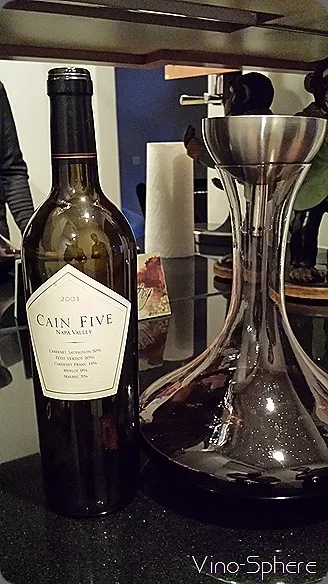
Cain 2001 Cain Five, Napa Valley

There are three things I will not forget about this wine from Napa Valley.

A Trio Of Remembrances


There’s much talk in the wine world of terroir – the soil, the climate and the unique sense of place that forge the essence of a particular wine. Even after the wine is bottled, there is a terroir of the mind that imprints a mental photograph based on your memories, sensations and images. In the case of this particular bottle of 2001 Cain Five, I have three things I will remember about this wine.

1


This bottle came from the Woodville Anderson’s store. Cabernetor and I had heard about the closeout sale in their wine department and raced over to the store hoping for amazing values.

When we arrived, the store was in a depressing state of deconstruction where even the shelves were being sold to the public. In the wine department, there was an abundance of “beverage” wines but most everything else had been picked over – except, that is, a small selection of their top bottles.

I grabbed a bottle of Bordeaux from Medoc for $70, which is a 50% savings. The Cabernetor, a Napa fan if there ever is one, carefully selected this bottle of Cain Five. That was four years ago.

2


The second image I will recall is that we drank the bottle at a dinner hosted by Cabernetor and Glorious T. I had suggested that Cabernetor and I should knock some rust off our ping pong game. Normally we play ping pong after Cabernetor has had an ample supply of premium red wine. This evening, however, close to New Year’s Eve, we decided to start with sparkling wine.

The order of wine service was perfectly by the book – but it didn’t help my table tennis any! After pushing the Cabernetor to the limit in the first game before falling, the worst happened. He was energized by the Champagne – instead of his senses being dulled by the red wine -- and proceeded to unleash a series of backhand smashes and impossible angles.

3


My third memory wrapped up in this wine is the food. In particular, crab melts. Glorious T had prepared this dish which features a crab meat and cheese mixture atop an English muffin. Light and tasty, this was perfect with our Champagne and with our Gruner Veltliner as well. We had a chocolate lava cake with the Cain Five and it was a gooey delicious mess (the dessert, that is).

The 2001 Cain Five is a blend of 52% Cabernet Sauvignon, 20% Petit Verdot, 14% Cabernet Franc, 9% Merlot and 5% Malbec. The five classic Bordeaux grapes have aged well and this particular bottle could have cellared for another two years. The cork presented some challenges, but the wine inside did not.

Cain Five delivered notes of orange peel and oak. Spice and savory flavors also tickled the tongue. This is the signature blend of Cain and the SRP was $90 – but Cabernetor scored a deal. If your New Year’s resolution is to drink more premium red wines, we suggest you check out Cain and make a memory of your own.