Showing posts with label WBC12. Show all posts

Monday, August 27, 2012

Oregon Wine Triumphs During Successful WBC12

There was a lot to love about the recent 2012 Wine Bloggers Conference (WBC12) held at the Doubletree Portland in Oregon. A total of 370 bloggers, winery representatives and industry moguls were present and enjoyed a full program that focused on wines from around the world as well as the craft of blogging.

The bounty of vino ranged from powerful Cabernets from Napa Valley to the almost completely unknown Hondarrabi Zuri grape in the obscure Spanish region of Bizkaiko Txakolina. But one star outshone them all: the wines of Oregon.

The wine industry is big business in Oregon, bringing in an estimated
$2.7 billion annually with $158 million coming from wine tourism. The TWAV tasting team was fortunate to get the flavor of Oregon during our recent visit. Here’s what we learned:

1. Oregon Wine Country is Cool. And we mean this in both senses of the word. There is a lot to be said for grape vines struggling out of scorched earth and rubble, resulting in concentrated flavors. That’s quite a contrast to Oregon, where marionberries, Douglas firs and a jungle of greenery seem to cover every inch of landscape. How can grapes not flourish in such a verdant landscape?

The cooler temperatures give it a leg up on California, its heated neighbor to the south. Oregon’s top three wines are Pinot Noir, Pinot Gris and Riesling. Chardonnay is also planted in large quantities. These are all varieties that thrive and gain character in the cooler
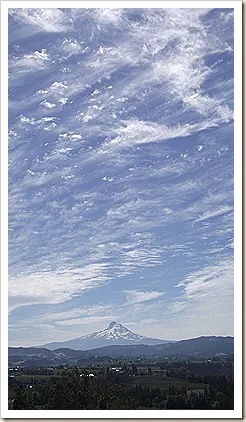
climate.

Oregon is also a natural wonderland, allowing you to visit waterfalls, snow-capped mountains and amazing Pacific coast vistas all with a glass of superb wine in your hand.

2. Oregon Deserves More Notoriety for Amazing Rosé and Pinot Gris. We were expecting spectacular Pinot Noir – and we got it in spades. What we hadn’t expected was the refreshing and dazzling rosé and Pinot Gris. The rosé, made with Pinot Noir grapes, has a citrus lilt with a touch of melon. This is head and shoulders above the old style sweet pink stuff and even an upgrade from the dry French rosé. The rosé from Domain Drouhin, King Estate and Stoller Family Estate are great examples of Oregon style. It is a natural summer refresher.

Perhaps my favorite wine is dry Riesling. Who knows what would have happened if I were introduced to Oregon Pinot Gris first? The wines are medium bodied with ample dollops of fruit flavors that are balanced with acidity. Unlike some Alsatian wines, these are not unduly restrained, they dance with life. They are tasty, refreshing and memorable.

3. There is Diversity in Oregon Wine. One of the most delicious pairings you’ll ever experience is Oregon Pinot Noir with fresh, native salmon. But we discovered wines beyond Pinot Noir and even beyond Pinot Gris and Chardonnay. Oregon stretches from Washington State to the north and down to California in the south.

During the Oregon wines welcome reception we discovered the 2011 Aleash from Agate Ridge Vineyards. The Aleash is an estate-grown white Rhone blend featuring Viognier, Roussanne and Marsanne. Agate Ridge also featured a 2009 Malbec. Agate Ridge is in the Rogue Valley AVA, the southernmost Oregon wine region.

Other popular varieties in southern Oregon include Albarino, Tempranillo and Cabernet Franc.

We’ll share more insights from our WBC12 Oregon visit in future posts. In closing here are a few of the top wines we sampled at the Oregon wines welcome reception:
  • Agate Ridge 2009 Malbec
  • Anne Amie Vineyards 2009 Pinot Noir
  • Argyle 2010 Reserve Pinot Noir
  • Carlton Cellars 2009 Roads End Pinot Noir
  • Chehalem 2011 Gruner Veltliner
  • Cornerstone Cellars 2010 Reserve Pinot Noir
  • Dion Vineyard 2010 Old Vines Pinot Noir
  • Domaine Drouhin 2008 Laurène Cuvee
  • Foris Vineyards 2010 Pinot Blanc
  • Kramer Vineyards 2010 Müller Thurgau
  • R. Stuart & Co 2011 Big Fire Pinot Gris
  • Twelve 2010 Estate White
  • Youngberg Hill 2009 Natasha Block Pinot Noir
Enhanced by Zemanta

Monday, July 23, 2012

Oregon Wine Country: Behind Every Bottle A Place And A Face

Portland, Oregon, will host the 5th Annual Wine Bloggers Conference August 17-19. Once again a tasting team from Toledo Wines and Vines will be there to visit wineries, sample new wines and report on the festivities. Here a brief snapshot of the wonderful wine region of Oregon.

In 1979 at a Paris tasting with entries from more than 330 countries, the 1975 Eyrie Pinot Noir took a top 10 finish. In a follow-up match the next year, it came in second place – and less than a point behind – the 1959 Drouhin Chambolie-Musigny. This was an astounding international achievement. Since that time Pinot Noir has been Oregon’s flagship wine.

Although there is much more than Pinot Noir in Oregon, it certainly is king. There are 12,560 acres of Pinot Noir planted in Oregon, more than four times the amount of the second most popular grape (which is Oregon’s “other Pinot,” Pinot Gris). Lesser amounts of Chardonnay, Riesling and Cabernet Sauvignon are also planted.

Oregon’s Pinot Gris is often been compared to that made in Alsace. It is medium-bodied, yellow to copper in color, crisp with full fruit flavors.

Countless millennia of volcanic eruptions and cataclysmic glacial action have blessed Oregon with some of the finest soil on earth. The rugged, alluring terrain attracts adventurous winegrowers who create artisan wines featuring fresh fruit flavors and lively acidity.

The vineyards are planted in small pockets to take advantage of the best micro-climates. There are enough of these pockets to make Oregon the fourth largest producer of wine in the U.S.

Oregon has 16 American Viticultural Areas (AVA): Columbia Valley, Umpqua Valley, Walla Walla Valley, Willamette Valley, Rogue Valley, Applegate Valley, Columbia Gorge, Dundee Hills, Yamhill-Carlton District, Southern Oregon, McMinnville, Ribbon Ridge, Red Hill Douglas County, Eola-Amity Hills, Chehalem Mountains, and Snake River Valley.

The Columbia Gorge and Walla Walla Valley include parts of Washington State while the Snake River Valley is principally in Idaho.

The three main wine regions are:

Willamette Valley: Located just south of Portland and home to approximately 70 percent of Oregon’s wineries.  It is the largest and most important region. This fertile river valley produces primarily Pinot Noir, Pinot Gris, Chardonnay and Riesling.

Umpqua Valley: Located in the southwestern area of Oregon. It is the site of Oregon’s first winery, Hillcrest Vineyard. The warm climate here produces outstanding red wines including Pinot Noir and Cabernet Sauvignon. Also produced are Chardonnay, Riesling and Sauvignon Blanc.

Rogue Valley: Located in the southern part of the state just above the California border. The warm weather is well suited to growing red grapes such as Merlot. Also produced are Cabernet Franc, Cabernet Sauvignon and Semillon.

The wines of Oregon are impressive and food-friendly. Unlike some other states, if a grape variety is named on the label of an Oregon wine, 90 percent of that wine must be made from that variety. Other states require only 75 percent. (One exception to this rule is Cabernet Sauvignon, which only needs to contain 75 percent.)

Oregon offers a diverse and bountiful landscape with handcrafted, exquisite wines.

Technorati Tags: ,
Enhanced by Zemanta