Showing posts with label Germany. Show all posts

Monday, January 9, 2023

German Pet-Net And Rosé Bring Thrills In The New Year


The year 2023 is off to a great start. We celebrated the advent of the new year with two great German wines. 

We really love pétillant naturel wines. Roughly translated as “naturally sparkling,” these wines are bottled during initial fermentation whereas most wines are bottled after fermentation. Instead pet-nat wines use the carbon dioxide that is a byproduct of fermentation to create blessedly delightful bubbles.

Brothers Daniel and Jonas Brand create certified organic and vegan wines using wild yeast in the Pfalz region of Germany. We started our celebrating with their funky Weingut Brand 2019 Pet-Nat. Made organically with a Silvaner and Pinot Blanc, this was an explosion of mineral and zesty citrus flavor. In the glass it was foamy and hazy. It is one of the best sparkling wines we've had. Hats off, Brand brothers.

We followed this with the 2020 Pinot Noir Rosé from Meyer Näkel. The wine comes from the Ahr region. The Romans began cultivating grapes in this area more than 1,000 years ago. The region has been focused on Pinot Noir since the 1700s.

Meyer-Näkel is a fifth-generation family. When Willibald Näkel established the vineyard with his wife Paula Meyer, they focused on dry red wine, something quite unusual for the time. Today the estate is run by his son Werner, his wife, and daughters. The winery produces about 10,000 cases per year, mostly Spätburgunder, which is what Pinot Noir is called in Germany.

The Pinot we tasted is a beautiful coral pink rosé. It's dry and smooth with an explosion of berries. If you haven’t yet tried German Pinot Noir, you are missing out. We suggest you start with this bottle, which costs $28 and is available at Wine.com.

These wines were received as a marketing sample.

Sunday, December 4, 2022

German Wines Offer New Choices For Holidays

Looking for creative choices for your holiday wine? Here are two winning bottles from Germany.

Picking up Cabernet and Chardonnay for your holiday entertaining? It’s time to color outside the lines and dazzle your guests with some lesser-known wines from Germany.

Try setting your table with German wines. For red consider this tasty bottle of Weingut Beurer Trollinger Trocken. Trollinger wines are meant to be enjoyed while they are young and fresh. This bottle is jubilantly fruity yet dry. The wine is certified biodynamic, following the winery’s goals of purity, minerality, liveliness, tension, complexity, and expression. Perfect for poultry and it can be lightly chilled too.

Pinot Blanc is also known as Weissburgunder. This bottle from Weingut Richard Böcking has delicate fruitiness and fresh acidity, Pinot Blanc is an ideal food wine. It opens with minerality and then rounded apricot and pear notes. The grapes for this wine come from the steep hillsides of the Mosel River, where the Böcking family has been making wine since 1624.

The prices for these wines are deliciously affordable. The Pinot Blanc goes for about $18 while the Trollinger retails for about $25.

Full disclosure: These wines were received as marketing samples.

Friday, September 16, 2022

German Riesling, Rosé, And A Surprise

Think you know German wine? You’ll be surprised by the diverse assortment of grapes and styles.

If your knowledge of German wine goes no further than Riesling, it’s not a bad thing. The cold climate and its sloping vineyards helped Germany develop world-class wines.

You should know, however, that simple sweet Riesling isn’t a true representation of German Riesling anymore. Drier Riesling has increased in production and masterful winemaking has balanced acidity and sweetness to produce wines that shine with a full spectrum of flavors without swamping you with sugar.

We sampled the Eva Fricke 2020 Trocken Riesling from Rheingau. The “trocken” means dry, but it doesn’t lessen the elegance of this bottle.

Juicy notes of lemon drop and apple fill this silky wine. At just 12.5% ABV, this is a light, food-friendly wine. The finish is dry and very satisfying.

If your knowledge of German wine is limited to Riesling, it is time to expand. Here’s a good place to start. The Seehof 2021 Pinot Noir Rosé comes from Germany’s Rheinhessen, a region known as the land of a thousand hills. Pinot Noir is Germany’s most popular red grape. For rosé lovers, this is great news as Pinot makes great blush wines. While prices of rosé continues to climb, this crystal-clear wine delivers everything you want for a price of about $19. Grown in limestone soil, this wine has an easy-going grace. Flavors of red apples and strawberries flow generously and keep you coming back for another glass.

Terraces Red, Vineyard Project 002 (2020) is a project of Weingut Roterfaden and the local Rosswag Co-Op. Rosswag is a small village located about 30 miles from Stuttgart. The village is surrounded by an ancient amphitheater of towering, steep, terraced vineyards. The terraces are over 1,000 years old and include 23 miles of stone walls.

From these historic vineyards comes a unique blend of 55% Lemberger, 25% Trollinger, 10% Regent, and 10% Schwarzriesling. Schwarzriesling is also known as Pinot Meunier. Trollinger is little-known but is a fragrant, late-blooming grape.

Together they make an entrancing wine with extracted flavors of cranberry, red fruit, and apple peel. Very light tannins and a low ABV keep this easy on the tongue. The wine also has a vibrant character with brambles, and herbal and pine notes.

This wine is organic and biodynamic. It’s one of the most unique wines to hit our tasting table and we’re thirsty for more. It retails for about $15 if you can find it.

Full disclosure: This wine was received as a marketing sample.

Sunday, June 5, 2022

Richard Böcking 2019 Böcking Riesling, Mosel Valley

 Reach for Summer Refreshment With Riesling

Riesling is the most versatile white grape. It can be finished sweet or dry in a variety of styles and with different flavor profiles. The art of Riesling is perfected in Germany. A case in point is the Richard Böcking 2019 Böcking Riesling. This off-dry Riesling comes from the Middle Mosel Valley, where vines have been planted since Roman times.

The grapes come from the steep Trarbacher Taubenhaus estate vineyard. The grapes are finished in stainless steel to preserve the blooming, floral taste. It’s fresh and light. We found this Riesling interesting because it has distinct herbal and honeysuckle flavors with the light sweetness not interfering with the delicate nuances. This is a unique grape and a unique wine that we truly enjoyed.

Five thousand bottles were produced for the US.

Full disclosure: This wine was received as a marketing sample.

Friday, January 7, 2022

Blanc Or Noir: German Wines To Delight


The wines of Germany aren’t limited to Riesling. We enjoyed a pair of Pinots certain to please.

It may be surprising to learn that Germany is a top-producing Pinot country. Pinot Noir, also known there as Spätburgunder, is the most widely produced red wine in Germany. In fact, Germany only trails France and the US in production of Pinot Noir. We’ve found Spätburgunder to be rich and delicious with high-quality bottles more affordable than you would expect.

Keep up with the latest. Follow us on Instagram!

Pinot Blanc tends to float under the radar with Pinot Gris/Grigio and Pinot Noir getting most of the spotlight. Germany loves Pinot Blanc, however, and is the world’s largest producer of this wine. The German name for the grape is Weissburgunder.

We opened a couple of bottles over the holidays to learn more about these wines so popular in Germany.

Selbach Oster 2017 Pinot Blanc, Mosel – The Selbach family has owned vineyards in Germany’s Mosel region since 1661. The estate includes old, ungrafted vines on south-facing slopes. The soil is mineral-rich rocky, slate soil that retains the heat. This golden-colored wine is medium-bodied with mineral notes, and comforting lemon and apple notes. This is a perfect wine for Chardonnay drinkers wishing to explore other options. The low percentage of alcohol means this is food-friendly, especially with fish dishes. Price is about $20.

Never Miss A Beat – Follow Vino-Sphere On Facebook

Weingut Burg Ravensburg 2017 Sulzfeld Pinot Noir, Baden – The name translates to Ravensburg Castle Winery and it is a member of the Association of German Prädikatsweingüter (VDP), which brings together the best wine producers in Germany. This German Pinot Noir wine has wonderful roasted aromas with delicious components of cherry, black currant and plums. It has more of an earthy characteristic than previous Spätburgunder we’ve tried and it’s quite lovely. The ABV is also at the lower end of the scale at 12.5%, meaning this is a versatile wine that can pair with pork and light meat entrees or with salmon or other fish dishes. At about $22, this is a great buy.

This pair of wines can match beautifully with your next meal. Be adventurous and uncork a bottle of German Pinot.

Full disclosure: These wines were received as a marketing sample.

Monday, December 6, 2021

German Wines A Great Choice For Holiday Meals

Holidays mean entertaining. Here are two picks for your festive table.


Pick A Pair Of Wines

Everyone is looking for a bit of magic this holiday season. The months of November, December and January mean gatherings of family and friends and, of course, plenty of wine.

We recently opened two German wines for Thanksgiving that are perfect the whole holiday season through. We tasted the Villa Wolf Sparking Pinot Noir Rosé as well as the 2016 P.J. Valckenberg Madonna Kabinett.

Keep up with the latest. Follow us on Instagram!

Our daughter is a vegan chef, so our meal included “turkey” cutlets with cranberry chutney, stuffing, Brussels sprouts, garlicky potatoes, salad, and homemade rolls. To kick off the meal, we popped the Villa Wolf sparkler.

We particularly enjoy rosé sparkling wine as this category has an extra dimension of flavor. This is a non-vintage wine created in the Charmat (or tank) method.

The perlage foams quite nicely as the bouquet of strawberry emerges. The bubbles dissipate rather quickly. On the tongue, there is crisp acidity with citrus and berry. This was an ideal way to open our meal. At about $14 per bottle, it is priced for buying multiple bottles.


German Wine And Plant-Based Cuisine

Our plant-based “turkey” cutlets won’t replace the Pilgrim’s original bird, but it sure is easier to prepare and clean up. With the cranberry chutney, it tasted delicious. As we plunged further into our meal, the Madonna was opened up.

Never Miss A Beat – Follow Vino-Sphere On Facebook

The Madonna is a “cuvée of traditional white grape varieties” from Rheinhessen, Germany’s largest grape-growing region. The leading grape there is Muller-Thurgau followed by Riesling. It also has the world’s largest area devoted to Silvaner. I expect that all three grapes make an appearance in this bottle (although the blend isn’t disclosed) with Riesling in the lead.

The grapes come from 500-year-old vines on the banks of the Rhine River. The Madonna is a light, food-friendly wine with an ABV of just 10%. On the palate, there is an enjoyable mineral twist and a slight sweetness. Notes of green apple and honey pair with a dash of lemon drop flavor. This is a wine that is fresh and harmonious. The addition of the other grapes elevate this a step beyond straight Riesling. You can expect to pay about $14 for this bottle.

Full disclosure: We received this wine as a marketing sample.

Saturday, October 9, 2021

Ziereisen 2016 Talrain Spätburgunder, Baden

Pork and Pinot – it’s a beautiful thing, especially with a gourmet-prepared smoked pork shoulder.

A German Surprise

When we arrived at our friend’s house, our hosts were befuddled. I announced that I had brought a bottle of Spätburgunder, and Tony and Amy exchanged puzzled glances.

Never Miss A Beat – Follow Vino-Sphere On Facebook

They aren’t alone. Even though Spätburgunder is Germany’s most popular red wine, most people haven’t heard of it. They haven’t heard of it, that is until you tell them that Spätburgunder is German for Pinot Noir.

Spätburgunder is a delicious secret to most people. While the prices of Pinot Noir from Willamette Valley, Carneros, and Russian River Valley continue to escalate, German Pinot Noir represents a marvelous value. I’ve also found the quality to be excellent.

The True Star


While the 2016 Talrain Spätburgunder is indeed newsworthy, the true star of the evening was the smoked pork shoulder prepared by Tony. Tony, who teaches physics at a local university, has developed his own scrumptious technique for smoking pork.

Keep up with the latest. Follow us on Instagram!

The secret is in the sous vide technique. The meat is vacuum-sealed in plastic and then placed in a water bath where it is cooked with a low-temperature immersion circulator cooker. This allows precise control over the temperature.

It’s a two-part process with the final cooking being done in a smoker to give the meat a nice “bark” and the smokiness we all crave. When the meat came out of the smoker (and after a brief rest) the meat fell off the bone – ready for the hungry guests.

The Pairing

While Amy and Tony took care of the many details of the dinner, I focused on the critical task of uncorking the Spätburgunder and pouring!

Talrain is a vineyard located on the lower hills of the Black Forest in Baden. It is layered with limestone and iron-rich clay with an elevation of nearly 2,000 feet.

Fermentation takes place in stainless steel and 30% of the grapes are pressed whole-cluster. The ABV is a low 12%, meaning it won’t overpower your meal. This is a light and fresh wine with good acidity and aromas of forest and flowers. On the palate, there is wild strawberry and spice with juicy mineral notes. It’s an elegant wine.

In case you are wondering about the sauce, it started with a base of sweet sauce which was precisely attuned with hot sauce, vinegar, and some mustard. The meal was over the moon good.

Thursday, September 16, 2021

Battenfeld Spanier 2016 Grüner Sylvaner Trocken

It’s time to revisit Sylvaner – once Germany’s most widely planted grape.

A Second Grüner?

This bottle began with a puzzle. We’re fans of the Austrian wine Grüner Veltliner – but the name Grüner Sylvaner on a German wine was a head-scratcher.

Keep up with the latest. Follow us on Instagram!

We’ve had Sylvaner before and it’s a pleasant, soft white wine capable of great aromatics. In Germany, it’s spelled Silvaner and at one time its vines dominated the wine lands – until it was surpassed by the more productive Muller-Thurgau grape.

The correct name for the grape is Grüner Sylvaner, to differentiate it from another Sylvaner grape that is rarely grown. Grüner, by the way, means “greener.” That seems to fit with a wine that emphasizes fresh flavors.

A Higher Organic

Battenfeld Spanier is a winery in Germany’s Rheinhessen region, the largest of the country’s wine-growing areas. The winery, with 100 acres of vines, was a pioneer in the biodynamic movement in Rheinhessen.

Never Miss A Beat – Follow Vino-Sphere On Facebook

Sylvaner is a subtle wine, with a mild acidity. Pale yellow in the glass, it’s a great food partner (fish, vegetable casseroles, mild cheese). It’s also a nice casual sipping wine, as we discovered at the patio fire pit.

The wine is low in alcohol (12% ABV) and is finished in stainless steel to preserve the clean, precise flavors. The aromas are floral notes mixed with grass and herbs. The flavors are bright and clear pear and apple with mineral notes and a velvety texture.

It retails for about $24.

Saturday, July 17, 2021

Bordeaux and Germany Surprise With Bottles Of Bubbly

The best tool in your entertaining toolkit is sparkling wine. Here are four that delight without busting the budget.

Sparkling Wine Beyond Boundaries

I’ll let you in on a wine secret. If you want fantastic French sparkling wine without the large price tag, try Crémant. Sparkling wine is made all over France, but only bubbly made in the Champagne region can be called by that name. Crémant is made with the same traditional method, just without the price.

Keep up with the latest. Follow us on Instagram!

This next fact might be even more surprising. Germany makes good sparkling wine.

During a recent online tasting event, sponsored by Bordeaux Wines and Wines of Germany, we had a chance to explore sparklers from these two regions.

Celene NC Cuvée Amethyste, AOC Crémant de Bordeaux

We’re most familiar with Crémant from Burgundy, but this bottle shows that Bordeaux knows its stuff with sparkling wine. Although sparkling wine has been made in Bordeaux for more than 200 years, the AOC Crémant Bordeaux wasn’t established until 1990.

Never Miss A Beat – Follow Vino-Sphere On Facebook

The Cuvée Amethyste, like all Crémant Bordeaux, is made in the traditional method. It is a Blanc de Noir, made with 60% Merlot, and 40% Cabernet Franc from three Right Bank vineyards. It has clean minerality, a hit of red fruit, with refreshing notes of honeysuckle and a pervasive stream of bubbles. It offers surprising finesse for a mere $12.

Markus Molitor NV Riesling Sekt, AOC Mosel

We were a little late jumping on the Sekt bandwagon, having tasted our first bottle just a few months ago. Now we are firmly on board. This Sekt is 100% Riesling that opens with peach and nectarine flavors. Markus Molitor is a pioneer of bubbly in Mosel, having produced sparkling wines since 1982. The grapes for this wine come from vineyards on steep slopes overlooking the Mosel River. The slate soil imparts minerality and focus to the finished wine.

This Sekt is 12.5% ABV, so it is light and playful in the glass. The wine is tank fermented (as opposed to the traditional method which has the second fermentation in the bottle). The bubbles are tiny and the high acidity makes this a nice pick for meats like prosciutto or dishes with cream sauces. SRP is $19.

Calvert 2018 Brut Rosé, AOC Crémant de Bordeaux

The production of rosé sparklers in Crémant de Bordeaux has exploded in the last 20 years, growing by 413%. The rosé there is produced using the famed red grapes of Bordeaux.

The Calvert Brut Rosé is a good reason why this segment is skyrocketing. It is made with 100% Cabernet Franc grapes that are hand-harvested and pressed.

It is pale in color with a deliciously perfumed nose. On the palate, it has notes of raspberry and dried earth with very fine bubbles. For a unique pairing, try it with milk chocolate. We think sparkling rosé is an ideal wine for entertaining. The bubbles set the festive atmosphere and rosé is an ideal food wine. This is an astounding bargain at $18 for traditional method bubbles.

Raumland 2013 Cuvée Marie Luise, AOC Rheinhessen

Surprise! This wine is a beautiful sparkling Blanc de Noir using Pinot Noir from Germany’s Rheinhessen region. Pinot Noir is Germany’s most popular red grape and is known there as Spätburgunder. Raumland is Germany’s benchmark sparkling wine producer and this is a classy, elegant wine.

The wine is made in the traditional method, using only the best juice from the whole cluster process. This wine spends 27 months on the lees.

Grown in chalky soil, it has minerality mingling with red apple and citrus notes. Bakery flavors are apparent in the approach. The texture is soft and creamy held together with a solid acidity. This is the highest-priced bottle of the quartet at $46 but represents an amazing value compared with a Champagne of similar quality.

Tuesday, June 8, 2021

Clink Different With Unexpected Wine Varieties From Bordeaux And Germany

Germany equals Riesling and Bordeaux means Cabernet and Merlot, right? Not necessarily…

Variety In Varieties

In a world that is increasingly learning to celebrate diversity, it’s surprising how easily we can pigeonhole certain wines or wine regions. It’s not all bad. In many cases, it happens because of skyrocketing success.

Never Miss A Beat – Follow Vino-Sphere On Facebook

Germany is a good example. It’s northerly climate, sloping vineyards, rivers, and slate-filled soil combine to create perfect conditions for the production of Riesling. In Bordeaux, some of the world’s most sublime red wines are produced in chateaus using Cabernet Sauvignon and Merlot.

To focus solely on these grapes, though, is to overlook a bounty of other varieties that thrive in these two regions. Bordeaux and Germany are both cooler climate regions with high quality standards and for the last three years have partnered on a joint marketing effort to showcase their wines. In a recent virtual tasting, four unsung grapes from the two regions were spotlighted.

Weingut Strub 2019 Silvaner Trocken

This wine hails from Germany’s Rheinhessen region, known as the “land of a thousand hills.” It is Germany’s largest wine-growing region in terms of size. Rheinhessen also is home to the world’s largest area devoted to the Silvaner grape, which at one point was the most important grape in Germany.

Keep up with the latest. Follow us on Instagram!

The straw-colored wine opens with aromas of apple, pear, and hay. It provides a surprise on the palate. Far from the shy wine I expected, the wine is rich and a medium-plus in body. The acidity is mild to medium so it didn’t detract from the many layers that emerged, first a green apple flavor emerged followed by vegetal notes wrapped in notes of salinity. There is a waft of sweetness, even though this is a dry wine, but it blends effortlessly into a balanced wine.

We judge this to be an amazing food wine that pairs with grilled or raw fish, salads or stir fry. SRP is $19.

Dourthe 2019 La Grande Cuvée Bordeaux Sauvignon Blanc

While the Bordeaux reds capture most of the world’s attention, don’t sleep on Bordeaux’s white wine. In fact, if teeth-jarring acidity isn’t your thing, you might find the Bordeaux Sauvignon Blanc style more to your liking. Bordeaux, after all, is where this ancient grape originated. The Dourthe Cuvée is 100% Sauvignon Blanc, something that isn’t always a given in a region known for blending.

On the nose, there are fresh notes of citrus. The palate provides a tantalizing sensory experience. The wine is finished in stainless steel and undergoes six months of battonage (stirring on the lees). I always love Chardonnay that is aged in oak and has battonage, but this is the first Sauvignon Blanc we’ve tasted that uses the process. The payoff is huge – rich aromatics, savory flavors, and overall elegance.

The wine is lively with lemon and grapefruit notes mingled with some bread/yeast flavor surrounded by a nice minerality courtesy of the limestone soils. The wine is fresh and has a touch of honey on the finish. This one is perfect for cream-based pasta, fatty fish, steamed clams or goat cheese. Priced at $14.

Schnaitmann 2017 Steinwiege Lemberger

We’ve been on the Lemberger bandwagon for a while now. This grape, also known as Blaufränkisch (and about 50 other names), does really well in cooler regions that we like (such as Germany, Canada, and the Finger Lakes). In Germany, plantings of Lemberger have more than quadrupled since the 1980s. It is grown almost exclusively in Württemberg.

In the glass, the wine has a light purple hue. The aromas hint at what’s to come, with notes of smoke and spice. The tannins are smooth and refined. There are notes of juicy cherries, both sweet and sour. Tobacco and white pepper accents contrast with the fruits. The acidity is medium and the experience is wrapped together with silky mouthfeel and herbal flavors.

Pair this with grilled lamb, chicken shawarma, or tomato-based pasta. Retail is $37.

Château Belle-Vue 2018 Petit Verdot

Our final bottle is a rarity – a 100% old vine Petit Verdot from Bordeaux, where the grape is usually used in blends. The vines range from 62 to 81 years old. Château Belle-Vue was granted the prestigious Cru Bourgeois Exceptionnel status in 2018.

The beauty of this inky grape shines thanks to the use of clay amphora and large (new and used Austrian) oak barrels. The body is silky and almost creamy. In the mouth, it’s all about the blue fruit, with a carousel of violet, blackberry, and floral notes. The finish goes on almost forever.

While this grape is also known as “the little helper" and is often used just to deepen the color of wine, that is changing. Acreage of Petit Verdot has tripled in recent years. The price is $25.

To strike gold, you have to dig below the surface. To discover amazing new wines, you need to think – and clink – differently. These four wines offer an excellent starting point for your next wine exploration.

Full disclosure: These wines were received as a marketing sample.

Thursday, May 27, 2021

German Riesling Sound Choice For Sultry Summer

As temperatures climb, it’s time to reach for the cool refreshment of German Riesling.

If things are heating up in your part of the world, we have two excellent suggestions for cool white wines. We tried a pair of Rieslings from Germany and although distinct in style, they are united in offering delicious taste and prices that make them excellent values.

Riesling From Rheinhessen

The 2016 Dr. Heyden Oppenheimer Kabinett Riesling is a beautiful wine, juicy and balanced. The estate was founded in the Oppenheimer region of Rheinhessen by Dr. Karl Heyden in 1999. Today the work is carried on by his sons. The Riesling vines average 25 years of age and are grown in loam soil rich in limestone.

Never Miss A Beat – Follow Vino-Sphere On Facebook

The first sip is mouth-watering thanks to abundant acidity. The flavor profile includes honey, apricot, and lime zest. A beautiful seam of salinity punctuates this wine.

This is slightly off-dry with RS of 1.5%, which provides a generous rainbow of flavor. ABV is 11.5%, so it complements rather than overpowers food. Spicy dishes like Thai cuisine would be a good choice.

Secret In The Slate

Clean Slate Riesling has been a favorite of ours for many years (the first vintage was 2005). This is a “go-to” wine that is widely available in restaurants and stores and is appreciated by wine aficionados or newbies. That takes some of the guesswork out of entertaining.

Keep up with the latest. Follow us on Instagram!

The name of the wine isn’t just clever marketing. This Riesling is from from Mosel. This region is famed for its Riesling as well as its thin slate stones in its soil. The slate reflects and retains heat, which allows the perfect ripening of the grapes in the chilly German climate. So precious are the slate stones that slip from the Clean Slate vineyard into the river are collected and carried back to their place up the treacherous slopes. 

Grapes for the 2019 vintage come from the upper, lower, and middle parts of the Mosel River Valley each contributing its own unique characteristic. Notes of apple and pear swirl with a touch of sweetness. The residual sugar is a touch higher (2.3%) than the Dr. Heyden, but the acid and minerality provide a counterbalance that results in a balanced wine. The alcohol is a low 10.9% and the stainless steel finishing keeps the flavor crisp and clean. Asian cuisine, pork, fish, and poultry are good choices with Clean Slate.

Both wines sell for less than $15 and represent a great value.

Full disclosure: These wines were received as a marketing sample.

Thursday, December 17, 2020

Consider These Holiday Treasure Wines

PXL_20201203_013914373.PORTRAITThe holidays are here. What will you pour? Check out this quartet.

Spanning The Globe

Anyone remember The Wide World of Sports? The opening had a montage of sports clips and the punchy narration: “Spanning the globe to bring you the constant variety of sport... the thrill of victory... and the agony of defeat... the human drama of athletic competition...”

Keep up with the latest. Follow us on Instagram!

We don’t pretend to do all that, but we do span the globe to taste some really exemplary wines so that you too may know the thrill of victory. Here are four that we recently tasted and enjoyed, from three different continents and all at a palatable price.

Tinto NegroKara-Tara 2018 Pinot Noir, Western Cape, South Africa

We opened this around a neighborly neighbor’s firepit. This is a South African spin on Pinot Noir. The name means “deep dark shadows” and indeed this wine tilts towards the earthy end of the Pinot spectrum. The vines average five years of age and grow at an elevation of 500 to 900 feet.

Never Miss A Beat – Follow Vino-Sphere On Facebook

This is a more substantial Pinot with malolactic fermentation and aging in French oak lending a beautiful body. In fact, I had to doublecheck the label to make sure I wasn’t drinking a bottle of Pinotage instead of Pinot Noir. A complex and exciting bottle priced at $21.99.

Tinto Negro 2018 Malbec, Uco Valley, Argentina

Talk about taking your Malbec drinking to new heights! This wine comes from the Los Arboles district of the Uco Valley, located at an altitude of 3,500 feet. The grapes are grown in shallow, sandy silt where their struggles result in a beautiful concentration of flavor.

This wine reflects the cool climate style of Malbec, with dark fruit and chocolate flavors. In fact, Tinto Negro means black wine in Spanish. There are rich flavors accented with oak, from six months in used French barrels. The complex Tinto Negro blows away the simply, jammy Malbecs but has an affordable $16.99 price tag.

Famille Perrin 2019 Nature Côtes du Rhône Blanc

This delightful white is a certified organic wine from the first family of the Rhône Valley. You are probably more familiar with the CDR reds – but the whites are intriguing and expressive.

PXL_20201216_012954432.PORTRAITThe grapes come from the northern part of the Côtes du Rhône region and are harvested in the morning to preserve their freshness. Aging in stainless steel keeps the flavors precise. The body is round and soft.

The Nature Blanc is a blend of Grenache Blanc, Viognier, Roussanne, and Marsanne – all lovely grapes with which you should become acquainted. This is a beautiful light gold in the glass with honeysuckle notes on the nose. It flows with tastes of peach and lime.

A natural partner for fish, this would also rock spicy Asian cuisine. We recommend a multi-bottle buy, or maybe a case at the ridiculously low price of $14.99.

August Kesseler 2018 The Daily August Pinot Noir, Rheingau

Germany’s Rheingau region is rightly known for Riesling, which accounts for 80% of production. What you may not know is that Germany’s number one red grape is Pinot Noir, also known as Spätburgunder. The name of this wine encourages you to make this German Pinot part of your daily routine.

This is VDP Gutswein. VDP is a collection of Germany’s leading wine estates and Gutswein is their classification for good entry level wine. The Daily August is aged in barriques manufactured in their two-story cellar, which dates to 1792.

Oak aging makes a difference as this wine has more complexity than the Spätburgunder we’ve had before. There are dark cherry and blueberry notes. This wine evolved in the glass and we found ourselves liking it more as the wine in our glasses went up and the wine in the bottle went down.

The winery suggests the following meal pairing: guinea fowl with red wine butter, parsley risotto, and porcini mushrooms. That would certainly be a feast! SRP is $26.99.

Full disclosure: This wine was received as marketing samples.

Monday, December 7, 2020

Plob 2016 Cliffhanger Riesling, Mosel

Cliffhanger 2016 RieslingLooking for food-friendly, easy-going wine? Look no further than this Mosel Riesling.

Riesling Rendezvous

What is the world’s most versatile wine grape? Probably Riesling.

Never Miss A Beat – Follow Vino-Sphere On Facebook

It can be finished into austere, bone-dry wine, or into a succulent late harvest bottle. Depending on the winemaker, it can land anywhere in between.

Our most recent rendezvous with Riesling was during a socially-distant game night with relatives. As you can see, they had another traveler with them, Kiwi the parrot!

We opened the 2016 Cliffhanger Riesling. This is produced by PLOB, which is the project of winegrowers Axel Pauly, Thomas Ludwig, Sebastian Oberbillig and Markus Berres – hence the company name.

Keep up with the latest. Follow us on Instagram!

The grapes come from the steep, rocky soils of the Mosel Valley. The vines root deeply into the soil. The slate rocks absorb, then radiate back, heat from the sun. The steep slopes guarantee added sunlight hours and the Mosel River helps moderate the chilly weather. The long growing season allows the grapes to develop aromatics and character.

The four producers ferment their grapes separately and then the wines are blended together. Then it is aged “sur lee” on the dead yeast and sediment to gain a creamy texture.

This is a feinherb (slightly sweet) wine, but one that we find to be balanced. In the glass this is a pale yellow with green highlights. There are flavors of apple and peach wound together with mineral notes.

The wine is vibrant and a good pick with seafood or Asian cuisine. Of course, it is great on its own.

Full disclosure: This wine was received as a marketing sample.

Tuesday, January 14, 2020

WIYG – We Answer The Age-Old Question: What’s In Your Glass?

WIYG? That’s a question we are often asked. Here’s a look at what we’re sipping.

WIYGCastel Grisch 2017 Merlot, Finger Lakes

Castel Grisch is one of the first wineries we visited in the Finger Lakes about a decade ago. It was founded in 1983 by a Swiss German couple and the building suggests a Swiss chalet. It’s got a great perch on the western shore of Lake Seneca and we like it as a spot to unwind without the pressing crowds of some of the larger tasting rooms.

Keep up with the latest. Follow us on Instagram!

Riesling is the calling card of the Finger Lakes, but we were attracted to this Merlot. It’s juicy with nice minerality and a touch of mint. There’s a hint of oak and round notes of plums and berry.

Famille Perrin 2016 Côtes du Rhone Réserve

This wine wraps the best white Rhone grapes -- Grenache Blanc, Marsanne, Roussanne, and Viognier -- into a refreshing blend. California may have its Rhone Rangers, but France’s Rhone Valley is the unrivaled home base for refreshing white blends like this. Pops of lime mingle with fresh floral aromas and a nice minerality.

Never Miss A Beat – Follow Vino-Sphere On Facebook

This is an example of a great winter white and is a great alternative for those looking for a different white wine. Adding to the delight, this wine can be purchased for under $10.

Hans Wirsching 2017 Silvaner, Franken

Silvaner may play second (or third) fiddle to Riesling in Germany, but in Franconia it has been making great wine for centuries. The Wirsching family has been making wine since the 1630s and Silvaner plays a key role in their estate vineyard. Silvaner has a full body, but less acidity that Riesling. This wine is golden in color with balanced acidity and peach and herbal notes. We savored it with a delicious meal of garlic teriyaki barramundi with caramelized leeks, smoked sausage and Tuscan sea sale. On the side we had citrus honey-glazed carrots. This is a VDP wine, a designation reserved for Germany’s top estate vineyards.

Full Disclosure: Some of this wine was received as a marketing sample.

Friday, December 6, 2019

White and Sparkling Wines To Highlight Your Holiday Feast

Left Coast Cellars Blanc de NoirThe month of December into January is a time for soirées and entertaining. Here are some stellar picks for your holiday party table.

Bring On The Bubbles!

Sparkling wine brings a luster to your holiday bash. Consider Left Coast Cellars 2013 Blanc de Noir, a traditional method sparkler. This wine is from Oregon’s newest wine region, the Van Duzer Corridor in Willamette Valley.

Keep up with the latest. Follow us on Instagram!

Blanc de Noir indicates white wine made with red grapes. Willamette Valley is known for its Pinot Noir and those acclaimed grapes are used in this Blanc de Noir. We just loved the full flavors of apple and raspberry paired with outstanding perlage (bubbles!).

A mere 135 cases were produced. The SRP is $55. Left Coast Cellars also makes an array of Pinot Noirs that are ideal for entertaining.

Domaine Rombeau 2015 AndréaGet Your Grenache Blanc Going

We have increasingly been popping the cork on Grenache and Garnacha, two different names for one great grape. It is one of the oldest and most widely planted grapes in the world.

In France’s Rhône Valley, Grenache is a primary grape, typically paired with Syrah. It is also part of the GSM (Grenache, Syrah, Mourvedre) blends popular worldwide. Garnacha is grown in almost every area of Spain and graces the well-regarded wines of Priorat and Cariñena.

Never Miss A Beat – Follow Vino-Sphere On Facebook

While most Grenache is of the red variety, white Grenache/Garnacha is making a name for itself with high-quality wines. We popped open the Domaine Rombeau 2015 Andréa from France's Cotes du Roussillon region. It was a perfect match with our holiday turkey.

This is a unique white Grenache blend with 31% White Grenache, 29% Grey Grenache, 14% Marsanne, 13% Malvoisie, and 13% Vermentino. This had a full body and complex structure with grapefruit and peppery notes. It has a golden hue and is a limited production wine. Only 3,000 bottles were produced.

Blue Fish Riesling and General Tso's CauliflowerRiesling Rendezvous

With the varied meals that accompany your holiday festivities, remember one word: Riesling! We love Riesling for its food-friendly nature and the broad range of styles. You can opt for a bone-dry bottle or a range of choices up to a sweet late harvest wine.

Germany built its wine reputation on this grape and its a good choice when making your wine selection. For a recent vegan feast prepared by our daughter we opted for the 2018 Blue Fish Riesling from Pfalz.

Our meal included General Tso’s Cauliflower with rice and green onions along with a Napa cabbage salad and chile garlic edamame.

Riesling is a classic pairing with spicy foods. Blue Fish is a dry Riesling with a nice balance. It has flavors of lemons and peaches with a thread of minerality. At under $10, this is an outstanding buy!

Saturday, September 21, 2019

German Wines: An Iconic White Plus A Surprising Red

P1050474We’re about to burst the bubble of some German wine myths…

In The Land Of Whites And Reds

When you think of German wines, you probably think of whites. That’s understandable. Germany produces world-class Riesling and a variety of white wines including Pinot Blanc, Pinot Gris and wines using native grapes.

Never Miss A Beat – Follow Vino-Sphere On Facebook

What you may not know is that about 34% of the country’s vineyard acreage is dedicated to red grapes. the leading red also might surprise you – it is Spätburgunder.

You might be more familiar with its better known name – Pinot Noir. Germany ranks third worldwide in area devoted to the grape, with almost 12% of its vineyards planted with Pinot Noir.

Pinot Noir thrives in cool climates, which helps retain acidity and allows flavors to fully develop. Spätburgunder is also ideal for making  rosé.

A Surprise With White Wine Too

While you are fumbling with your corkscrew as you ponder the above facts about German Pinot Noir, consider this. Germany’s wine regions are also well suited for the production of crisp, high-quality sparkling wine. In Germany it is called Sekt and is usually done in a sweet or semi-sweet style. Surprisingly, Germans drink more sparkling wine than any other country.

Keep up with the latest. Follow us on Instagram!

What’s no surprise is the amazing quality of German Riesling. It is fruit-forward, but balanced with acidity. Overall, German wines have been trending drier to match the modern international palate.

We tasted a German Pinot Noir and Riesling, the 2016 Neiss Riesling Trocken, Pfalz, and the 2014 Günther Steinmetz Kestener Paulinsberg Pinot Noir, Mosel. Each was outstanding.

2014 Günther Steinmetz Kestener Paulinsberg Pinot Noir, MoselNeiss is a fifth-generation family winery with plantings in the northern, cool-climate region of Pfalz, where  vines grow deep roots in mineral-rich soils, with large amounts of chalk. For us, minerality is the element that often makes the difference between an outstanding Riesling and a ho-hum affair. Platinum color in the glass, the Neiss Riesling has notes of peach and wet stone along with lime zest. This is a perfectly balanced glass that has the refreshing minerality we crave.

Complex, Rewarding Pinot Noir

I was surprised by the sophistication of the 2014 Steinmetz Pinot Noir. My previous tastes of Spätburgunder were young and fresh with vibrant flavors – wholly satisfying, but without the complexity that can make the Pinot Noir grape a star.

Steinmetz wines use wild fermentation and are grown organically.The Steinmetz is an elegant glass, its body and texture enhanced by the lack of filtering. It has dusky notes of flowers and spice. In short, this is a bottle that would capture the attention of any Pinot-phile. Its craftsmanship and complexity would not be out of place in cooler climate California AVAs.

Germany offers a range of styles that is surprising. In a good way. Prost!

Tuesday, February 12, 2019

Pair Of German Wines Show Dry Defiance


Dry German wines are trending and changing perceptions.

Dry January? How About Dry Wine?


I’m note sure where the concept of Dry January came from, but as a wine writer you can imagine I’m not completely on board. I have in the past abstained from wine during Lent, but it was a challenging 40 days.


A refreshing alternative comes from Germany. Instead of having a dry month, how about some very nice dry wine? That’s an idea we certainly can support. We tried a pair of dry German whites that we found to be outstanding.

The Red Hang


Riesling is one of our favorite grapes and we are partial to the drier style. We tried the 2014 Gunderloch Nackenheimer Rothenberg Riesling Trocken from Rheinhessen. Like many German wines, the long name can appear intimidating, but conveys some important information.


The Rothenberg Vineyard in Nackenheim is on the Rhine River and is on the north end of what is known as the Red Hang. The vineyard is steep, with slopes ranging from 30% to 80% and the soil is made of 290-million-year-old red slate.Trocken indicates that the wine is dry.

The Grunderloch winery has 28 acres that are planted to Riesling, Silvander, Rulander and Gewurztraminer. They produce about 9,000 cases of wine annually.

Inspired is a good description of this wine. Although dry in style, the flavors are not muted. The unique soils lend a nice flowing minerality and a bright acidity creates a crisp finish. The swirling flavors include citrus and apples with a touch of herb. The wine is light gold with green reflections.
This Riesling is a Grosses Gewächs wine. All Grosses Gewächs comes from a Grosses Lage (‘great site’), the best vineyards according to the German VDP classification system. We’ve found “GG” wines to be outstanding.

Weissburgunder Anyone?


That Germany excels in white wine is not a recent discovery. What is relatively new is the increased production of Weissburgunder, known elsewhere as Pinot Blanc. The grape grows in fertile or chalky soil and ripens late. It is a Pinot mutation, sharing genetics with Pinot Noir and Pinot Gris.

In the 1970s, less than 1% of German vines were Weissburgunder. Today that figure is 5%, a noticeable increase. We sampled the 2015 Alexander Laible Weissburgunder from Baden. Baden is the southernmost of Germany’s wine regions.

This was a pleasurable wine to sip. The flavors are subtle peach and white flowers with a dash of herbs. The Laible Weissburgunder is perfect for any light chicken or seafood dish or, as we did, just enjoying in the evening. It is medium bodied and refreshing.

If you have to endure a “dry” month or winter, we suggest that you do it with some dry German white wine!

Monday, December 3, 2018

Germany’s Cool Climate Wines A Delicious Choice For The Holidays

The holidays bring out a variety of festive foods. Germany’s white wines are delicious choices and versatile enough to pair with savory or sweet dishes.


German Riesling Versatility


For Thanksgiving we opened our doors to family and friends to share our holiday feast. In addition to the traditional turkey, we had a variety of sides including potatoes both mashed and sweet with cranberry sauce and gravy. Veggies ranged from brussel sprouts to green beans. Our table was overflowing and there are probably a few dishes I left off.


What wine to pick? A great grape for this meal, and to keep in mind for Christmas and New Years festivities, is Riesling. Germany’s reputation for outstanding wine is built on producing world-class Riesling. It’s a smart choice for holiday entertaining.

By all rights, Germany shouldn’t be able to produce excellent wine. Germany is home to some of the world’s coldest climate vineyards and it is far away from a large body of water. It’s difficult for grapes to ripen in such conditions.

Through determination and wise vineyard selection, with southern-facing slopes and close to rivers, German winegrowers have experienced success. Riesling, a cold-hardy variety, is the most widely planted grape in the country.

Holiday Feasting


The 2015 Clemens Busch vom Grauen Schiefer Riesling Trocken is a dry wine that was a delightful pick for our main course. The grapes are grown on treacherously steep slopes of slippery slate that are snug up to the Mosel River. Mosel is the most northerly great wine region in the world.


This is a fresh wine that is crisp without harsh acidity. There are notes of white flowers and citrus graced with a flowing minerality. A wonderful blending with the turkey!

In contrast, the 2015 Louis Guntrum Niersteiner Rehbach Riesling Spätlese from Rheinhessen is an amply sweet wine. How sweet? It was sweet enough that my sister-in-law snuck into the fridge and opened the wine a few hours before our meal.

The Guntrum Riesling is juicy with honey flavors and notes of tropical fruit. Spätlese means late harvest, and the grapes are more intense in flavor than the lower Kabinett level. The ripeness can also come with sweetness.

Residual sugar is listed at 4.5%, which isn’t too extreme. It is just the ticket for some people. (I’m talking to you, sister-in-law Sandra!). The sugar is balanced nicely with the acidity.

For our dessert, we had pumpkin and pecan pie. The dessert that paired best with the Spätlese was prepared a few days later by our daughter: Bartlett pears poached in lemon jasmine tea spiced with ginger. The sweetness of the dessert dials down the sweetness of the Riesling. The pears also had some nice savory notes courtesy of the tea and ginger, which had delicious interplay with the subtle notes of the Riesling.

Rheinhessen is the largest wine-growing region in Germany and on August 6, Rheinhessen saw the first grapes picked for the earliest harvest in Germany’s history. These grapes are used to make Federweißer (“new wine”). The partially fermented, traditional beverage is halfway between grape juice and wine. It’s offered all around Germany but not exported.

Germany Riesling runs the gamut from bone dry to sublimely sweet. It’s a perfect “pearing” for you holiday meals.

Full disclosure: This wine was received as a marketing sample.


Wednesday, September 26, 2018

From Dry To Sweet, German Riesling Has Style To Suit All Occasions

German Riesling has cascading levels of sweetness, from rich, honeyed wines to bone dry sippers. We uncorked a pair of very different bottles.

You Are Like A Hurricane


After about a week of a constant news drumbeat about Hurricane Florence, it was time for us to make our move. We had booked a vacation rental in Asheville, at the western edge of North Carolina and about four hours from our Raleigh-area home.


The weather forecasters (or as my friend calls them, “weather guessers”) had predicted that the storm would make landfall at Wilmington, NC, and then march directly toward our home. We secured the house by moving our patio furniture inside, unplugged everything, and filled the bathtub with water.

We packed all the essentials for our trip: my guitar, our dog, some whiskey and two bottles of great German Riesling. Then we hit the road.

Grilled Shrimp And Trocken Riesling


Our trip to Asheville (actually the neighboring community of Black Mountain) was an annual get-together with friends from college. There were 13 of us there and we alternated responsibilities for the evening meal. My wife and I were on for the first meal. My involvement was limited to making sure everyone had wine. Meanwhile the Green Dragon whipped up spicy grilled shrimp and grits with a spinach salad. I’ve encountered a version of the dish that has tomato-y grits, but my favorite (which we prepared) is buttery grits with bacon and perhaps andouille sausage.


Paired with the shrimp and grits was the 2014 Weingut Wittmann Westhofener Riesling Trocken from Rheinhessen. This is a VDP wine, marked by the black eagle of the Association of German Prädikat Wine Estates, a group of Germany’s leading estate wineries. We’ve found the VDP wines to be excellent in quality.

The Wittmann is the 2014 vintage, which would be suspect for some inexpensive Riesling. Germany Rieslings, however, are quite capable of aging and this bottle is prime for drinking through 2021.

Light gold in the glass, it has an expansive minerality. Flavors of apricots and peach rush forward and are balanced with a nice acidity that keeps everything nice and “trocken” (dry). There is a slight nutty flavor, which adds to the complexity.

This is one of the nicer Rieslings we’ve tried this year. It’s from the Rheinhessen region located on the south and west banks of the Rhine. The average price for this bottle is $24.

Stepping Into The Sweet Side


The next night we again gathered at the two large dinner tables that had a spectacular view of the Blue Ridge Mountains and Lake Burnett. Our meal this evening was sautéed chicken with a selection of steamed vegetables.

To accompany this meal, we opened the 2016 Mönchhof Ürziger Würzgarten Riesling Spätlese from Mosel. The Würzgarten vineyard translated is “spice garden” and is so named because centuries ago monks noticed that its grapes had a spiciness distinct from its neighbors.

Spiciness, however, is not the main quality of this wine. It is unapologetically sweet. There are flavors of melon and honey with a perfumy, floral aroma. It’s juicy with a nice long finish.

This was an enjoyable wine that would have fared better with a sweet dessert, like an apple pie. We sampled it again the next night and found it even more tasty. The average price for this wine is $29.

We made it through the storm with no problems at home. The storm had rolled south through South Carolina and then curled up to nip at us in Asheville as we prepared to leave. Come sunshine or storm, there is a German Riesling for all occasions.

(Publisher’s Note: Although we were fortunate, thousands in North Carolina and South Carolina were not. Soon after we returned, my wife was deployed with Red Cross disaster services to help feed some of the flooded out residents in North Carolina.)

Full disclosure: We received this wine as marketing samples.

Thursday, July 5, 2018

Cool Climate Wines Of Germany An Expressive Pick


Where The Wind Blows


Germany is home to some of the world’s coldest-climate vineyards, well north of what is generally considered prime territory for growing grapes. The temperatures are lower during the growing season and the vineyards get less sunshine. The good news is that the cool climate allows the grapes to ripen slowly and retain their hallmark acidity. The resulting wines are crisp and expressive. We found a pair just right for summertime drinking.


The best vineyards in Germany are on southern-facing slopes on the north side of a river. The orientation allows for more sunlight hours and the river reflects sunshine onto the vines. Rheingau, produces just 2% of Germany’s wines, but has a reputation for producing Riesling that is second to none. The region has the most favored position on the Rhine and benefits from red slate soil. The slate absorbs heat from the sun and radiates it back during the night.

The King Of White Wine


Some consider Riesling the king of white wines. It certainly is the most versatile, with Riesling being produced from bone dry to sweet dessert-style wine. Who ever heard of a late harvest Chardonnay? Riesling also pairs perfectly with a variety of foods. (Can you tell Riesling is my favorite grape?)


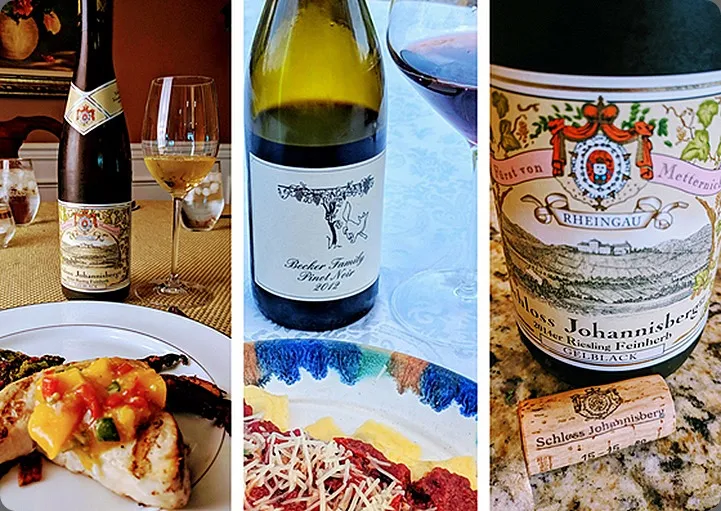
We opened a bottle of Furst von Metternich 2014 Schloss Johannisberger Riesling Feinherb Gelblack from Rheingau. Johannisberg is renowned for producing wonderfully refreshing Riesling, so much so that wineries in the US were producing “Johannisberg” Riesling until international trade agreements put the kibosh on that marketing ploy. Feinherb indicates that the wine is off-dry.

We paired the Riesling with mahi-mahi with peach salsa and tri-colored carrots. This is a classic Riesling with fragrant aroma of white blossoms. On the palate there is fresh apple and pear. There is a subtle fruit sweetness that is balanced with juicy acidity. This is a wine that will appeal to those with a dry palate as well as those who prefer more sugar. It was a nice match with the sweet and spicy salsa and our fish.

You Need To Know Spätburgunder


Spätburgunder is the most widely planted red wine grape in Germany. That makes more sense when you know that Spätburgunder is also known as Pinot Noir. Even so, I was surprised to learn that Germany is the world’s third leading producer of Pinot Noir (behind France and the US).

We enjoyed a meal of mushroom ravioli on the patio while enjoying the Becker Family 2012 Pinot Noir from Pfalz. German Pinot Noir is less tannic than warmer climate Pinot and this bottle offers wonderful fruit flavors of blackberries and strawberry.

Pfalz is a region that in years past was know for producing bulk-style, inexpensive wines. That has changed and no German region has shown a more drastic improvement in quality. The packaging of this bottle is unintimidating to US wine consumers. The grape variety is prominently shown without a confusing (to some) array of German words for villages, vineyards and quality level.

The Becker Pinot was an inspired pairing with the ravioli dish. The savory mushrooms blended seamlessly with the swirling fruit of the Pinot Noir.

Germany is one of the great wine producing countries of the world. It’s reputation is built on world-class Riesling – but surprises are in store. More than one third of German wines produced today are reds, including delicious Spätburgunder! White or red, Germany wines are a good pick for your summer meal.

Full disclosure: These wines were received as a marketing sample.