Showing posts with label White Wine. Show all posts

Friday, April 26, 2024

Adelaida Vineyards Releases Trio Of Spring Wine Winners

Rhône grapes add up to unique and refreshing new bottles from Paso Robles.


Adelaida Vineyards is a pioneer in Paso Robles wine. Established in 1981, it was the ninth winery in Paso. It is family-owned and all wines are 100% estate-grown and organically certified.

We were delighted to have the opportunity to taste three spring releases from this critically-acclaimed limited-production winery. The 2023 Adelaida Rosé, 2022 Adelaida Picpoul Blanc, and 2022 Adelaida Anna’s White all come from the Anna’s Estate Vineyard.

The vineyard is dedicated mostly to Rhône varieties. The white varieties (except for Viognier) lie at the lowest part of the vineyard where they benefit from cooler air. The red varieties are planted at higher elevations to capture greater sun exposure.

Adelaida is located just 14 miles from the Pacific Ocean. The afternoon sea breezes contribute to a dramatic diurnal temperature swing allowing slow ripening and the development of nuanced flavors and high acidity.


The Anna’s White is a standout wine that delighted us from the opening sip. The blend is 41% Grenache Blanc, 37% Roussanne, 17% Muscat Canelli, and 5% Picpoul Blanc.

It's golden yellow in the glass and coats the tongue with rich, strikingly complex flavors of tart green apple, stone fruit, and ginger. The Muscat Canelli adds an interesting twist to this wine. It's aged nine months in a combination of new French oak and concrete. This is a smashing Rhône-style wine. Highly recommended! SRP $45.


We paired the rosé with vegan African Peanut Stew with brown rice and crispy kale topping. The rosé is one of the best we've tasted this year. It has "a lot going on" with 74% Grenache and smaller amounts of Cinsault, Mourvedre, Syrah, and Counoise.  In the glass, the wine is a beautiful pink pearl. A contemporary style of rosé, it’s nice and juicy. It offers floral scents and rounded flavors of cranberry and cherry blossom on the palate. SRP $35.


We’ve been fans of the Picpoul Blanc grape for many years and were looking forward to tasting this new release. Our daughter is a vegan chef, and she whipped up a special dish to pair with the Picpoul Blanc, vegan Aloo Gobi Mutter (potatoes, cauliflower, and peas with Indian spices). The wine is aged in concrete eggs and neutral oak for nine months. We love that as it adds an extra layer of texture without smothering the flavor.

Picpoul translates to “stings the lips” and there is ample acidity here that creates a vibrant wine. It is flush with tropical flavors, minerality, and notes of stone fruit. It’s a refreshing glass that certainly goes with seafood or plant-based dishes. Only 293 cases were produced. The SRP is $40.

As if producing wonderful wine isn’t enough, Adelaida is a forerunner in the ecology movement. Only 10% of Adelaida’s 1,900 acres are planted to vineyards; more than 1,000 acres of land remain undeveloped and unfenced, for ecological and wild animal habitat. The winery also produces all of its energy needs from its own solar farm and recycles its pond water for storage and ranch use.

These wines are available directly from the winery via its website.

Full disclosure: These wines were received as marketing samples.

Friday, December 1, 2023

Ca’ Del Lago 2021 Lugana

With our daughter, a very accomplished vegan chef, in town. Her creation needed a special bottle, so we reached for a white wine from Lugana in Italy. The Lugana region is in the northern part of the country, on the south shore of Lake Garda and near the Dolomite Mountains.

The grape is Turbiana, thought at one time to be Trebbiano or a clone of Verdicchio. Testing has since proven it is it’s own distinct variety (although closely related to Verdicchio). The cooling winds from the Dolomites and the moderating effect of the lake allow the grapes to develop wonderful structure. The mineral-rich soils, mixed with clay, help impart a unique flavor profile.

Chef Rachel whipped up a plant-based meal that featured Caldo Verde, a Portuguese potato soup with greens and (vegan) sausage. In addition o a salad with lemon vinaigrette dressing, we enjoyed Bolhinos de Arroz, which are herbed rice cakes.

The wine has a nice structure, so much so that it might appeal to those normally favoring red wine. Tropical notes of pineapple, mandarin orange, and stone fruit give a pleasing mouthful of flavor. The fruit and acid are in good balance – no jarring acidity here, just a smooth ride. A thread of minerality gives a refreshing lift to the finish.

Subtle flavors of the vegan cuisine were a nice match for the Lugana. The 2021 Ca’ del Lago Lugana was a steal for $12.99 at Lidl. In fact, we enjoyed this wine so much I went back and purchased a couple more.

Lugana is a wine not widely distributed in the US. When you see it, don’t hesitate. Buy several and you’ll be pleased you did.

Thursday, July 28, 2022

Tarima 2020 Mediterráneo, Alicante

A project to reinvigorate heirloom Spanish grapes results in a delicious summer wine.

A Pair of Rare Grapes

Tarima is a project of enologist and winemaker Juan Cañizares and a brand of his winery Bodega Volver. It is designed to reposition Spanish quality wines and recover old indigenous vineyards. I’ve had the Tarima Monastrell. In Spain there are many different names for grapes. Not only do the names differ from other countries, but sometimes from regions within Spain.

Keep up with the latest. Follow us on Instagram!

The Tarima Monastrell (also known as Mourvèdre) was delicious and rocked a crazy low price. So when my friend Arthur (of Merlot to Muscadine fame) had a bottle of Tarima Mediterráneo to try, I was scrambling to get out the wine glasses.

The Alicante region is located in Southeast Spain. In this locale, the reds are made with Monastrell and Garnacha grapes. The white grapes are even less familiar, Merseguera and Moscatel.

Tasting The Unknown

Arthur was charged up about this bottle for good reason. He and Mary recently fulfilled their qualifications for the Wine Century Club, where you have to taste and document 100 different grape varieties to earn recognition. (I’m a proud member too!) They have eclipsed the century mark and continue to seek out exotic and strange grapes.

Never Miss A Beat – Follow Vino-Sphere On Facebook

The blend of Tarima Mediterráneo fills the bill splendidly. It is a 50-50 blend of Merseguera and Moscatel Alejandria. Merseguera is a little-known grape variety that grows along the southeastern coast of Spain. The grape is rarely seen outside of Spain and since it is lacking in acidity, it is primarily a blending grape.

After I unmasked the second grape, I realized that I had it previously on a trip to South Africa. Moscatel Alejandria is also known as Muscat of Alexandria. Muscat is a family of grapes that has hundreds of different varieties. Muscat of Alexandria has a high sugar content and is often made into sweet golden wine.

The Tarima Mediterráneo was a magnificent taste! In the glass, it is pale gold. Aromas of orange blossom and white flowers burst from the glass. This is a balanced sipper, with just the right touch of sweetness. On the tongue, this is a joyful and expressive wine. Peach is the primary flavor for me with a good mix of apricot with a touch of herbaceousness. Give a light chill to fully enjoy Mediterráneo (about 50oF ).

This gets two thumbs up, especially with a price of $10 to $13.

Monday, December 28, 2020

The Top White, Rosé, And Sparkling Wines Of 2020: An Exclusive Vino-Sphere List

Vino-Sphere Top Whites 2020Cheers to the end of 2020 and a new beginning in 2021. We’re celebrating with our year-end list of top wines.

Yes, it’s here – our annual listing of the best wines we’ve had in the last 365 days. In this first installment we look at whites, rosé, and sparkling wines.

Keep up with the latest. Follow us on Instagram!

This has clearly been a year unlike any other – at least in our lifetimes. Normally we’d be combing the countryside and trotting the globe searching for adventure and great wine. Alas, the COVID pandemic put the kibosh on that.

We were able to savor some really great wines despite the global health crisis. To fully “test-drive” a wine, we like to share with friends. We were able to do so on a limited basis with socially-distant tastings – but big wine dinner plans were put away for a future time. The year ahead, at some point, offers hope of normalcy.

Never Miss A Beat – Follow Vino-Sphere On Facebook

So, we’re proud to present to you our list of Top 20  White, Rosé, And Sparkling Wines. Some are from famed producers and wine regions, others are small producers or wines that just tickled our fancy. Pop open a bottle and savor our reviews and articles with all the details. An asterisk denotes a wine of distinction.

Vino-Sphere Top 20 White, Rosé, Sparkling Wines of 2020

Monday, December 7, 2020

Plob 2016 Cliffhanger Riesling, Mosel

Cliffhanger 2016 RieslingLooking for food-friendly, easy-going wine? Look no further than this Mosel Riesling.

Riesling Rendezvous

What is the world’s most versatile wine grape? Probably Riesling.

Never Miss A Beat – Follow Vino-Sphere On Facebook

It can be finished into austere, bone-dry wine, or into a succulent late harvest bottle. Depending on the winemaker, it can land anywhere in between.

Our most recent rendezvous with Riesling was during a socially-distant game night with relatives. As you can see, they had another traveler with them, Kiwi the parrot!

We opened the 2016 Cliffhanger Riesling. This is produced by PLOB, which is the project of winegrowers Axel Pauly, Thomas Ludwig, Sebastian Oberbillig and Markus Berres – hence the company name.

Keep up with the latest. Follow us on Instagram!

The grapes come from the steep, rocky soils of the Mosel Valley. The vines root deeply into the soil. The slate rocks absorb, then radiate back, heat from the sun. The steep slopes guarantee added sunlight hours and the Mosel River helps moderate the chilly weather. The long growing season allows the grapes to develop aromatics and character.

The four producers ferment their grapes separately and then the wines are blended together. Then it is aged “sur lee” on the dead yeast and sediment to gain a creamy texture.

This is a feinherb (slightly sweet) wine, but one that we find to be balanced. In the glass this is a pale yellow with green highlights. There are flavors of apple and peach wound together with mineral notes.

The wine is vibrant and a good pick with seafood or Asian cuisine. Of course, it is great on its own.

Full disclosure: This wine was received as a marketing sample.

Friday, August 28, 2020

Delle Venezie DOC Unites To Promote Italian Pinot Grigio

Delle Venezie DOC, an Italian wine region devoted especially to Pinot Grigio is boosting awareness and sales worldwide.

Delle Venezie DOC Pinot Grigio

Global Pinot Grigio Boss

To say Italy is pretty good at Pinot Grigio is a vast understatement. Italy is the number one country for Pinot Grigio production and boasts more than 40% of the world’s Pinot Grigio acreage.

Never Miss A Beat – Follow Vino-Sphere On Facebook

Pinot Grigio is Italy’s top exported Italian grape variety. Ninety-six percent of its Pinot Grigio is exported. Can you guess who is the biggest customer? Yes, it is the US.

A complex and versatile grape, Pinot Grigio was found in the Venetian area at the end of the 1800s. It’s an area with winemaking roots that date back to the 7th century BC.

Unifying Italian Pinot Grigio

While Pinot Grigio can be found across Italy, 85% of production comes from the regions of Friuli Venezia Giulia and the Veneto and the province of Trento. In 2017 producers came together and DOC delle Venezie was established.

Keep up with the latest. Follow us on Instagram!

In Italy a DOC represents a region where a set of regulations ensures the quality from a particular region. It is a step up from an IGT wine, which is a wine with geographic indication, and a significant upgrade from table wine. The three areas united under the DOC encompass more than 63,000 acres of vines.

We recently attended a webinar hosted by Consorzio DOC delle Venezie as part of the Wine Media Conference. It was an opportunity to taste and learn about premium Italian Pinot Grigio. We were guided through a tasting of Venezie Pinot Grigio by Laura Donadoni, a sommelier and authority on Italian wine.

“Pinot Grigio has really been underestimated,” said Donadoni. “The quality has greatly improved.” Going forward DOC delle Venezie will be the region that carries the banner for Italian Pinot Grigio.

The average temperature during growing season is 57 to 59 degrees Fahrenheit. She notes that the region, which includes the foothills of the Italian Alps, features acidity and complexity lacking in Pinot Grigio from warmer climates.

A Sparkling Surprise

We tasted two bottles of Venezie Pinot Grigio: the 2018 Cupcake Pinot Grigio and the Bolla Pinot Grigio Spumante. I had seen Cupcake on the store shelves and always assumed this was a California brand. I was only half right. Although the winery is located in Lodi, its Pinot Grigio is made with grapes from Venezie.

The Cupcake shattered my preconceptions and was quite delicious with crisp notes of pear and lemon. The acidity lingered and begged me to pour another glass, which I did.

Bolla is an Italian winery with a far-reaching tradition. It was one of the first wineries from the region to become recognized in the US and was championed by Frank Sinatra. Bolla also stakes a claim as the first winery to market Amarone and brands its top-tier Amarone as Le Origini.

The Bolla bottle was a surprise as I don’t recall trying a sparkling Pinot Grigio before. The bubbles tickle and are celebratory, but don’t last very long. I kept recharging the glasses to keep the fizz going. The flavor is fresh and bright apple with a touch of citrus. This could make a good substitute for Prosecco. Both wines can be found for under $10, making them quite a value.

It’s time to revisit Italian Pinot Grigio and drink in the refreshing notes of DOC della Venezie.

Monday, August 3, 2020

Pick Six! Some Top Picks To Celebrate National White Wine Day

Italian White WinesQuench your summer thirst with these top white wines that won’t pinch your wallet.

Exploring Refreshing Alternatives

The North Carolina summer can try the hardiest soul. With daily highs in the mid-90s and heat indexes in the triple digits the heat is sweltering.

Keep up with the latest. Follow us on Instagram!

Thankfully relief can be found in icily chilled white wine – and there’s no better time to pop open a bottle than right now. National White Wine Day is August 3.

Here’s a refreshing half-dozen picks to tide you over through the summer heat. Many are grapes you may not have yet tried, but all are below $25 – so these wines are refreshing in more ways than one.

Gradis’ciutta Ribolla Gialla 2018 (SRP $21.99)

Ribolla Gialla is a new grape for us. The grape is an ancient European variety that can be traced back to the 13th century and made a comeback in the 19th century. Notes of nuts and apples with creamy texture. No one in our group had tasted this grape before, but it became a favorite. An Italian patio champion!

Vinho Verde and Pinot Grigio

Umani Ronchi Vellodoro Pecorino 2019 (SRP $16.99)

Italy’s Pecorino is known as the “grape of the sheep” for the presence of this grape in sheep grazing territory. This is a dry wine with soft fruit, good acidity and herbal notes. This is perfect with fish, cheeses and pasta. A steal at $17.

Never Miss A Beat – Follow Vino-Sphere On Facebook


Gradis’ciutta Friulano 2018 (SRP $21.99)

Friulano is the grape in the famed white wines of Italy’s Friuli region. Also known as Sauvignon Vert, this wine has notes of peach and apples and a rounded finish with some savory notes for interest. One sip transports you to the sun-dappled countryside of Italy!

Umani Ronchi Villa Bianchi Verdicchio dei Castelli di Jesi 2018 (SRP $16.99)

Verdicchio means “little green one” and the grapes are straw colored with green tinges. This is an elegant wine with citrus and minerality and a bit more body than you might expect. It gets brief aging in stainless steel to preserve its fresh flavors.

Azevedo Loureiro e Alvarinho Vinho Verde 2019

Vinho Verde, from Portugal, is know for its amazing refreshment as well as its sub-$10 pricing. Azevedo checks all the boxes. With 70% Loureiro and 30% Alvarinho, this is a fresh, easy-drinking bottle we enjoyed with a patio meal. Citrus and tropical fruit highlight this tasty treat. Vinho Verde is a nice alternative to rosé.

Barone Montalto Pinot Grigio 2019 (SRP $12)

This is a light and lilting wine with elegant flavors of orange blossom and pear. Grapes for this Sicilian wine benefit from a Mediterranean climate and clay soil. We loved the flowing lime highlights with clean, fresh flavors. A perfect wine for pizza or fish. This can be an everyday sipper throughout the summer. 

As we close, here are a couple of thoughts about summer white wine. First, you must make sure the wine is properly chilled. You won’t be able to do so if you put the wine the fridge an hour before guests arrive. Put your wine in the fridge the day before. Your red wines, if being served outside, will also benefit from a slight chill.

If you are entertaining guests outside, don’t bring the chilled wine out until you guests have arrived. That summer heat will melt the ice and warm up the wine in no time. If you are serving appetizers, do so a little bit at a time. No one wants to eat shrimp that’s been sitting out in the sun for three hours.

Cheers and keep it cool!

Full disclosure: These wines were received as marketing samples.

Wednesday, July 15, 2020

The Passion And Perfection Of Italy’s Lugana DOC Wines

IMG_20200607_134531_310Are you a lover of Italian wine? It’s time to become familiar with the Lugana DOC.


Learning Lugana


I’m a Certified Specialist of Wine. I’ve spent countless hours studying obscure Italian grapes and memorizing the location of wine regions from the top of the Italian boot to the tip of the toe. Yet I must admit I drew a blank when the name of Lugana was raised.


Keep up with the latest. Follow us on Instagram!


Lugana DOC is a small wine region that straddles the border between Lombardy and Veneto in Northern Italy. It produces white wine only and uses the high-quality Turbiana grape variety, also known as Trebbiano di Lugana. during a recent Wine Studio education program, we dug into the finer points of these wines and this unique region.

IMG_20200609_200119

Lake Garda Grown


Lugana lies just south of Lake Garda, Italy’s largest lake and one of the most beautiful and popular tourist destinations in Northern Italy. Centuries ago the area was covered by “Selva Lucana”, a really dense marshy forest. 
Vines in the area date back to the Bronze Age. As early as 1595, Lugana was praised by philosopher and author Andrea Bacci as “lusty, agreeable wine.”

The soil is sedimentary clay deposited by movements of the glaciers. It is chalky and rich in limestone and mineral salts. The wines are some of the top whites in the country. They have clean, powerful scents that combine hints of almonds and citrus fruits, as well as acidity, tanginess and a well-balanced structure.

Lugana rocks in the “climate cradle” created by Lake Garda. The lake moderates the temperature with breezes that are mild and fairly constant. There is little difference between day and night temperatures, making it ideal for the grape Turbiana.

IMG_20200616_152137

The Turbiana Touch


For years Turbiana, also called Trebbiano di Lugana, was confused with Verdicchio. Studies have shown that it is indeed its own unique cultivar. The grapes are medium-sized and thick-skinned with a lower yield than other Trebbiano.

Winemakers produce five different styles of Lugana DOC wine: standard Lugana, Superiore, Riserva, Vendemmia Tardiva (Late Harvest) and Spumante (Sparkling). Ninety percent of Lugana wine is the “standard” Lugana – fresh and young with citrus and floral notes.


Lifting A Glass Of Lugana!


We had a chance to taste through four bottles of Lugana. Here are the food pairings and tasting notes:


Citari 2019 Sorgente - We started with a raw summer squash ravioli with vegan almond "ricotta" followed by linguini in a white clam sauce. The Sorgente is a light-bodied white wine with tart citrus and bright acidity. There are floral and starfruit notes on the nose.

Lugana DOC Wine
Marangona 2017 Tre Campane - The Marangona 2017 Tre Campane is fresh with citrus notes of orange, a body that mellows in the glass. Blossom notes and a dash of salinity. Tre Campane means 'Three Bells.' The wine is aged in cement -- no hiding the great flavors behind oak! Our culinary team whipped up Tomato and Corn Whole Wheat Rotini and White Bean & Beet Green Sauté.


Olivini 2016 Brut - Our meal choice was white pizza with herbed Alfredo sauce and lemon garlic kale. The wine has floral and apple notes and a good savory side thanks to 48 months on the lees. The metodo classico is used. That's the same way Champagne is made, with a second fermentation in the bottle.


Cà Maiol 2018 –
This was the most complex of the Lugana wines we tried. It starts with a nice aroma of flower blossoms in the rain. It is tangy with waves of salinity and minerality. Flavor notes include apples and roasted fruit. Served with chicken and penne pasta in pesto cream sauce and a beet salad with herbed goat cheese and walnuts.

Lugana is a premium white wine that should be on your radar in your hunt for elegant Italian wine. It’s food friendly with a lively flavor profile that’s sure to please.

Thursday, March 19, 2020

Petit Manseng Wines Creating A New Stir

P1070217This French grape is finding a home among the hills of North Carolina. It’s also known as Esciberou, Ichiriota Zuria Tipia or Mansic. Ring a bell?

Petit Manseng is a rather obscure white grape grown primarily in Southwest France. The berries are small with thick skin and it's often used to produce late harvest wine. The grape is gaining popularity in North Carolina as well as states like Ohio and Virginia as it is well suited to the climate and soil.

Never Miss A Beat – Follow Vino-Sphere On Facebook

The grapes hang in loose bunches that allows air to circulate around the fruit during hot, humid summer days. This  helps minimizes mold and rot – conditions that can ruin a grape harvest.

Petit Manseng Blind TastingWe recently had a chance to attend a Petit Manseng blind tasting and wine thrown-down hosted by Jen and Dathan of Triangle Around Town. Featured were five Petit Manseng bottles from NC and Virginia:
  • 2016 Jones von Drehle Petit Manseng (North Carolina) – A balanced wine with hints of lime and tropical fruit. A straw color with a touch of minerality. Light body.
  • 2016 Horton Vineyards Petit Manseng (Virginia) – Light gold in color. Refreshing on the palate with a touch of sweetness and a rich body.
  • 2018 Jefferson Vineyards Petit Manseng (Virginia) – Pronounced intensity with threads of honey, ginger and citrus. Light gold in color with platinum highlights. This wine delivered the goods and was my top pick of the night!
  • 2018 Williamsburg Winery Petit Manseng (Virginia) – Plenty of acidity and complexity in this wine, which was the favorite of several attendees.
  • 2017 Jones von Drehle Petit Manseng Barrel Select (North Carolina) – This is a very popular wine for Jones von Drehle. There are pronounced floral and oak flavors. This was also a top pick for the group, while some (yours truly included) felt the ABV was a bit too high.

Keep up with the latest. Follow us on Instagram!

The take-away from the tasting is that Petit Manseng is breaking into the mainstream. Often used to create sweet wines or in blends, Petit Manseng can stand on its own as a versatile and beautiful grape. I didn’t realize its popularity in Virginia, which some time ago adopted Viognier as its “signature” grape. The wines we tasted should make Virginia rethink its choice!

P1070206In North Carolina, Petit Manseng is trending as a popular pick for winemakers. Its characteristics mean Petit Manseng is less susceptible to disease in the vineyard. High acidity allows additional hang time on the vine where it can develop some nicely nuanced flavors.

About a half dozen North Carolina wineries sell Petit Manseng and several more vineyards grow it. If you haven’t yet tried Petit Manseng, treat yourself to a bottle made with this up-and-coming grape.

Tuesday, August 6, 2019

Dry Creek Vineyard 2018 Fumé Blanc and 2018 Sauvignon Blanc

DCV 2018 Fume Blanc and Sauvignon BlancHusband and wife don’t always agree. Such was the case with these two Sauvignon Blanc releases from Sonoma Country.

A Tale Of Two Palates

Anytime two different wine drinkers imbibe, you can expect a difference of opinion. One Instagram contributor I follow, for example, keeps posting photos of visits to interesting wineries in our state – but every wine shown is a sweet fruit sugar bomb. That’s clearly out of step with where I am in my wine appreciation journey.

Never Miss A Beat – Follow Vino-Sphere On Facebook

My wife (known as the Green Dragon) and I often think alike. That’s not so strange when you’ve been married for a while like we have. It’s not uncommon for me to say, “I’d really could go for some Mexican food tonight” and she’ll say, “I was thinking the same thing.” Our taste in wines are usually in sync too – but not always.

A Doubletake On Sauvignon Blanc

We recently opened two new releases from Dry Creek Vineyard, the 2018 Fumé Blanc, Sonoma County, and the 2018 Sauvignon Blanc, Dry Creek Valley. Although both Sauvignon Blanc, they are two different animals in the glass. We had two different favorites.

Keep up with the latest. Follow us on Instagram!

Fumé Blanc is an approved alternate name for Sauvignon Blanc and was coined by Robert Mondavi when he was trying to jumpstart the California wine industry in the 1960s. While some associate Fumé Blanc with an oak finish, that isn’t always the case. This Fumé is fermented in stainless steel with no oak aging.

The Green Dragon leapt for joy with the Fumé Blanc. The racy acidity, aroma of cut grass, and dynamic citrus flavors push all the right buttons. Made with grapes from Dry Creek Valley and Russian River Valley in Sonoma, this is a perennial favorite with us. It is refreshing and intense with pure flavors. At only $16, this is a flavorful value.

Going For A Different Twist

While Green Dragon was going ga-ga over the Fumé Blanc, I was appreciating the Dry Creek Valley Sauvignon Blanc. It offers complexity and style at an amazing price point of just $20. To start with, it’s not just Sauvignon Blanc. It has 15% Sauvignon Musqué and 9% Sauvignon Gris. The Sauvignon Musqué, a clone, delivers added body while the Sauvignon Gris gives a unique texture to the wine. All grapes come from the Dry Creek Valley AVA.

So, instead of a New Zealand style Sauvignon Blanc, there is a more sophisticated quality. As if the grape selection weren’t enough to pique your interest, a portion of the wine is fermented in acacia, chestnut and neutral French oak barrels. That’s cool.

This wine tips toward tropical fruit flavors of pineapple and tangerine. This has a fuller body than the Fumé Blanc with the acidity not as pronounced. It has a grand elegance you wouldn’t expect at this price and is my pick of the two.

Both bottles will make great pairings with light summer fare including chicken and fish. Of course, sipping them nicely chilled on a warm summer evening works too.

Full disclosure: These wines were received as a marketing sample.

Monday, July 29, 2019

Centanni 2017 Passerina, Offida DOCG

passerinaWhen I’m in the mood for a refreshing wine, I usually grab a glass of chilled Passerina. Said no one. Ever.

Wine Century Club Territory

After seemingly years of waiting, I finally got my certificate stating that I am indeed a member of the Wine Century Club. The main requirement is that you taste a minimum of 100 different grape varieties. You have to record the variety, the wine and the date.

Never Miss A Beat – Follow Vino-Sphere On Facebook

In my tastings, I’ve tasted many usual grapes. Everything from Assyrtiko to Zweigelt. I never, however, have sampled Passerina. I’ve also never said, “Honey, it’s been a long day. Do we have a chilled bottle of Passerina?”

Maybe that should change. As we discovered, it makes an enjoyable wine. It also is a great way to check off another obscure grape on your Wine Century Club credentials.

Final Hurrah From Invino

We are big supporters of local wine shops, for many reasons. Your local megalithic grocery store doesn’t need your wine purchase to stay in business. Your local wine merchant just might. Your local wine shop will also have more interesting selections and knowledgeable staff.

Keep up with the latest. Follow us on Instagram!

That being said, I do purchase wine online as well. There are some great deals to be had on wines not available in my home town. Over the past decade or more, my favorite online site has been Invino. Recently I decided it was time to stock up on everyday white wines. Amongst my shipment from Invino, I picked up two bottles of the Centanni Passerina at a mere $8.99 each. (As a footnote, Invino has recently morphed into the thoroughly disappointing Cellar Thief online site.)

Puzzling Italian White

This Passerina is from the Offida DOCG within the Le Marche wine region of Italy. Le Marche is in central-east Italy, bordering the Adriatic Sea. Le Marche wines and beautiful and expressive. Verdicchio is Marche’s top white grape but Passerina was previously off my radar. It has small berries, often seedless.

The flavor profiles of popular white wines like Chardonnay and Sauvignon Blanc are well known to Americans including us. Passerina, on the other hand, takes time and several sips to decipher.

There isn’t a forest of oak like some Chardonnay. The acidity isn’t off the charts as in zippier Sauvignon Blanc. Instead this is a mellower experience.

The Centanni is a subtle, delicate wine. The flavors are fresh, indicating stainless steel finishing. Notes of flower blossoms and herbs help create a distinct and enjoyable sipping experience.

Pair it with tapas or shellfish. Keep it simple – intense flavors or fancy sauces could muddle the smooth clean notes of the wine.

It’s an enjoyable bottle. If you see it, don’t pass on the Passerina.

Tuesday, February 12, 2019

Pair Of German Wines Show Dry Defiance


Dry German wines are trending and changing perceptions.

Dry January? How About Dry Wine?


I’m note sure where the concept of Dry January came from, but as a wine writer you can imagine I’m not completely on board. I have in the past abstained from wine during Lent, but it was a challenging 40 days.


A refreshing alternative comes from Germany. Instead of having a dry month, how about some very nice dry wine? That’s an idea we certainly can support. We tried a pair of dry German whites that we found to be outstanding.

The Red Hang


Riesling is one of our favorite grapes and we are partial to the drier style. We tried the 2014 Gunderloch Nackenheimer Rothenberg Riesling Trocken from Rheinhessen. Like many German wines, the long name can appear intimidating, but conveys some important information.


The Rothenberg Vineyard in Nackenheim is on the Rhine River and is on the north end of what is known as the Red Hang. The vineyard is steep, with slopes ranging from 30% to 80% and the soil is made of 290-million-year-old red slate.Trocken indicates that the wine is dry.

The Grunderloch winery has 28 acres that are planted to Riesling, Silvander, Rulander and Gewurztraminer. They produce about 9,000 cases of wine annually.

Inspired is a good description of this wine. Although dry in style, the flavors are not muted. The unique soils lend a nice flowing minerality and a bright acidity creates a crisp finish. The swirling flavors include citrus and apples with a touch of herb. The wine is light gold with green reflections.
This Riesling is a Grosses Gewächs wine. All Grosses Gewächs comes from a Grosses Lage (‘great site’), the best vineyards according to the German VDP classification system. We’ve found “GG” wines to be outstanding.

Weissburgunder Anyone?


That Germany excels in white wine is not a recent discovery. What is relatively new is the increased production of Weissburgunder, known elsewhere as Pinot Blanc. The grape grows in fertile or chalky soil and ripens late. It is a Pinot mutation, sharing genetics with Pinot Noir and Pinot Gris.

In the 1970s, less than 1% of German vines were Weissburgunder. Today that figure is 5%, a noticeable increase. We sampled the 2015 Alexander Laible Weissburgunder from Baden. Baden is the southernmost of Germany’s wine regions.

This was a pleasurable wine to sip. The flavors are subtle peach and white flowers with a dash of herbs. The Laible Weissburgunder is perfect for any light chicken or seafood dish or, as we did, just enjoying in the evening. It is medium bodied and refreshing.

If you have to endure a “dry” month or winter, we suggest that you do it with some dry German white wine!

Wednesday, September 19, 2018

Bollina Corte Medicea 2015 'Cletus' Toscana IGT, Tuscany

Super Tuscans break the mold. Can “renegade” Italian winemakers deliver a superior white Super Tuscan?

Red And White?


Super Tuscans are supposed to be red, aren’t they? Some of the world’s greatest wines are red wines of Italy’s Tuscany region that “break the rules” and use international grape varieties like Cabernet Sauvignon and Merlot.


Hold the phone! Tuscan winemakers produce white Super Tuscans also. We recently uncorked the 2015 Cletus Super Tuscan from the Bollina Vineyard.

Cletus is is complex blend of Chardonnay, Sauvignon Blanc and Viognier. Quite a change from the often unremarkable Pinot Grigio which gush forth from Italy.

Verdict Of The Glass


These are three grapes you wouldn’t normally think of joining together, but it works splendidly. Tuscany’s glorious sunshine brings out the best in the fruit. The body of Cletus is medium, which is more substantial than many whites. The flavor profile is bouncy, with bright green apple and melon notes being woven together with a lively acidity. This is  a luscious mouthful.


We picked this bottle up online for a mere $14.99, a steal for this high quality white which usually goes for about twice the price. Super Tuscans typically give winemakers more leeway to be creative, since they are not regulated by the rules of the regulating counsel of the wine region. We’re happy to say that this white wine lives up to the “super” title.


Monday, June 25, 2018

Mother Rock “Force Celeste” 2016 Chenin Blanc, Swartland


Is Chenin Blanc an overlooked white? Perhaps, but it is embraced in South Africa. We dive into a bottle from Swartland to learn more.

Famous French Roots


We are fans of Chenin Blanc and lovers of South African wine. I recently purchased a bottle of the 2016 Force Celeste Chenin in the discount room at Great Grapes in Cary.

When the International Drink Chenin Day rolled around, it was a perfect time to open this South African bottle.


Chenin Blanc is a French grape that reaches perhaps its best expression in the Loire Valley of France. It is the grape used in Vouvray, producing refreshing wines ranging from off-dry to sweet. It is also used in sparkling wines in the Loire region of Saumur.

South Africa has been producing Chenin Blanc for centuries, although there it is often called Steen. Unfortunately, only a small trickle of South Africa’s best wines make it to the US. There is a flood, though, of lower priced and lower quality South African Chenin Blanc. These wines are often produced by cooperatives and are non-descript compared to the elegant Chenin Blanc wines made by the top producers.

Celestial Chenin


The Force Celeste pushed three buttons for me: Chenin Blanc, South Africa and Swartland. In the last decade, Swartland has emerged as a fine wine region. As a result, I grabbed it immediately when I spotted it on the store shelf.


Force Celeste is made from a selection of old dry-farmed bush vines grown on decomposed granite. No enzymes, yeast or acid were added. The bottle is also unfiltered and unfined. The label art is also appealing, showing a trio of lightning bolts racing from an ominous cloud in a bold woodcut style design.

Chenin is a very accessible grape – it’s easy to enjoy. The Force Celeste is primarily aged in steel tanks to retain the fresh flavors with 20% aged in neutral French oak barrels. The wine spent nine months on the lees (the dead yeast cells and sediment) to impart deeper flavors.

We opened this on a day when it was smothering hot. The Celeste Force has nice pineapple notes with a vein of minerality. There is a lilting twist of acidity.

The wine retails for about $21 and I was able to pick it up for $15. That’s a tasty deal. If you haven’t tried Chenin Blanc before, I suggest you give it a swirl. Force Celeste is a nice bottle to begin your exploration.

Wednesday, May 23, 2018

Rías Baixas Albariño Impresses With White Wine Artistry


Albariño is Spain’s greatest white wine. It’s home is in Rías Baixas in the northwestern region of Galicia. We uncorked 11 bottles to learn the secrets of this refreshing grape.

Albariño Extravaganza


When we were invited to participate in an online tasting of Albariño from Rías Baixas, we were all in. Albariño is one of our favorite white wines and my visit to Rías Baixas a couple years ago etched memories of lush landscapes, stormy seas and friendly people. We had just one problem.


The virtual tasting, courtesy of Rías Baixas Wines and Snooth, the popular online home for wine lovers, featured 11 bottles. That’s a daunting task, even for us. So the invitations went out for an evening of Albariño. Our dinner party totaled 11 persons, forming a neat symmetry with our 11 bottles. (No, we didn’t sit there and each drink a bottle!)

Culinary treats were provided by our guests and the Green Dragon. The Green Dragon prepared broiled octopus (pulpo) and a seafood paella. Our top-chef guests brought a multitude of treats including crab cakes, bacon-wrapped figs, Spanish olives, Manchego cheese, salad and Galician almond cakes. I was focused on my critical tasks: chilling down the wine and uncorking and unscrewing the bottles.

Sipping The Best Of Spain


Some people go ga-ga over an oaky bottle of Chardonnay. That’s not our palate profile. Oak can cover a multitude of sins and tends to blot out the fresh and delicate fruit of a white wine. So, we love white wines with crisp flavors, minerality and a minimum of oak aging.


I had six bottle stashed in the refrigerator and the rest in a cooler of ice. Rob provided a random number and that was the bottle I poured. That worked fine until about wine number six, when I realized we’d be tasting wine until a week from Tuesday. From that point on I offered a choice of two bottles at a time, and the guests could circle back to try the second one.

There were a number of take-aways from our wine dinner. First, Albariño is a versatile wine that pairs magically with seafood. I had a steady diet of octopus while in Spain, and the charred octopus was a brilliant pairing. Many of our guests hadn’t tasted Albariño before and so there were several who discovered a new favorite wine. The third insight is that winemaking techniques, different growing areas and (in some cases) blending can create surprising differences in the wine.

Most of what we tasted were 100% Albariño, but a pair from the O Rosal growing area featured a blend of Albariño, Loureiro and Caiño. Most have a lower alcohol percentage than typical wine at about 12.5%, which helps it be more food friendly.

Tale Of The Taste


Here are our tasting notes from our Rías Baixas event (with growing region and SRP):

  1. Condes dei Albarai (Val do Salnés) - $15 Given a “we like” thumbs up from our group, the Albarai uses vines older than 20 years and has tropical fruit notes.
  2. Bodegas As Laxas (Condado do Tea) - $18 Offers nice fruit on the back of the palate. Fresh flavors of apple and apricot.
  3. Don Pedro de Soutomaior (O Rosal) - $18.99 Named for a noble Galician warrior and knight whose victories were attributed to rising early. Lipsmacking good with smooth flavors of green apple. Great packaging!
  4. Pazo Señorans  (Val do Salnés) - $25 This was my favorite.Aged five months on the lees, this has a complexity and herbacious, grassy notes that elevate it.
  5. Valmiñor (O Rosal) - $18.99 A 100% Albariño from O Rosal. Melon and grapefruit flavors.
  6. Señorío de Rubiós Robaliño. (Condado do Tea) - $18 This was an early favorite with our group. Great acidity and vivid flavors of citrus and peach. A top pick.
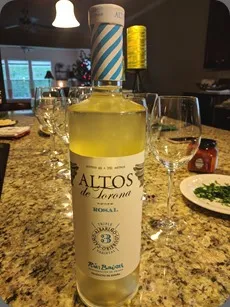
  7. Altos de Torona (O Rosal) - $20 This was the number two top choice. It’s bottle is most distinctive and has flowing flavors of green apple. Good acidity (a bit too much for some guests).
  8. Nai e Señora (Val do Salnés) - $15.57 Nai is a tribute to contemporary women. That and its stylish label made it a favorite with all the women who started singing “Nah na na na, hey hey hey, good bye! Tropical and aromatic.
  9. Fillaboa (Condado do Tea) - $20 Good acidity with elegant flavors of pineapple and citrus.
  10. Paco & Lola (Val do Salnés) - $21.99 A distinctive polka dot label and irresistible flavor palate of citrus and intense tropical fruit make this a favorite.
  11. Terras Gauda (O Rosal) - $23.99 Here is the O Rosal blending at its best. There is fruitiness from Albariño, intense aromatics from Loureiro and structure and exotic fruit notes from the Caiño.

Albariño from Rías Baixas is a perfect wine for warm weather sipping or pairing with your casual meals, particularly seafood. The cost is wallet-friendly. Our bottles started at $15 and topped out at $25 – not bad for one of the world’s best white wines. Snooth is offering a special deal on Albariño and you can find it here. It is also widely available in wine shops. Don’t forget the octopus!

Tuesday, April 3, 2018

Carlin de Paolo 2015 Estate Arneis, Terre Alfieri, Italy

The Italian grape Arneis is called “Little Rascal.” We paired the rascally grape with a hearty vegan meal.


Plant-Based Pairings


Vegan meals can provide a delightful wine pairing challenge. I discovered this when our daughter Rachel, a vegan baker and chef, visited for a couple months.


Normally I focus on the main entree, which is usually meat or fish. From there, the wine selection process can be narrowed to a few key decisions down the pathway to the perfect wine.

Taking meat and seafood out of the equation means I’ve had to power up my wine pairing skills to find the right picks for Rachel’s plant-based dishes.

Northern Italian Flavor


A recent meal was centered on Quinoa topped with garlic sautéed asparagus and mushrooms with a side of citrus-maple glazed root vegetables. Vegan cooking done right is loaded with flavors. This meal highlighted a unique ensemble of roasted beets, carrots and potatoes coated with a delicious glaze that had sweetness as well as a citrus zing.


I needed something that would accentuate the flavors but not overwhelm them. Scanning over my inventory of wine, I locked on the 2015 Carlin de Paolo Arneis. We’re big fans of Arneis, first tasting this unique white grape a half dozen years ago with a superb Italian meal in San Diego.

The bottle comes from the Terre Alfieri DOC in the Piemont region of Northern Italy where Arneis is the primary white grape. The Carlin de Paolo is 100% Arneis and is straw yellow with green highlights in the glass.

Aromas are those of tropical fruit. On the palate there are soft fruit flavors of citrus and white flowers. The tannins are strong enough to stand up to the robust root veggies. The finish of the wine is crisp and dry.

Our Arneis was a smashing pairing with the vegan dish, but it can also be enjoyed as an aperitif. It also pairs well with fish and white meat – just don’t tell Rachel! For more information Rachel’s cooking, visit Earth N Oven.

Monday, March 5, 2018

Pedroncelli Winery Marks 90 Years of Quality and Innovation

During the last 90 years Pedroncelli Winery has forged a reputation for “firsts” that have quenched our thirsts.

A Family Tradition


In 1927 Giovanni and Julia Pedroncelli purchased a shuttered winery, a vineyard and a home.
Working together they initiated a family business which has spanned four generations.

They have quite a few “firsts” to their credit, including the first rosé from Zinfandel, putting Sonoma County on the label and the first in the region to plant Cabernet Sauvignon.

We were eager to “uncork” the Pedroncelli Winery during our recent Wine Studio educational session.

Making “Friends” With Sonoma County


Our first Pedroncelli wine was the approachable 2017 friends.white Sonoma County white blend. The winery offers both a red and white blend designed to be casual and easy drinking fare.

Never Miss A Beat – Follow Vino-Sphere On Facebook

The Green Dragon prepared a tasting menu to enjoy this white wine. We had grilled chicken breast with a teriyaki ginger glaze and fresh pineapple and Fresno pepper sauce accompanied by purple potatoes with an herbed Feta topping.

I unscrewed the top and poured a couple of glasses. Two things struck me. First, the cap has a smiling “old school” emoji of a winking smile (which is also on the label). Second, After I set down the bottle, there was a playful gaggle of large bubbles in the bottle that caused me to smile.

friends.white is a blend of Sauvignon Blanc and Gewürztraminer. The two grapes are balanced nicely. To start, Friends is focused on the Sauvignon Blanc, with nice rounded tropical fruit notes. It was only later that the Gewürztraminer hallmark floral aroma and flavors began to surface.

friends.white is an enjoyable casual wine that paired nicely with our unique chicken dish. This is a great $14 buy!

A Visit From “Mother”


Our exploration of Pedroncelli vino continued with the 2015 “Mother Clone” Zinfandel, Dry Creek Valley. This is a wine we are familiar with, tasting it first when we bought a bottle while volunteering at the Fabulous Food Show in Cleveland.

Check out our reports on 
more than 100 wineries

The Pedroncelli historic Zinfandel vineyards were first planted to the grape in 1904. A second generation was cloned from these old vines and replanted block by block starting in the 1980s. Fruit from the new vineyard along with a small amount of fruit from the remaining over 100-year-old vines make up Mother Clone Zin.

This wine, priced at $19, is one of the best Zinfandel bargains out there. There are many “gimmick” Zinfandels, with labels that play off “Zin” and “sin,” glutting the market. Mother Clone, though, is the real deal. It delivers Dry Creek Valley goodness at an amazing price.

Speaking of amazing, Green Dragon prepared a tasty meal to accompany our Zin. We enjoyed sliced filet of beef with a Zinfandel and mushroom reduction sauce served with a spinach, avocado, bacon and egg salad.
Mother Clone Zin is an enjoyable mélange of red and black berries accented with spice notes. It has 14.9% alcohol, but the tannins and acidity balance so well that there is no “heat” to this sipper. 

Broiled meat and Mother Clone is a great pairing. It’s a great wine solo, as well. In fact, this is not only high on the QPR (quality price ratio) list, but is a wine that is sure to be enjoyed by a wide spectrum of your friends. No special wine knowledge is needed to appreciate this Zin.
Pedroncelli also has a line of small lot and vineyard designated wines as well as reserve and limited production wines. We haven’t yet tasted these, but give them a hearty recommendation based on the two we sampled from their entry level.

Ninety years and going strong, the Pedroncelli roots run deep. We encourage you to pick up a bottle or two and get to know the family.

Wednesday, December 27, 2017

Honoro Vera 2015 Blanco, Rueda

One should never buy wine based on a label design alone. Just like you should never judge a book by its cover. But hey, I’m only human.


Rueda Refreshment


My assignment was simple enough. Pick up a refreshing white wine that would pair well with seafood. Green Dragon was whipping up shrimp and grits and so I was scanning the shelves of the local wine shop looking for a bottle to chill.

My attention was captured by the Honoro Vera Blanco, a white wine from Rueda. Rueda is a Spanish wine region that produces some of the country’s best white wines. The wines are based primarily on the local Verdejo grape but Sauvignon Blanc is also used. Not only are the wines well-crafted – but the prices are a great bargain.

Phantasmagoria


It’s not often you can use the word “phantasmagoria” in a wine review, so I’m going to take advantage of the opportunity. Although I was attracted by the quality of Rueda wines, the label design locked me in a tractor-beam.

It features a phantasmagoria of design with a close-up of a woman’s shadowed face that is a cross between a Greek statue and an android. Aside the face is a flow of swirling lines, flowers and colors.The combination of wine region, great label design and a bargain price of $9 caused me to purchase the bottle and meander home.

The entree was ready. The shrimp was cooked Cajun-style and the grits were nice and cheesy with crumbles of bacon. Shrimp and grits has become a favorite of ours since we first had a great chef creation at a restaurant in Cleveland. Yes, I said Cleveland.

The Honoro has a twist closure, which is just fine for wines designed to be consumed while they are young. On the nose there are floral notes. In the glass the wine glimmers greenish gold. The spiciness of the shrimp was complimented by the cool crispness of the wine.
The body is light and lively. On the palate, there is a kick of acidity and delicate flavors of white flowers.

Honoro Vera has produced a very pleasing white that is affordable enough for you to purchase multiple bottles. I’ve had some Verdejo wines that were ho-hum, not the Honoro. The blend of Verdejo with a splash of Viura and Sauvignon Blanc is aromatic and flavorful. Not only that, but the bottles look oh so stylish until you empty them.

Monday, October 16, 2017

Domain Duffour 2016 Cotes de Gascogne Blanc

Cotes de Gascogne is a region for French Vin de Pays, or “country wine.” A humble origin, however, doesn’t make this wine less satisfying.

Interesting Cast Of Characters


Cotes de Gascogne is in the Gascony region in Southwest France. It produces mostly white wine – but the allowed grapes are not your typical ones. That’s what attracted me to this bottle.

The permitted white grapes include: Colombard, Petit Manseng, Gros Manseng, Len de l'El, Sauvignon Blanc, Sémillon, Muscadelle, and Ugni Blanc. So sure, you’ve heard of Sauvignon Blanc – but Len de L’El, no way. The Domaine Duffour consists of Colombard, Gros Manseng and a dash of Ugni Blanc (also known as Trebbiano).

Colombard, also called “French Colombard” was popular in California jug wines in the 1980s. It also is used in France to make Cognac.

The Judgement Of Gascogne


The Colombard on the label caught my eye and so I grabbed a bottle of the 2016 Domaine Duffour from Cellar 55 in Fuquay-Varina for about $10. It was part of my wine booty to be enjoyed at a family event in upstate New York. I had plenty of reds on hand and needed to equalize.

In the French wine world, Vin de Pays is the next step up on the ladder from table wine. It can be labelled with a geographic indication, which is usually pretty broad. Unlike the top notch AOC wines, Vin de Pays can usually be had for a song.

I recall my friend Jim, who would frequently lament that people just don’t realize how much affordable good French wine is available. I must agree. Some folks are intimidated because of the French labels with the region as opposed to the grape. Certainly the top quality French wines do carry a serious price tag. That shouldn’t deter you from scoring some excellent French wines for under $15 – and Domaine Duffour is a good example. The bargains are out there.

The Domain Duffour (we can call it the Twin-D) came through in the clutch. My family members are a diverse bunch. I needed a wine that has some degree of sophistication but also delivers easy to enjoy flavors. Check and check. This wine has juicy flavors of melon and citrus. This is a dry wine, but with mild acidity. The fruit flavors come through cleanly as this is a young wine and hasn’t undergone any oak aging.

This can be classified as a PNP (pop and pour) wine and at a price point (around $10) that you can pick up a half dozen bottles for your next party. It works well with light appetizers, vegetarian dishes, chicken or seafood. In fact, we can call this Triple-D, because Domain Duffour is a Dependable pick for your next social event.

Monday, April 10, 2017

San Simeon 2016 Sauvignon Blanc, Paso Robles


It’s always time to celebrate when a winery launches its first vintage of Sauvignon Blanc. Even better when the vino is coming from Paso Robles…


3… 2… 1… Liftoff!


The Riboli family is no newcomer to the wine business. They started making wine in California in 1917. The enterprise has grown from the initial winery in Los Angeles to multiple brands.

The San Simeon label focuses on two diverse California regions: Paso Robles and Monterey. They recently recorded a first, with their debut vintage of a Sauvignon Blanc.

Batonnage Complexity


The 2016 vintage of San Simeon Sauvignon Blanc is a great example of why Paso Robles is proving to be an ideal home for whites – not just robust reds. The grapes come from a San Simeon estate vineyard, specifically the Margarita Vineyard. The hillsides are steep and the warm days and cool nights of Paso Robles enables Sauvignon Blanc to thrive.

In 2016 the weather was almost perfect, with a long growing season that provided great “hang time” enabling the grapes to develop more depth of flavor. Fourth generation winemaker Anthony Riboli paired with French-trained winemaker Arnaud Debons for this vintage. They use traditional techniques in crafting the wine including long, cool fermentation in steel tanks to preserve the delicate flavors of this white wine.

After fermentation, 10% of the wine was transferred to neutral French oak barrels and batonnage was used. Batonnage is the stirring of the lees (dead yeast cells and grape solids) to add texture and depth. This is a step that adds life and character to a white wine.

In The Glass


The San Simeon Sauvignon is a natural partner for seafood and the winery specifically mentions swordfish. Outstanding! Also suggested is Pesto Di Basilico, a traditional Italian dish of basil pesto over linguine. The bright acidity and liveliness of the Sauvignon Blanc pairs well with the aromatic garlic and basil characteristics of the dish.

We tried this as an after dinner wine sans food. Like with Riesling, acidity is the key to a vibrant wine or a ho-hum experience. The acidity here provides a nice crispness to the wine without being jarring. There are hallmark flavors of pear and lime in each well-balanced glass.

The price point for the 2016 San Simeon Sauvignon Blanc is $18.95, a very good value. San Simeon also offers two other whites at the same price, a Paso Robles Viognier and a Monterey Chardonnay. If you’ve only quaffed Paso Robles reds, this is a prime opportunity to expand your wine horizons.

Full Disclosure: This wine was received as a marketing sample.