Showing posts with label wine pairing. Show all posts

Wednesday, May 23, 2018

Rías Baixas Albariño Impresses With White Wine Artistry


Albariño is Spain’s greatest white wine. It’s home is in Rías Baixas in the northwestern region of Galicia. We uncorked 11 bottles to learn the secrets of this refreshing grape.

Albariño Extravaganza


When we were invited to participate in an online tasting of Albariño from Rías Baixas, we were all in. Albariño is one of our favorite white wines and my visit to Rías Baixas a couple years ago etched memories of lush landscapes, stormy seas and friendly people. We had just one problem.


The virtual tasting, courtesy of Rías Baixas Wines and Snooth, the popular online home for wine lovers, featured 11 bottles. That’s a daunting task, even for us. So the invitations went out for an evening of Albariño. Our dinner party totaled 11 persons, forming a neat symmetry with our 11 bottles. (No, we didn’t sit there and each drink a bottle!)

Culinary treats were provided by our guests and the Green Dragon. The Green Dragon prepared broiled octopus (pulpo) and a seafood paella. Our top-chef guests brought a multitude of treats including crab cakes, bacon-wrapped figs, Spanish olives, Manchego cheese, salad and Galician almond cakes. I was focused on my critical tasks: chilling down the wine and uncorking and unscrewing the bottles.
Sipping The Best Of Spain


Some people go ga-ga over an oaky bottle of Chardonnay. That’s not our palate profile. Oak can cover a multitude of sins and tends to blot out the fresh and delicate fruit of a white wine. So, we love white wines with crisp flavors, minerality and a minimum of oak aging.


I had six bottle stashed in the refrigerator and the rest in a cooler of ice. Rob provided a random number and that was the bottle I poured. That worked fine until about wine number six, when I realized we’d be tasting wine until a week from Tuesday. From that point on I offered a choice of two bottles at a time, and the guests could circle back to try the second one.

There were a number of take-aways from our wine dinner. First, Albariño is a versatile wine that pairs magically with seafood. I had a steady diet of octopus while in Spain, and the charred octopus was a brilliant pairing. Many of our guests hadn’t tasted Albariño before and so there were several who discovered a new favorite wine. The third insight is that winemaking techniques, different growing areas and (in some cases) blending can create surprising differences in the wine.

Most of what we tasted were 100% Albariño, but a pair from the O Rosal growing area featured a blend of Albariño, Loureiro and Caiño. Most have a lower alcohol percentage than typical wine at about 12.5%, which helps it be more food friendly.

Tale Of The Taste


Here are our tasting notes from our Rías Baixas event (with growing region and SRP):

  1. Condes dei Albarai (Val do Salnés) - $15 Given a “we like” thumbs up from our group, the Albarai uses vines older than 20 years and has tropical fruit notes.
  2. Bodegas As Laxas (Condado do Tea) - $18 Offers nice fruit on the back of the palate. Fresh flavors of apple and apricot.
  3. Don Pedro de Soutomaior (O Rosal) - $18.99 Named for a noble Galician warrior and knight whose victories were attributed to rising early. Lipsmacking good with smooth flavors of green apple. Great packaging!
  4. Pazo Señorans  (Val do Salnés) - $25 This was my favorite.Aged five months on the lees, this has a complexity and herbacious, grassy notes that elevate it.
  5. Valmiñor (O Rosal) - $18.99 A 100% Albariño from O Rosal. Melon and grapefruit flavors.
  6. Señorío de Rubiós Robaliño. (Condado do Tea) - $18 This was an early favorite with our group. Great acidity and vivid flavors of citrus and peach. A top pick.
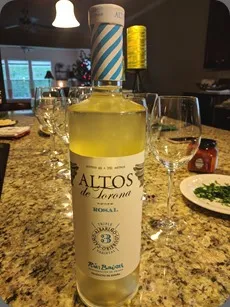
  7. Altos de Torona (O Rosal) - $20 This was the number two top choice. It’s bottle is most distinctive and has flowing flavors of green apple. Good acidity (a bit too much for some guests).
  8. Nai e Señora (Val do Salnés) - $15.57 Nai is a tribute to contemporary women. That and its stylish label made it a favorite with all the women who started singing “Nah na na na, hey hey hey, good bye! Tropical and aromatic.
  9. Fillaboa (Condado do Tea) - $20 Good acidity with elegant flavors of pineapple and citrus.
  10. Paco & Lola (Val do Salnés) - $21.99 A distinctive polka dot label and irresistible flavor palate of citrus and intense tropical fruit make this a favorite.
  11. Terras Gauda (O Rosal) - $23.99 Here is the O Rosal blending at its best. There is fruitiness from Albariño, intense aromatics from Loureiro and structure and exotic fruit notes from the Caiño.

Albariño from Rías Baixas is a perfect wine for warm weather sipping or pairing with your casual meals, particularly seafood. The cost is wallet-friendly. Our bottles started at $15 and topped out at $25 – not bad for one of the world’s best white wines. Snooth is offering a special deal on Albariño and you can find it here. It is also widely available in wine shops. Don’t forget the octopus!

Monday, April 9, 2018

A French Food And Wine Pairing: Châteauneuf-Du-Pape And Ratatouille

Looking for a wine to pair with your “meatless Monday” dish? Here’s the perfect bottle we selected for our vegan Ratatouille.


Ratatouille: Flavorful French Country Dish


Honestly, I eat a lot more tuna fish and hot dogs than I do Ratatouille. But when our daughter Rachel, the vegan baker and chef behind Earth N Oven, was in town it was a different story.
After a few months backpacking in Southeast Asia, she was interested in creating amazing plant-based dishes in a big, American-style kitchen. I was standing by to pair her work with the best wines I could find.


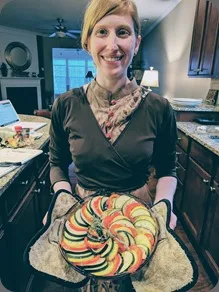
Ratatouille is a hearty dish from the Provence region of France. It’s a vegetable dish, with eggplant, zucchini and tomato. With olive oil, herbs and garlic, it is a sumptuous dish. Rachel created a flavorful layered ratatouille served with a warm white bean salad and loaf of sourdough bread.

This dish not only satisfied the appetite, but had an amazing presentation. The veggies were layers and spiraled around the circular pan. It looked so wonderful, it was almost a shame to eat it. Almost!

Southern Rhone Wine To The Rescue


In thinking about the wine pairing, I decided that a light-bodied red would be in order. I actually had an excellent Spanish Rioja Crianza teed up for the meal. The chef had other ideas. She demanded that her French dish be served with French wine.


Rhone is one of my favorite French regions, because we go gaga over Syrah and Grenache, two of the regions main red grapes. The cooler climate of the North Rhone is more suited to Syrah, while Grenache thrives in the warmer south. For this dish, the lighter Grenache grape would be the way to go.

My cellar was appallingly low on French wine, with most clearly not suited for this dish. Lingering in the shadows and waiting to step into the spotlight was the 2009 Vignobles Mayard Châteauneuf-du-Pape La Crau de ma Mère.

Some of France’s best wines come from Châteauneuf-du-Pape and Maynard’s “Crau” parcel contains Grenache vines 105-years-old. The blend is 80% Grenache, 10% Syrah and 10% Mourvedre. The wine is aged 18 months in “foudres” – a large wooden vat significantly larger than a typical oak barrel.

We decanted the wine for about a half hour before dinner. The wine is still quite lively nine years after vintage. It is drinking in its prime now, but could probably age for up to three more years. The tannins are soft and the wine was jammy with a nice acidity. Just as there were layers in the Ratatouille, there were delicate layers of complexity in the wine, with cherry, blackberry notes.

A good rule of thumb when pairing food and wine is to opt for wine from the country of the cuisine. Ratatouille and Southern Rhone equaled an evening of French elegance. Viva la France!

Thursday, April 5, 2018

Ca’Marcanda Delivers The Art And Style Of Italian Wine

Ca’Marcanda winery is named for the seemingly endless negotiations it took to purchase the historic estate. The name has come to represent the best in modern Italian winemaking.

Bolgheri: Italy’s Best-Kept Secret


Italy is home to amazing world-class wines. But it wasn’t always so.
In the decades before the Italian wine renaissance, regions like Chianti had restrictive regulations that handcuffed the creativity of winemakers. The best wines sometimes had to be released as vino da tavola, table wine.


Modern Italian wine began to take shape in the late 1960s and early 1970s. The Super Tuscan movement was launched near the town of Bolgheri, with the introduction of Cabernet-based  Sassicaia. (A Super Tuscan is considered a Tuscan blend made with Cabernet Sauvignon or other international varieties.) Other wines based on international grape varieties followed.

Angelo Gaja, the owner of Ca’Marcanda winery, was instrumental in the introducing revolutionary winemaking practices in Italy, such as the planting of French grape varieties and the use of malolactic fermentation and oak barriques. His pioneering spirit is embodied in the Ca’Marcanda winery.

Super Super Tuscans


During a recent Wine Studio education session, we had the chance to explore three outstanding wines from Ca’Marcanda. Each features international grape varieties and only one includes a small quantity of a signature Italian grape.


Bolgheri is located along the coast of the Tyrrhenian Sea in an area known as the Maremma. The climate, with hot days, cool nights and brisk sea air, is ideal for the growing of premium red grapes. Today Bolgheri is its own officially recognized DOC wine region.

Any discussion of Ca’Marcanda would be incomplete without mention of its two types of soil. The rich dark “terre brune” is primarily loan and clay. The “terre bianche” is light soil, primarily clay and sand,  rich in limestone and filled with abundant stones and pebbles.

The 2015 Ca’Marcanda Promis was our first taste. It is 55% Merlot, 35% Syrah and 10% Sangiovese. Promis (pronounced proh-MEES) means commitment, expectation, fulfillment and hope. We enjoyed the bottle with a dish of spaghetti.

Promis grapes are grown in the terre brune. This wine is supple and elegant, with the Merlot providing a silky texture. There is a mix of black fruit and a savory note. The wine is aged in slightly used barriques for 12 months. Promis retails for $48.

The middle wine in the Ca'Marcanda trio of reds is the 2015 Magari. Magari means “if only it were true.” The wine has been produced for 20 years. Starting with the 2015 vintage, the blend will be predominantly Cabernet Franc. The composition is 60% Cabernet Franc, 30% Cabernet Sauvignon and 10% Petit Verdot.

Cabernet Franc ripens well in Bolgheri and the Ca’Marcanda Cab Franc is profoundly excellent. We are huge Cab Franc fans, and so this delicious wine was a treat.

In the glass the wine is a deep purple with a bright edge. On the palate the wine is rich and savory with luscious blueberry notes. The wine offers a pop of pepper. It is polished with a nice minerality. The SRP for Magari is $65.

Ca’Marcanda Flagship Red


The crown of Ca’Marcanda is its namesake wine. The grapes are grown in 100% terre bianche soil, which are ideal for producing long-lived wines.

To enjoy this special wine, Green Dragon prepared Filet Mignon and Truffled Mushroom Reduction. The entree was served with organic polenta with Pecorino Romano cheese and braised kale with onion, garlic and bacon.

The 2013 Ca’Marcanda is a blend of 50% Merlot, 40% Cabernet Sauvignon, and 10% Cabernet Franc. It was decanted for an hour before our meal, but continued to evolve in the glass until the decanter was empty more than an hour later.

In the glass the wine is a deep red and the aroma has layers of fruit. Ca’Marcanda has structured but relaxed tannins, nice minerality with core of dark cherry and blueberry. This is a wine to savor and sip while reflecting on the goodness of life.

Ca’Marcanda is only produced in exceptional years. All three of the grape varieties are fermented separately. After blending, the wine ages for 18 months in slightly used barriques and gets another year of bottle aging. Ca’Marcanda retails for $145.

Why settle for average, when you can enjoy “super?” Super Tuscan, that is. The sensory experience of modern Italian winemaking is at its best in Ca’Marcanda wines.

Tuesday, April 3, 2018

Carlin de Paolo 2015 Estate Arneis, Terre Alfieri, Italy

The Italian grape Arneis is called “Little Rascal.” We paired the rascally grape with a hearty vegan meal.


Plant-Based Pairings


Vegan meals can provide a delightful wine pairing challenge. I discovered this when our daughter Rachel, a vegan baker and chef, visited for a couple months.


Normally I focus on the main entree, which is usually meat or fish. From there, the wine selection process can be narrowed to a few key decisions down the pathway to the perfect wine.

Taking meat and seafood out of the equation means I’ve had to power up my wine pairing skills to find the right picks for Rachel’s plant-based dishes.

Northern Italian Flavor


A recent meal was centered on Quinoa topped with garlic sautéed asparagus and mushrooms with a side of citrus-maple glazed root vegetables. Vegan cooking done right is loaded with flavors. This meal highlighted a unique ensemble of roasted beets, carrots and potatoes coated with a delicious glaze that had sweetness as well as a citrus zing.


I needed something that would accentuate the flavors but not overwhelm them. Scanning over my inventory of wine, I locked on the 2015 Carlin de Paolo Arneis. We’re big fans of Arneis, first tasting this unique white grape a half dozen years ago with a superb Italian meal in San Diego.

The bottle comes from the Terre Alfieri DOC in the Piemont region of Northern Italy where Arneis is the primary white grape. The Carlin de Paolo is 100% Arneis and is straw yellow with green highlights in the glass.

Aromas are those of tropical fruit. On the palate there are soft fruit flavors of citrus and white flowers. The tannins are strong enough to stand up to the robust root veggies. The finish of the wine is crisp and dry.

Our Arneis was a smashing pairing with the vegan dish, but it can also be enjoyed as an aperitif. It also pairs well with fish and white meat – just don’t tell Rachel! For more information Rachel’s cooking, visit Earth N Oven.

Tuesday, March 27, 2018

Southeast Asian Vegan Feast A Tasty Test For Wine Pairing

Sweet, sour, salty and spicy – Southeast Asian cuisine can be all that in one bite. So when we hosted a vegan dinner with dishes from that region, the challenge was on to find just the right wines.


Asian Adventure On A Hot Plate


Hiking through the rainforests of Southeast Asia, driving a motorbike on the jungle roads of Vietnam, splashing in the waters of a pristine beach. It all sounds idyllic. Of course it does – unless you are the somewhat nervous parent of the young lady doing it all!

Our daughter Rachel returned jet-lagged, but safe and sound from her recent trip halfway around the globe. She not only had loads of stories and photos from her trip with her boyfriend Jason, but returned with a taste for the savory flavors of the region.


Rachel is a vegan baker and chef with baking and cooking experience around the US, especially in locations with ski boarding slopes. Now she’s launching her own enterprise called Earth N Oven. Following her return from abroad, she presented an evening of food, wine and conversation for our party of eight.

What Wine Goes With Fermented Soybeans?


Any chump can find the proper wine to pair with juicy steak (bold Cabernet Sauvignon). How about picking a wine to pair with a Spicy Lao Cucumber Salad and Green Mango Salad from Thailand? That was one of the challenges facing me as I looked over the plant-based menu developed by Rachel that featured dishes from Vietnam, Laos, Thailand, Cambodia and Indonesia.


This was a creative enigma I was ready to unravel. Two things were in my favor. First, the Indonesian Tempeh Satay was going to be marinated and then cooked on the grill – giving it a hearty (dare I say) meat-like character. Second, I had ordered some white wine online and one of the bottles was a French Petit Manseng from Jurancon, a sweet wine that would pair well with our dessert.

Versatile Vegan Openers


T
he meal planning was orchestrated by Rachel and much of the work was done the evening before. As the appointed hour neared, the Green Dragon and her sister Janine were chopping, slicing, cleaning and providing support. Meanwhile, I was watching a very important basketball game… (NO, that’s a joke, I was assisting also.)

Our arrival wine was the 2016 Andreola Valdobbiadene
Prosecco Superiore Más de Fer. This is a “rive” wine, with the village name designated on the bottle. It paired with the Vietnamese Mushroom Pho which was garnished with peppers, bean sprouts and greens.

The crisp Prosecco had notes of honeysuckle and apple and provided the right contrast with the soup. This was a great pairing – to the extent that I soon needed to open a second bottle of Valdobbiadene Prosecco Superiore, this one from Grandi Mori.

The next dish – a pair of spicy Asian salads – was a treat for the eyes and mouth. From Laos and Cambodia, the two salads offered a delightful mix of textures, color and flavors including mango, cucumber,peanuts and grape tomatoes. My pairing choice was the standout 2016 Russian River Sauvignon Blanc from Hanna. It had just the right blend of acidity and bright flavors of melon and lime.

Cambodian and Indonesian Eats


The evening belonged to Rachel and her fantastic dishes. My small culinary role was to broil the tempeh outside on the grill. I did the job masterfully, if I do say so myself.

The grilling was done so well someone seeing a photo on Facebook thought that some meat sneaked in to the vegan-only happening. The Indonesian tempeh was skewered and served over absolutely delicious pineapple fried rice or, as I like to call it, Nasi Goreng Nanas.

This was the heartiest of the plant-based dishes on the program, so I dialed up a superlative red to go with it. The choice was the 2009 Lorenzi Estate Zinfandel Signature Series Reserve, from Temecula. When we visited Temecula a couple years ago, this was, hands-down, the best wine we tasted. It is an epic wine with majestic notes of raspberry and blackberry with waves of vanilla. This was decanted and enjoyed to the last drip.

Our group was loving the food and the vino. Tales of adventure from Southeast Asia were related by Rachel. The tapestry of varied foods, cultures and people were reflected well in beautifully prepared and presented dishes.

The Best Pisang Goreng Ever


For the closing act, we enjoyed a sweet treat. Fried Banana served with date caramel and whipped coconut cream was paired with the golden yellow 2015 Domaine Nigri Jurancon Toute une Histoire Petit Manseng.

I hadn’t realized this was a sweet wine when I purchased it online – but I was glad I had, because I had no other dessert type wines on hand. It turned out to be a blissful pairing. The bananas were incredibly delicious and the Petit Manseng had just the right sweetness level to work with the dessert.


Picking the wines for a plant-based meal is tricky, but very rewarding. Thanks to Rachel Nershi of Earth N Oven, her sous chefs, and all our guests for the event. The beauty, flavor and downright healthiness of the meal was amazing.

Tuesday, March 13, 2018

German Scheurebe and Grauer Burgunder Offer Tasty Options For Food And Wine Pairings

Snowstorm or sunshine, German wines are fantastic choices for any time of year. Here we test-drive two unique bottles.


Amateur Chef On The Loose


Most of the delicious food featured in this blog is prepared by my wife, aka Green Dragon. When she is in town, my daughter, a vegan baker and chef, will also cook up a storm.

Every so often, though, I will rattle a few pots and pans. I’ve been a cook in three different restaurants, so I’m not entirely without skills. My wife might disagree.

When she was out of town for a couple of days, I decided to surprise her with a gourmet treat prepared by yours truly. It was designed to go with a delicious German wine.

A Pair Of Exotic Grapes


We were able to sample two cool German white wines. The first, destined to be paired with my culinary masterpiece, was the 2012 Weingut Weegmϋller Haardter Herrenletten Grauer Burgunder Spätlese Trocken Alte Reben, Pfalz. Phew, that’s a long name. The short story is that this is German Pinot Gris. Throughout most of Germany it is called Grauburgunder, but in Pfalz it is known by the slightly different name Grauer Burgunder.


The other wine was what I originally thought was a Riesling. It was in a Riesling style bottle, it said Kabinett on the label. Not looking too closely at the label, I thought I was pouring one or our favorite grapes – Riesling. I was delightfully surprised that it was Scheurebe (shoy-ray-beh). The wine was a 2015 Geil Bechtheimer Scheurebe Kabinett, Rheinhessen. More on that in a bit – I’m sure you want to read about my cooking first!


My Culinary Masterpiece – Pork Loin Perfection


To go with the Grauer Burgunder, I prepared Slow-Roasted Honey and Parmesan Pork Loin, Bacon and Cheddar Potatoes and a Corn, Black Bean and Pepper Medley. The entree was the difficult part, but once the prep was done, most of the rest of the work was done by the crock pot. Over a six hour period, the giant slab of meat cooked down to a tasty, browned roast of delectableness with a fantastic glaze. From the juice I whipped up a tasty sauce to go atop the meat.


After slaving over a hot stove (something my wife reminded me she did most days of the week!) we were ready for the feast and a glass or three of Grauer Burgunder! The Weegmϋller had a great depth of flavors as well as a touch of fruitiness for which Pinot Gris is known. The glaze on the roast was slightly sweet and so there was a nice interaction with the pork and wine.

The Grauer Burgunder had herbal notes – something I hadn’t experienced before in a Pinot Gris – and delicious minerality. This is a wine that would pair well with almost any seafood, too.

Scheurebe: A New One On Us


I’m an unofficial member of the Wine Century Club – I say unofficial, because no one from that organization has responded to my dozens of emailed applications. At any rate, to become a member, you have to taste at least 100 different grapes.

I’ve done that and then some. Never have I encountered Scheurebe – but I’m sure glad I did.
Scheurebe is grown in all wine regions, but has some importance in Rheinhessen, where the Geil bottle is from. It was thought to be a cross between Riesling and Silvaner. Later the Silvaner connection was disproved, so Scheurebe is a cross between Riesling and an unknown variety.

For this pairing, I hung up my apron and let my daughter Rachel (of Earth N Oven) work her magic. Rachel, a vegan baker and chef, prepared homemade pot pies – vegan for her, and chicken for Green Dragon and me.

The Scheurebe worked wonderfully with the meal, with enough acidity to cut through the creamy innards of the pot pie and a satisfying touch of sweetness. The flavor notes include honeysuckle and citrus. A cream-based soup or a spicy dish would pair nicely with Scheurebe, a grape that we’ll be on the look-out for in the future.

German whites, like the Grauer Burgunder and Scheurebe featured here, are versatile food wines. No matter if you are being hit with a March Nor’easter or luxuriating in Spring sunshine, there is a Germanic wine to pair perfectly with your cuisine. 

Full disclosure: These wines were received as a marketing sample.

Tuesday, January 16, 2018

Chef Creations Shine At Cellar 55 Wine Pairing Event

Popcorn and movies, peanut butter and jelly, Batman and Robin, some things are just better together. A band of wine lovers gathered last week at Cellar 55 in search of the perfect wine and food pairing. The results were delicious indeed.


Hook & Cleaver Shows Culinary Chops


Cellar 55 in Fuquay-Varina hosts a series of weekly tastings. Twice a month they have a food and wine event while the other two weeks of the month feature beer. To attend, you not only have to love wine – you have to have a pretty quick trigger finger. The tickets sell out in what seems like the blink of an eye.

The wine shop pairs up frequently with the Hook & Cleaver Market on Broad and owner/chef Joseph Fasy. For the dinner last week, Chef Joe brought his “A” game for outstanding results. To help ensure a perfect pairing with the food, Sara Doom, a certified specialist of wine, selected a lineup of appealing wine and introduced each pour as the evening progressed.

The first dish was Roast Apple and Blue Hokkaido Pumpkin Soup with Prosciutto Crisps and a Chive Crème Fraiche. This was paired with Barboursville Vineyard 2015 Viognier Reserve. Barboursville Vineyards is one of the premier wineries in Virginia. They are renowned for their Octagon Bordeaux-style red and also produce a killer Cabernet Franc.

The soup set the mood for the evening. It was visually stunning with a swirl of Crème Fraiche artistically floating next to a beckoning mound of crispy prosciutto. I thought Hokkaido was some sort of traditional Japanese dance with kimono and face paint. Turns out I was half right. Hokkaido is a small pumpkin that is Japanese in origin – it also is wonderfully delicious.

Each spoonful of the soup was a flavor explosion. The Viognier has delicate floral notes and a brightness that was a delightful counterpoint to the soup.

Pairing Two featured Ad Lucem 2014 Elaina Red, a luscious Rhone-style red from Washington State. It paired with Shrimp and Wild Mushroom Ravioli with Garlic Kissed Baby Spinach and a Roast Piquillo Pepper Coulis. Chef Joe explained that this was an unconventional pairing, but he and Sara felt the heartiness of the dish would match well with a red.


The pairing couldn’t have been better. We are fans of Washington State wine and would gladly drink their rich reds with just about anything. This was another symphony of flavor with each element artfully contributing its part. Elaina is a blend of 48% Syrah, 30% Counoise, 17% Mourvèdre, and 5% Grenache. This is juicy and fruit driven without harsh tannins. SRP is $24.

Rebellious Winemakers And Bubbly Red


Our tasting then travelled to Italy, with an IGT “Super Tuscan” wine, Le Volte 2015 Dell’Ornella. It was partnered with Provencal Crusted Lamb Chop with a Mint Demi-Glace, Pommes Maxim, and a Zucchini and Campari Tomato Napoleon.

 
We are lovers of lamb, and so we were looking forward to this dish. The lamb was a perfect medium rare and the mint and mustard glaze made it a robust bite. Super Tuscans were created by rebellious Italian winemakers who wanted to experiment with international grape varieties outside the rules for Italian quality wine. They ultimately prevailed and Super Tuscans frequently are on the list of the world’s top wines.

The Dell’Ornella is a blend of 67% Merlot, 13% Sangiovese, and 20% Cabernet Sauvignon. This is a well balanced wine with berry flavors and a touch of spice. It is lush with drying tannins. It retails for $28.

We grabbed our forks and glasses for the final pairing, a dessert dish served with the most unique wine of the evening. Cantina Sant’Evasio 2015 Brachetto d’Acqui is a light bodied red sparkling wine. It is frizzante in style, meaning fizzy but not fully “sparkling” like Champagne or Prosecco.

The Brachetto d’Acqui was paired with Chocolate Grand Marnier Orange Tart with Fresh Whipped Mapleview Farms Whipped Cream and Candied Citrus Zest. Chocolate, Grand Marnier, Candied Citrus Zest?! This was a winner even before we took our first bite.

The tart was tongue-enveloping with opulent chocolate. The Brachetto d’Acqui, served chilled, was an expert pairing. It’s sweetness was toned down whilst paired with the rich dessert. The bubbles, strawberry notes, and touch of sugar was the perfect sipper to cap off the evening. At $13, its an affordable luxury.

We salute all involved in this superb event. It was pairing paradise!

Saturday, December 16, 2017

Uplifting Vino, Small Plates And Raclette Highlight Wine Pairing Party

Food, friends and a selection of great wine – these are the key ingredients to a pleasurable party. Here’s what went down at our first wine pairing party at our new home in North Carolina.

Opening Medley


We recently hosted our first soirée at our new home in the Triangle area of North Carolina. It was a fabulous gathering of about a dozen friends, family and neighbors. Oh yes, we had some wine too!

The culinary brains behind the gathering was my wife, the Green Dragon. When we were out in

Sonoma last month, we visited Hanna Winery. There we met Christine Hanna, who not only is president of Hanna Winery and Vineyards, but also a food writer and cooking teacher. She gave us a copy of her book, The Winemaker Cooks: Menus, Parties and Pairings. 
Green Dragon used recipes from the book for our party menu.

What better way to start the party than with caviar and sparkling wine? For the appetizer we had caviar on crème fraiche and brioche toast. Wow. The saltiness of the caviar was the perfect foil for the Bervini 1955 NV Spumante Rosé. The Italian winery was founded by Antonio Bergama and his son Giuseppe in 1955.

Sparkling wine is a terrific arrival wine due to its lower alcohol level, in this case 11%, as well as the spectacle of bubbles. The effervescence adds a festive note to any occasion. The Bervini 1955 has notes of raspberry and rose and just a hint of sweetness. The Extra Dry rosé is slightly sweeter than the Brut designation. This wine is now available in the US via Wine Trees an importer with a collection that focuses on the world’s most interesting regions. It retails for $18.99.

The Raclette Ruckus


When our friend Jon offered to bring his raclette grill, I had to admit, I didn’t know what it was. I had heard of raclette, a Swiss cheese dish eaten by shepherds in the Alps. I didn’t know raclette grills were “a thing.”

We soon found out that raclette grills may be hot – but they are oh so cool! Jon and his wife Michelle swung into action with Swiss precision. Raclette is a delicious Swiss cheese that is melted in coupelles (small metal pans that slide into the grill) and then served on top of potatoes, mushrooms, onions, pickles or charcuterie.

While the activity swirled around the raclette grill, I served our next wine, the 2015 Reichsfgraff von Kesselstaff Riesling from Mosel, Germany. The wine was finished semi-dry and the welcome sweetness paired ideally with the raclette.


Sockeye Salmon And Sfeeha


The chef’s next dish was Wild Sockeye Salmon with leeks and mustard cream along with cream of cauliflower and fennel soup. My contribution to the dish was driving to the grocery store and hunting down a fennel. For this dish we selected the 2015 Domain De Oliveira Lecestre Chablis. French Chardonnay from Chablis has a more refined, minerally profile than Napa Chardonnay, which tends to be more buttery and oaky.

The De Oliveira Chablis is part of the wine collection at Lidl, a European grocery store chain that began opening stores in the US last summer. It can be purchased for about $13 and is a satisfying white Burgundy that might inspire multiple purchases. This had many votes from our guests as the top white.

We bid adieu to the sparkling and white wines and moved into red territory with our next dish. Green Dragon served up sfeeha, a Mediterranean meat pie made with lamb. She got a big assist from her sister Suzanne.

There was a special treat with the sfeeha, a sumptuous red blend from Israel. The 2012 Carmel Limited Edition is from Galilee and is a blend of 65% Cabernet Sauvignon, 17% Petit Verdot, 15% Merlot and 3% Cabernet Franc. This is a premium Bordeaux-style blend and it’s Kosher as well.

We decanted the Carmel Limited Editor for about an hour. This is deep purple in color with rich aromas of blackberry. In the glass this has a mellow texture enhanced by 15 months of aging in French oak. There are threads of chocolate and hints of smoke.

If you haven’t experienced the wines of Israel, we encourage you to do so. This ancient winegrowing land is producing premium wines that are meant to be enjoyed by those of any religious faith. The retail price is $80.

Bing, Bang Boom


It was time for big reds to make an appearance. The first is an uncommon grape: Carmenère. Carmenère is the signature grape of Chile and nowhere is it better expressed than in the Montes Purple Angel.

The 2014 vintage, from Marchigüe Vineyard in the Colchagua Valley, is 92% Carmenère and 7% Petite Verdot. Purple Angel is considered the “super Carmenère” wine and we are “super fans.”

Cumin-Crusted Pork Tenderloin with Salsa  Verde was the food pairing and it was served with wild rice salad that had celery root, acorn squash and leek.

The Purple Angel is rich with red and black fruit flavors. It has a different flavor profile than Cabernet Sauvignon, juicier and with smoother tannins. The wine is aged for 18 months in new oak, but the oak melds wonderfully with the Purple Angel, lending a bit of toast to the fruit flavors. It has an SRP of $65.

Since we were enjoying a culinary tour de force, what else could we do but have more wine? Decanters were rapidly being filled and drained and refilled.

We next enjoyed a heavyweight from Napa Valley, the 2008 Schweiger Vineyard Cabernet Sauvignon from the Spring Mountain district. This is a towering Cab with mountain-grown fruit.

Chocolate truffles were the pairing for this wine, a good choice. We decanted the Schweiger for about 30 minutes, but it still opened up more as we conversed and swirled. This whole College Football Playoff controversy seemed to make more and more sense as the wine in the decanter got lower.

The 2008 Schweiger is a great Napa Cab with aging potential for up to 20 years. We couldn’t wait. It has wild cherry notes coupled with plum and dark chocolate. It has a smooth start, crescendos in the middle and has a lingering finish. It retails for about $59, but I was able to get a “steal” for about half price.

The night was drawing to a close. While some guests had only to walk next door, others had to drive to Chapel Hill. But before the guests departed, I had one more ace up my sleeve.
Plonk is a new premium wine club with a very eclectic selection of wines. We featured Plonk in a recent article. One of the selections was the 2015 Santomas Refosk, from Koper, Slovenia. This has flavors of blueberry, but with spice notes that make it a unique wine.

After our wine and culinary tour of four continents and many bottles, the party reached the end of the line. Thanks to the cooks, party-goers and winemakers who helped us warm up a chilly December night!

Full disclosure: Some of the wine served was received as marketing samples.