Showing posts with label Prosecco. Show all posts

Sunday, November 13, 2022

Little Rock Marriott Wine Tasting A Pinnacle Event

Wines of the world explored at Little Rock landmark.


By Dave Nershi, CSW

A Tip-Top Location

For the last several years I have hosted a wine tasting at the Southern Management Association conference. This year the conference was in Little Rock AR, a wonderful small city overlooking the Arkansas River. The headquarters hotel was the Little Rock Marriott.

Keep up with the latest. Follow us on Instagram!

The Marriott has a wonderful location just steps from dozens of great restaurants and shops as well as the capital and the William J. Clinton Presidential Library. Standout restaurants include Flying Fish, Samantha’s Tap Room & Wood Grill, and @ The Corner. Of course, the Marriott has its own pub, which was a great location to grab a cold beverage.

Adjacent to the hotel is Riverfront Park, which encompasses 39 acres in downtown Little Rock on the south bank of the Arkansas River. The park is a stroller’s delight with a semi-formal arrangement of walks, terraces, plazas, and sitting areas. Right outside the Marriott’s Riverfront Room is the Vogel Schwartz Sculpture Garden which uses landscape architecture to showcase more than 90 works of art from sculptors in Arkansas and across the country.

Begin With Bubbly


My tasting took our group of about 25 to the tip-top of the hotel: The Pinnacle Room, which provides a 360-degree view from the 20th floor. The staff did an outstanding job setting up for the event. I began arranging and icing down bottles.

Never Miss A Beat – Follow Vino-Sphere On Facebook

I was delighted to see six bottles of chilled Josh Prosecco marching in the door. Although he couldn’t be with us for the event, the Little Rock Marriott GM David Lang is a wine aficionado and he sent the bubbly to start the event on a festive note. Thanks, David!

Josh is a well-known brand, but I didn’t realize they made Prosecco. In fact, I learned, they partnered with Italian winemaker Daniele Pozzi to launch their own Prosecco in 2019. Much like Champagne, the only Prosecco comes from a specific region, in this case, Italy.

This wine was frothy, with a touch of sweetness and apple and pear flavors. Our group raised a grand toast to the Marriott!

The tasting had a Wines Around the World theme. The lineup was

· Gassac “Folie” - NV - France (Pet-Nat style sparkling)

· Verus 2019 Furmint - Stajerska, Slovenia

· Netzl 2019 Zweigelt Classic - Caruntum, Austria

· Noble Hill 2019 Estate Reserve—Simonsberg, South Africa

Folie means madness and it’s also a French sparkling wine with a crown cap. This is in the style of a petulant-natural wine. This wine is bottled before fermentation is over and finishes in the bottle – resulting in fine bubbles with white flower flavors and fresh aromas. The flavor is also more robust than a typical sparkler.

Famous In Slovenia 


The Furmint grape has been present in Slovenia for more than 1,000 years. The Slovenian name for Furmint is sipon. Supposedly comes from the times of the Illyrian Provinces, when Napoleon’s soldiers, upon drinking the wine, exclaimed “c’est si bon” – which was interpreted as ‘šipon’ by the locals. Furmint is the grape used in Hungary's famous Tokaji dessert wine. The Verus version has a palate of tropical fruits like quince and kiwi. The finish is waxy and almost floral.

Zweigelt is a beautiful Austrian grape. The Netzl 2019 Zweigelt is ruby-garnet in the glass, with typical cherry fruit in the nose. This is a young and charming wine with a smooth, elegant palate and some spice notes.

It comes from a blend of several vineyards that enjoy the moderating influence of the River Danube and the Lake Neusiedlersee on their climate. This results in very ripe grapes with good tannins, high ripeness, and intensive and fresh aromas. This winery is in the village of Gottlesbrunn, known for its idyllic taverns offering local foods and wine. It’s a popular destination for day-trippers from Vienna

Key To A Great Wine


The 2019 Estate Reserve from Noble Hill comes from the Simonsberg region of South Africa. It’s a blend of 58% Cabernet Sauvignon, 23% Merlot, 11% Petit Verdot and 8% Cabernet Franc. South Africa represents a blending of the best of New World flavors with Old World winemaking. It truly excels in Bordeaux-style blends. We stayed in the Simonsberg area during our visit to the country and each winery surprised us in a good way.

The label is adorned with four keys, one for each of the varieties used in the blend. The wine has tastes of blackberries, plum, and a wee bit of mint. The oak is light, and the tannins are smooth.

We did have another surprise wine, Pol Solanelles brought a bottle of Spanish Macabeo from his family’s winery. What a treat! Cheers to the Little Rock Marriott for being a great venue and to our guests who made it special.

Wednesday, November 24, 2021

Italian Wines Sparkle At Festive Meal

Bubbly and the queen of Italian wine are perfect matches for a four-course meal.


Italian meals mean family and festive times around the dinner table. When our daughter Rachel arrived in town, it was the ideal time to host a special meal with four Italian wines imported by Mack & Schuhle and distributed nationally. We dubbed the affair our “pasto festivo” (festive meal).


There’s no better way to greet dinner guests than with a glass of sparkling wine. Our arrival wine was the Ca di Prata Prosecco DOC Brut. Prosecco is made primarily from the Glera grape and is made using the Charmat or tank method. Prosecco gets its bubbles from a second fermentation, but unlike Champagne, the second fermentation takes place in a tank and not the bottle. The process is less labor-intensive so the final product is less costly (yay!).


Keep up with the latest. Follow us on
Instagram!

The Ca di Prata has fine streams of bubbles with citrus and apple notes. The finish is crisp and dry. It was a perfect foil for our antipasti which featured garlic crostini and olive tapenade, plenty of tomatoes and salad, and even some vegan Italian “salami.“

It was time to transition to white wine as we prepared for our second course. We opened the Barone Montalto 2020 Pinot Grigio to pair with baked polenta stacks with grilled vegetables. The subtle flavors of the polenta and roasted notes of the veggies were a tasty match with the Pinot Grigio which leads with citrus and mineral components. The stainless steel aging keeps the flavors fresh. It finishes with a light pear note.

Risotto has been the downfall of many contestants on cooking competition shows. When done wrong, it’s a puzzling mess. When done right, it is a melt-in-your-mouth delicacy. Rachel is a vegan chef, and after studying the wines, decided on crafting a scrumptious mushroom risotto.


Our red wine was the Riva Leone 2017 Barbaresco DOCG. Barbaresco is considered the queen of Italian wine (while Barolo wears the king’s crown). Both are made with the Nebbiolo grape. This wine was softer than I was expecting with floral and earthy components to the taste. It is aged for 12 months in French and American oak which contribute to a long, complex finish. This is a medium-bodied wine that matched well with the savory notes of the risotto.


We closed our festivities with the pop of a cork as we opened the Acquesi Asti Spumante. It has 9.5% residual sugar so finding the right food pairing is important. Our selection was vegan tiramisu and it was a classic pairing. The sweetness of the dessert ratcheted down the sweetness of the Asti, enabling us to enjoy its delicate spice, persistent bubbles, and honeycomb flavors. At only 7% ABV, this is a splendid end to a great dinner.


The pricing of the wines is as tasty as our meal. All are under $20 except for the Barbaresco, which is $25.

Full disclosure: These wines were received as a marketing sample.

Wednesday, May 12, 2021

Three Regions, Three Great Rosé Expressions For Springtime

Here are three affordable, totally tasty rosé wines we know you’ll love.

Get Ready To Celebrate

The flowers are blooming, birds are singing, and the temperature is rising. Everyone knows what time of year it is: it’s rosé season!

Never Miss A Beat – Follow Vino-Sphere On Facebook

To prepare for National Rosé Day on June 8, we delved into this most delightful style of blush wine, popping open three bottles from three different regions. We’re happy to recommend this trio of deliciousness:

Hampton Water Rosé 2020, South of France

This rosé is the creation of Jesse Bongiovi, son of rock legend John Bon Jovi. Far from being a celebrity gimmick, this wine has garnered a slew of awards, including being included in the Wine Spectator Top 100 Wines list.

The wine is made with the assistance of famed French winemaker Gerard Bertrand, whose wines we adore. It is a blend of Grenache (60%)  blended with Cinsault (15%), Mourvedre (15%), and Syrah (10%) traditional grapes of the French Mediterranean. We really enjoy wines from the Languedoc region and this is no exception.

Keep up with the latest. Follow us on Instagram!

It has clean notes of red fruit and citrus and has body that is a notch fuller than a Provence-style rosé. We see this as a perfect pairing with seafood. Although we’ve never been to the Hamptons, we can catch a sip of that carefree lifestyle while sipping this wine. A sub-$25 SRP winner.

Ca Di Prata Brut 2019, Prosecco Rosé DOC

We had no idea that until November 2020, there was no such thing as Prosecco Rosé. Even though the Friuli region has a long history of making sparkling rosé it couldn’t carry Prosecco on the label. A long-debated proposal was finally approved by the regulating council, and we couldn’t be happier.

This bubbler has 85% Glera (the traditional grape for Prosecco) and 15% Pinot Nero (aka Pinot Noir). With a $17 SRP, we found this wine to be an exemplary food wine. It has notes of strawberry and violet with fresh red fruits. There are nice streaming bubbles, but they dissipate rapidly.

The Ca’ di Prata name and label pay tribute to the municipality of Prata di Pordenone within the region of Friuli, where these wines are made.  A location famous for its historic bell tower, beautiful vineyards, and surrounding farmlands, the Ca’ di Prata label features a rendition of the tower on its label.

Reserve des Chastelles 2019 Rosé, Tavel

Occasionally when shopping at Trader Joe’s, we’ll stock up on everyday wine. It has a nice selection of European wines and there are some evenings you really don’t need to crack open a $75 bottle of vino.

We had just about wrapped up a recent shopping trip when this bottle caught my eye. Tavel rosé is trending, at least with me. Tavel is the only region in France’s Rhone Valley that is dedicated solely to the production of rosé and I think it shows in the taste and quality.

First of all, Tavel rosé isn’t for the weak-kneed. It’s got a bit more heft to it, and the color gives you a clue to that. Instead of a pale salmon color like a Provence rosé, it is a bold red, like a translucent rose petal. It is composed of 60% Grenache, 25% Cinsault, and 15% Syrah but the expression has much more structure than most rosé wines. It’s a rosé that red wine drinkers can appreciate.

There are layers of strawberry, watermelon, and a dash of minerality. It is juicy with a touch of tartness. All this is to say, there are layers of flavors rather than being a one-note wine.

The most startling thing about this wine is the price. It is a mere $8.99! At this price, you can buy a couple of cases to tide you through the rest of the pandemic. It’s only available at Trader Joe’s.

For under $25, you have three great picks to celebrate spring and National Rosé Day.

Full disclosure: Some of this wine was received as a marketing sample.

Wednesday, April 14, 2021

Ca' di Prata Prosecco Perfect For Spring Entertaining

Ready to jazz up the evening? Pop open one of these Prosecco wines.

Coming Soon: Entertaining At Home!

It’s a surprising phrase to write: Perfect wines for your entertaining. It’s been more than a year of locked-down, face-masked, sanitized pandemic life. As the vaccine rolls out across the country, we can finally see some light at the end of this dark and dreary tunnel.


Yes, in the near future, you’ll be able to entertain with family and friends. Here are some great wines to celebrate the joyous occasion.

Never Miss A Beat – Follow Vino-Sphere On Facebook

Nothing says “celebrate” like bubbles. Italy’s Prosecco wine is tasty and the price means you can afford it pop open bottles frequently. We recently served a trio of Ca’ di Prata Prosecco wines during an outdoor, socially distant patio party.

Vastness Of Territory

The Ca’ di Prata name comes from the municipality of Prata di Pordenone within the famed region of Friuli, where these wines are made.  A location famous for its historic bell tower, beautiful vineyards, and surrounding farmlands, the Ca’ di Prata label has a drawing of the tower on its label. The name “Ca’ di” which means “home of,” and “Prati” which is derived from the Latin “Pratum” meaning “vastness of territory covered in meadows.”

With Italy's Prosecco region having a long history of producing sparkling rosé I was surprised to learn that sparkling rosé wines were not authorized to carry the name Prosecco on the bottle until just a few months ago (November 2020) when the Prosecco DOC consortium approved a long-debated proposal.  Sparkling rosé wines can use the DOC designation as long as they have 85% Glera grapes along with 10% to 15% Pinot Noir grapes, which must be fermented on the skins.

Keep up with the latest. Follow us on Instagram!

The three wines included the Brut Prosecco DOC, Brut Prosecco Rosé DOC, and Extra Dry Prosecco Valdobbiadene Superiore DOCG. The price points are $16, $17, and $18 respectively.

The Brut Prosecco is a nice entry-level Prosecco with 85% Glera plus other varieties including Chardonnay and Pinot Bianco. There are some nice mineral notes and green apple highlights.

Premiere Location For Prosecco

We popped the DOCG Prosecco next. Valdobbiadene is the premier location for Prosecco and I’ve found that DOCG wines, where the quality is guaranteed, often mean a noticeable bump up in quality.

The wine is a golden straw color in the glass. The perlage is nice and foamy and the bubbles are fine and persistent. On the palate, there is crisp apple with a flash of lime zest. In the hierarchy of sparkling wine naming, Extra Dry is actually sweeter than Brut. This wine is certainly dry, however.

The Brut Prosecco Rosé was the finale. The wine is Glera and Pinot Nero, or Pinot Noir as we call it in the States. Rosé sparkling wine is always a good pick in our books. It’s versatile, fun, and is food-friendly. This wine adds flavors of red fruit and strawberries along with floral accents.

The Ca’ di Prata wines, newly available in the US, are a perfect choice – and a great value -- for entertaining or just chilling at home.

Full Disclosure: These wines were received as marketing samples.

Monday, January 11, 2021

Cameron Hughes Delivers Stylish DOCG Prosecco And Carneros Pinot Noir

Cameron Hughes Prosecco and Carneros Pinot Noir

Ready to add some spark to your evening, or maybe just need a good bottle for hunkering down? Here are two great picks.

Grace And Style For Little Scratch

The train has pulled out of the station leaving the festive holiday season behind and is rumbling down the tracks toward months more of pandemic. It’s time to reach for another bottle while seeking out the light at the end of the tunnel. Here are two excellent choices.

Cameron Hughes Lot 738 Prosecco, Valdobbiadene DOCG, NV

One of the best values for sparkling wine is Valdobbiadene DOCG Prosecco from Italy. There’s a sea of sweet and insipid Prosecco out there, but if it has DOCG on the label that’s a mark of quality. That means someone actually tasted the wine and approved the quality. This sparkling wine comes from Glera grapes grown in the hills of Valdobbiadene, the home of stellar Prosecco.

Keep up with the latest. Follow us on Instagram!

We enjoyed Lot 738 with a meal of tuna steak, quinoa, and roasted vegetables. The Prosecco is crystal in color with notes of white flower blossoms and citrus on the nose. The perlage is frothy, lending a great creamy texture. The bubbles are tiny and persistent. On the palate it has notes of lemon zest and green apple.

Cameron Hughes is a négociant, sourcing wine and reselling it direct to the consumer under their label at great savings. There were 750 cases were produced. The price is $15.

Cameron Hughes Lot 704 2018 Carneros Pinot Noir

Grapes for this Pinot Noir come from one of California’s top Pinot Noir regions: Carneros. The grapes are estate grown and the vines are 20- to 40-years old. We enjoyed this with a delicious roast turkey breast.

Never Miss A Beat – Follow Vino-Sphere On Facebook

Finding a Pinot Noir like this for $16 is a revelation. It has complex layers of dark cherry, cooking spices, herbs, and tobacco. Underlying acidity makes Pinot Noir a standout food wine, and Lot 704 displays a nice undercurrent that balances the flavors and the 14.5% ABV.

Cameron Hughes works with wineries that have excess wine and don’t want to deeply discount their own label. Cameron Hughes buys it, gives it a lot number and new label and resells it. This Pinot was priced at $35 from the parent winery, but Cameron Hughes (which cannot divulge the source) sells it at less than half price. We like deals like that – especially when they are so tasty.

Full disclosure: These wines were received as marketing samples.

Thursday, January 18, 2018

Bubbles And Bourbon Spotlighted In Trio Of New Wines

Bourbon and bubbles? Yes, but to be clear, these are three different wines – not carbonated whiskey. We recently had a chance to taste a pair o’ Prosecco and a new Bourbon barrel aged wine. Read on.

Two Frothy Italians


Holidays are prime time for bubbly. As we wrapped up one year and plowed boldly into the new, we did it fortified with sparkling wine.

Has Italy’s sparkling Prosecco wine ever been more popular? Not that we can see. America loves Prosecco and we sampled two that are being carried by Wine Trees USA distributors.
We first uncorked the beautiful Bervini 1955 Spumante Rosé. It should be noted that the brand name is Bervini 1955. This is a non-vintage sparkler, like most are, not a 1955 vintage.

We served this at a wine dinner paired with caviar on crème fraiche and brioche toast. Not too shabby! Bubbly and caviar is always a winning combination. The Bervini rosé radiated a stream of tiny bubbles adding festivity to the evening. This has nice floral aromas and raspberry flavor notes. This rosé bubbly is nice because it isn’t as austere as some sparkling wines – there’s a richer flavor palate.

Bervini 1955 offers a second sparkler, the Prosecco DOC Millesimato Extra Dry. Please note that “extra dry” is actually sweeter than “brut” in the sparkling wine sweetness scale. This is well balanced and not overly sweet. We enjoyed this with Gruyere fondue.

Millesimato is a very enjoyable Prosecco. The Bergamo family have been making wine since 1955 in the Italian province of Pordenone, which straddles the two DOC Prosecco zones of Prosecco and Friuli Grave. During the decades since, they’ve learned how to deliver flavors that are elegant and authentic. Whereas the rosé had berry notes, the Millesimato has citrus and pear tones. Its crispness and acidity makes this an excellent match with seafood – and of course, fondue. Both Prosecco are priced at $18.99.


Bourbon Barrel Aged Wine Done Right


Wine Trees has a diverse portfolio of wines, and we were pleased to be able to uncork the 2015 Barrel Road red blend from California. The winery has partnered with Backbone Bourbon in Indiana and ages the wine for three months in used Bourbon barrels.

Many winemakers are jumping on the Bourbon barrel bandwagon, but not everyone gets it right. Some of the Bourbon barrel wines are harsh rather than complex. In the grocery store last week I saw a Bourbon barrel aged Chardonnay. That’s a move to exploit a trend with a rather incongruous pairing.

Barrel Road takes the high road. The Bourbon barrel aging lends delectable caramel and vanilla flavors. The alcohol level is 13.2%, and the lower level prevents it from being too “hot.”

The exact blend for Barrel Road isn’t revealed. The grapes come from California’s Central Coast and “interior winegrowing regions,” which might mean the Central Valley. We guess that Zinfandel and Merlot make up a good percentage of the wine.

Whatever the mix, this is one of the most enjoyable Bourbon barrel wines we’ve had. The winemaking isn’t heavy handed. The Bourbon factor adds a nice complexity and toasty richness to the wine. At $16.99 it’s a great value and a bottle that is certain to appeal to most wine lovers. It’s especially rewarding during the cold nights of winter!

Full Disclosure: We received this wine as a marketing sample.

Saturday, December 16, 2017

Uplifting Vino, Small Plates And Raclette Highlight Wine Pairing Party

Food, friends and a selection of great wine – these are the key ingredients to a pleasurable party. Here’s what went down at our first wine pairing party at our new home in North Carolina.

Opening Medley


We recently hosted our first soirée at our new home in the Triangle area of North Carolina. It was a fabulous gathering of about a dozen friends, family and neighbors. Oh yes, we had some wine too!

The culinary brains behind the gathering was my wife, the Green Dragon. When we were out in

Sonoma last month, we visited Hanna Winery. There we met Christine Hanna, who not only is president of Hanna Winery and Vineyards, but also a food writer and cooking teacher. She gave us a copy of her book, The Winemaker Cooks: Menus, Parties and Pairings. 
Green Dragon used recipes from the book for our party menu.

What better way to start the party than with caviar and sparkling wine? For the appetizer we had caviar on crème fraiche and brioche toast. Wow. The saltiness of the caviar was the perfect foil for the Bervini 1955 NV Spumante Rosé. The Italian winery was founded by Antonio Bergama and his son Giuseppe in 1955.

Sparkling wine is a terrific arrival wine due to its lower alcohol level, in this case 11%, as well as the spectacle of bubbles. The effervescence adds a festive note to any occasion. The Bervini 1955 has notes of raspberry and rose and just a hint of sweetness. The Extra Dry rosé is slightly sweeter than the Brut designation. This wine is now available in the US via Wine Trees an importer with a collection that focuses on the world’s most interesting regions. It retails for $18.99.

The Raclette Ruckus


When our friend Jon offered to bring his raclette grill, I had to admit, I didn’t know what it was. I had heard of raclette, a Swiss cheese dish eaten by shepherds in the Alps. I didn’t know raclette grills were “a thing.”

We soon found out that raclette grills may be hot – but they are oh so cool! Jon and his wife Michelle swung into action with Swiss precision. Raclette is a delicious Swiss cheese that is melted in coupelles (small metal pans that slide into the grill) and then served on top of potatoes, mushrooms, onions, pickles or charcuterie.

While the activity swirled around the raclette grill, I served our next wine, the 2015 Reichsfgraff von Kesselstaff Riesling from Mosel, Germany. The wine was finished semi-dry and the welcome sweetness paired ideally with the raclette.


Sockeye Salmon And Sfeeha


The chef’s next dish was Wild Sockeye Salmon with leeks and mustard cream along with cream of cauliflower and fennel soup. My contribution to the dish was driving to the grocery store and hunting down a fennel. For this dish we selected the 2015 Domain De Oliveira Lecestre Chablis. French Chardonnay from Chablis has a more refined, minerally profile than Napa Chardonnay, which tends to be more buttery and oaky.

The De Oliveira Chablis is part of the wine collection at Lidl, a European grocery store chain that began opening stores in the US last summer. It can be purchased for about $13 and is a satisfying white Burgundy that might inspire multiple purchases. This had many votes from our guests as the top white.

We bid adieu to the sparkling and white wines and moved into red territory with our next dish. Green Dragon served up sfeeha, a Mediterranean meat pie made with lamb. She got a big assist from her sister Suzanne.

There was a special treat with the sfeeha, a sumptuous red blend from Israel. The 2012 Carmel Limited Edition is from Galilee and is a blend of 65% Cabernet Sauvignon, 17% Petit Verdot, 15% Merlot and 3% Cabernet Franc. This is a premium Bordeaux-style blend and it’s Kosher as well.

We decanted the Carmel Limited Editor for about an hour. This is deep purple in color with rich aromas of blackberry. In the glass this has a mellow texture enhanced by 15 months of aging in French oak. There are threads of chocolate and hints of smoke.

If you haven’t experienced the wines of Israel, we encourage you to do so. This ancient winegrowing land is producing premium wines that are meant to be enjoyed by those of any religious faith. The retail price is $80.

Bing, Bang Boom


It was time for big reds to make an appearance. The first is an uncommon grape: Carmenère. Carmenère is the signature grape of Chile and nowhere is it better expressed than in the Montes Purple Angel.

The 2014 vintage, from Marchigüe Vineyard in the Colchagua Valley, is 92% Carmenère and 7% Petite Verdot. Purple Angel is considered the “super Carmenère” wine and we are “super fans.”

Cumin-Crusted Pork Tenderloin with Salsa  Verde was the food pairing and it was served with wild rice salad that had celery root, acorn squash and leek.

The Purple Angel is rich with red and black fruit flavors. It has a different flavor profile than Cabernet Sauvignon, juicier and with smoother tannins. The wine is aged for 18 months in new oak, but the oak melds wonderfully with the Purple Angel, lending a bit of toast to the fruit flavors. It has an SRP of $65.

Since we were enjoying a culinary tour de force, what else could we do but have more wine? Decanters were rapidly being filled and drained and refilled.

We next enjoyed a heavyweight from Napa Valley, the 2008 Schweiger Vineyard Cabernet Sauvignon from the Spring Mountain district. This is a towering Cab with mountain-grown fruit.

Chocolate truffles were the pairing for this wine, a good choice. We decanted the Schweiger for about 30 minutes, but it still opened up more as we conversed and swirled. This whole College Football Playoff controversy seemed to make more and more sense as the wine in the decanter got lower.

The 2008 Schweiger is a great Napa Cab with aging potential for up to 20 years. We couldn’t wait. It has wild cherry notes coupled with plum and dark chocolate. It has a smooth start, crescendos in the middle and has a lingering finish. It retails for about $59, but I was able to get a “steal” for about half price.

The night was drawing to a close. While some guests had only to walk next door, others had to drive to Chapel Hill. But before the guests departed, I had one more ace up my sleeve.
Plonk is a new premium wine club with a very eclectic selection of wines. We featured Plonk in a recent article. One of the selections was the 2015 Santomas Refosk, from Koper, Slovenia. This has flavors of blueberry, but with spice notes that make it a unique wine.

After our wine and culinary tour of four continents and many bottles, the party reached the end of the line. Thanks to the cooks, party-goers and winemakers who helped us warm up a chilly December night!

Full disclosure: Some of the wine served was received as marketing samples.

Saturday, November 4, 2017

Prosecco Superiore From Conegliano Valdobbiadene DOCG A Shining Star

Nowhere does Italy’s famous bubbly shine brighter than the hilly region between the towns of Conegliano and Valdobbiadene. It was the first sparkling wine district in Italy and is the leader in crafting superior Prosecco loved around the world.


Head To The Hills For Quality


Our latest exploration with wine education program #Winestudio is the hilly terrain of the Conegliano Valdobbiadene DOCG of northeast Italy. Conegliano Valdobbiadene is part of the Veneto wine region and was named Italy’s first DOCG for sparkling wine in 2003. We eagerly drank in the step up in quality with DOCG (Italy’s highest classification) Prosecco. The difference between “regular” DOC Prosecco and that produced in Conegliano Valdobbiadene was eye-opening.

Conegliano Valdobbiadene has a unique microclimate particularly suited to growing grapes and vineyards have flourished here since ancient times. The region is situated between the sea and the Prealp mountains ensuring a mild climate.

Constant breezes enable the grapes to dry off quickly after rain. The hills run east to west and provide a south-facing slope, benefitting the vineyard with ample exposure to sunshine. The hills allow for good daytime and nighttime temperature differences, which promotes aromatic qualities in the grapes. Glera, grapes almost exclusively used in Prosecco, has found an ideal environment here. There’s plenty of rain, but the hills provide good drainage.

Never Miss A Beat – Follow Vino-Sphere On Facebook

Until our tasting of Conegliano Valdobbiadene Prosecco Superiore DOCG wines, we were unaware of the quality nuances of Prosecco. We've had quite a bit of Prosecco over the years. It’s produced primarily using the autoclave method (also called cuvée close or Charmat method) whereby the wine’s second fermentation takes place in a tank as opposed to in the bottle. This is one reason why Prosecco is less expensive than Champagne.

The Charmat method is used on all quality ranges of sparkling wine, including high end wines. We were delighted to discover that the traditional method, with the second fermentation in the bottle, is used on some of the premium Proseccos.

Kaleidoscope Of Prosecco Quality


We had always thought there was one flavor profile for Prosecco – which we happened to like. Silly us! We were exposed to a variety of styles through our Wine Studio tasting.

We started with Bortolomiol Valdobbiadene Prosecco Superiore DOCG Extra Dry Millesimato "Banda Rossa" 2016 and Conte Collalto Conegliano Valdobbiadene Prosecco Superiore DOCG Brut. In the world of sparkling wine, Dry isn’t necessarily dry. Of the three styles we tasted, Dry was the sweetest, followed by Extra Dry and then Brut. The Conte Collalto had nice froth with decentralized bubbles and was our first indication that we had been missing out on a higher tier of Prosecco tasting.

Our next round of tasting exposed a gap in my Certified Specialist of Wine studies. Nowhere in my studies for CSW did they cover the Rive sub-category of Prosecco. Rive is the local term for the steep sloping hills upon which Prosecco grapes are grown. There are 43 different Rive districts, each with its own unique microclimate. All wines are vintage dated with the grapes hand picked.

We rolled out some pheasant pate and parmesan crisps and sampled three Rive Prosecco. The Val d'OcaValdobbiadene Prosecco Superiore DOCG Brut Nature "Rive di Santo Stefano,” packaged in a unique squat bottle, had a nutty taste and a steady perlage.
Masottina Conegliano Valdobbiadene Prosecco Superiore DOCG Extra Dry Rive di Ogliano 2016 was crisp and clear in color with notes of tropical fruit. Tenuta degli Ultimi Conegliano Valdobbiadene Prosecco Superiore DOCG Brut Rive di Collalto "Biancariva" had minerality and a twist of lime.

While 95% of Prosecco is made using the autoclave, the 5% done with the second fermentation in the bottle are special indeed. Our two tastes were Bellenda Conegliano Valdobbiadene Prosecco Superiore DOCG Brut "Sei Uno" Rive di Carpesica 2015 and Malibran Valdobbiadene Prosecco DOCG "Credamora" Rifermentato in Bottiglia 2015. The Sei Uno offers tastes of toasted brioche and energetic streams of bubbles. The Malibran is aged sur lie which gives it a complex yeasty flavor with a dollop of lemon cream. This was one of our favorites.

The “Grand Cru” Of Conegliano Valdobbiadene


Without a doubt, the pinnacle of Prosecco is Cartizze. It is produced only in a tiny 264-acre region, where the southern exposure allows grapes to ripen to a higher sweetness. This is balanced by the minerality of the ancient soil. Cartizze was typically produced in a Dry style, meaning sweeter. Now Brut Cartizze is being made by more producers. We tried one of each style:  Colesel Valdobbiadene Superiore di Cartizze DOCG Brut and ​Le Colture Valdobbiadene Superiore di Cartizze DOCG Dry.
Cartizze is complex sparkling wine that will please any lover of fine wine and grab the attention of those who stick primarily to Champagne. The wafting flavors of apples and pears, with nutty undertones and a creamy froth of fine bubbles made these wines a delightful experience.

If you see Cartizze online or on the shelf, buy it! The same goes for any Prosecco from our new favorite sparkling wine region. It is sensational wine and the perfect expression of the people and terroir of Conegliano Valdobbiadene.

Monday, October 9, 2017

Nino Franco Continues Legacy Of Premiere Prosecco In Italy’s Valdobbiadene Region

You may be familiar with Italy’s bubbly treat: Prosecco. But did you know that there is a level of high quality beyond what you usually experience? Pop a cork and read on…

Prosecco A Popular Choice


We’ve been fans of Prosecco for a long time. The main reasons are the delicious taste and a cost much lower, in general, than Champagne. You get to rock the bubbles without going broke. We had a chance to sample the Prosecco of Nino Franco during the Wine Studio educational program.

Prosecco, the sparkling wine specialty of the Veneto region of Italy, is made by a different process than Champagne. Carbon dioxide gas is a natural byproduct of fermentation. Most sparkling wine undergoes a second fermentation to create the bubbly beverage. For Champagne, the second fermentation is in the bottle. Prosecco uses the Charmat method whereby the second fermentation happens in a pressurized tank. Numerous high quality sparkling wines are made with this method.

Stepping Up In Quality


In Italy, the peak of wine quality is the DOCG label. This is Denominazione di Origine Controllata e Garantita, whereby you have a whole lot of people watching your back. The higher level classification is not only controlled, but the quality guaranteed. What I didn't’ realize until our Nino Franco tasting, was the immense step up in quality DOCG Prosecco represents.

The Nino Franco winery traces its roots to 1919 when Antonio Franco founded the “Cantine Franco” winery in Valdobbiadene. Valdobbiadene is located at the foot of the Prealps, in the Venetian region, and is famous for the Prosecco vine and wine production. Nino Franco is one of the oldest wineries in the Valdobbiadene.

We had the opportunity to sample an outstanding range of wines:
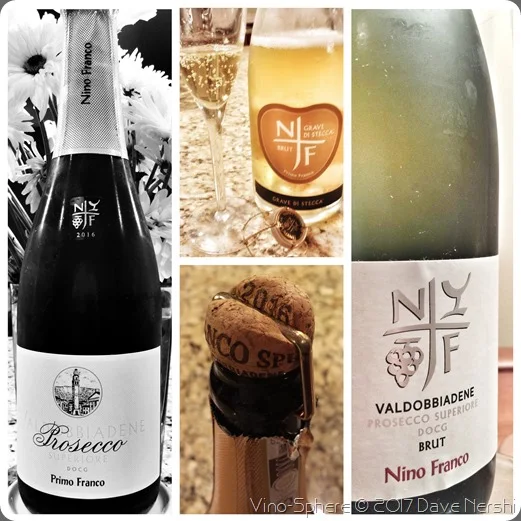
  • Nino Franco Brut Valdobbiadene Prosecco Superiore DOCG, SRP $27
  • Nino Franco Prosecco Rustico Valdobbiadene Superiore DOCG, SRP $19
  • Nino Franco Brut Valdobbiadene Prosecco Superiore DOCG 2016, SRP $29
  • Nino Franco Grave di Stecca Brut Sparkling 2010, SRP $49


Popping The Cork On Nino Franco


Leading off our exploration of Nino Franco was the Prosecco Brut Superiore. The Glera grapes for Prosecco Superiore are grown on the wild, steep hills in Valdobbiadene, as contrasted with non-Superiore Prosecco which comes from low-lying valleys. Terroir does make a difference as the quality upgrade was noticeable on the first frothy sip. This wine has crisp apple flavors with bubbles that stream and disappear quickly.

The Rustico name is connected to the old local tradition of making wine with a short second fermentation and leaving sediment in the wine. That’s no longer the technique, but the name remains. Rustico has a nice creamy froth and a balanced flavors. Like the Brut, this has an 11% alcohol content.

We continued to climb the quality ladder with the Primo Franco Prosecco Superiore 2016. “Under the hood” I got a surprise. The wine is sealed with a metal clasp called an agrafe. After a few minutes of puzzlement I pried the agrafe off with a knife – nothing could stop me from the prize! This bottle offered wave after wave of perlage (those wonderful bubbles) and had a creamy foam. This was savory and nutty adding to a delightful sipping experience.

The pinnacle of our tasting was the Grave di Stecca 2010. To add to the allure, this is packaged in a yellow cellophane wrap. Unwrapping it built the anticipation. This Prosecco stood alone in the quartet we tried. The seven years of aging ratcheted up the complexity. The bouquet combines fresh fruit and herbs.

In the glass, the Grave di Stecca offers a minerally flavor with some chalkiness. It has additional aging on the lees (the dead yeast cells) and that adds wonderful savory notes. On the palate it is remarkably smooth. It was a golden experience to be sure.

Nino Franco Prosecco has received a multitude of awards and it is easy to see why. Each bottle was crafted to produce a delicious experience. The pricing is such that opening a bottle doesn’t need to wait for a special occasion. Even the highest priced bottle we enjoyed is under $50. We highly recommend the wines of Nino Franco and want to nudge you to step up from the basic Prosecco to the DOCG Prosecco Superiore of Valdobbiadene.


Monday, August 11, 2014

Prosecco Brunch Scheduled August 24 At Churchill’s Briarfield Location

Wine service pouring a glass of the Italian sp...

Wine service pouring a glass of the Italian sparkling wine. (Photo credit: Wikipedia)

A gourmet Prosecco brunch will be held Sunday, August 24, at Walt Churchill's Market Maumee, 3320 Briarfield. Maumee, (419) 794-4000. The wines of the Bisol family will be featured.

Prosecco is a white wine grape grown primarily in the eastern part of Italy’s Vento region. It is famed for its sparkling wine. The best-known Prosecco comes from the wine region of Conegliano-Valdobbiadene. The finest Prosecco is labeled Superiore de Cartizze. The Bisol family has farmed since the 17th century, making wine on their estate since 1875.

A five-course meal prepared by celebrity chef Bill Kolhoff will be served. The cost is $75 and the event begins at 12:00 noon. Call Austin Beeman for reservations. Seating is limited.