Showing posts with label Sauvignon Blanc. Show all posts

Friday, January 5, 2024

Miguel Torres Chile Targets Zero Emissions With Tasteful, Organic Wines


Familia Torres, a well-known winemaking family in Spain, has been producing wine for more than 150 years and five generations. Torres was the first foreign winery in Chile and they produced the first Pinot Noir in that country.

Miguel Torres Chile today is under the guidance of Miguel Torres Maczassek. Their wine business in Chile is built on three pillars: organic farming, sustainability, and innovation.

Their goal is to reach net zero emissions by 2050, a tall order for any winery. In 2021 they attained a 35% reduction in CO2 emissions per bottle with a goal to reach a 60% reduction by 2030.

Green practices from vineyard to bottle are helping on the pathway to net zero emissions. Three main practices include:

Waste management: The winery approaches its industrial waste by installing clean points, reducing the generation of single-use plastic and using elements for packaging that are designed for recycling. They reduced the weight of 3 out of every 4 bottles produced, becoming one of the most significant reductions in the industry, now being 38% lighter. That’s less waste produced and less fuel to ship the wine.

Renewable energy:  Two photovoltaic arrays of solar panels are installed in the winery in the Curicó Valley. One  generates power for the winemaking process; and the other for the production process, such as bottling and labeling. These projects together with the biomass boilers self-generate 30% of clean energy.

Sustainable viticulture: This involves regenerative viticulture, which seeks to imitate nature as much as possible so that vineyards can become natural ecosystems. The winery applies this practice in its vineyards to reach a new balance based on the increase of biodiversity and organic matter in a natural way, thus enabling the vineyards to absorb more atmospheric CO2.


We contemplated these impressive environmental actions while sipping three bottles from the Miguel Torres Chile “Las Mulas” label. We sampled the 2021 Sauvignon Blanc, 2022 Rose, and the 2021 Cabernet Sauvignon, all made with organically grown grapes. 

The rosé comes from the Central Valley and is a blend of Pinot Noir and Monastrell (also known as Mourvèdre in France). This is a cheerful wine with delicate notes of fresh raspberries and ample acidity. This is a great aperitif or pairing with a light, casual meal.

Pale yellow in the glass, the Sauvignon Blanc is subtle, with a wafting aroma of tropical fruit. On the palate, it tastes of lychee fruit, freshly mown grass, and charming citrus fruit. This is perfect for baked or sauteed fish with light sauce. It’s truly wonderful on its own as well.

Las Mulas Cabernet Sauvignon was a satisfying surprise. All three of these bottles sell for about $10, but the Cabernet is loaded with flavor and outperforms other wines that are double the cost. I brought this to my weekly wine tasting with my friend Arthur Barham (Merlot 2 Muscadine). The flavors are rich, with prominent red fruit and accents of spice. It’s round and elegant with tannins providing a light and easy structure. The finish was buoyant and long. This is a tremendous deal at the price.

We suggest you cheer Miguel Torres Chile on their way to zero net emissions by toasting with a bottle of their Las Mulas wine!

Full disclosure: These wines were received as marketing samples.

Monday, September 25, 2023

South African Dinner Dazzles With Tasteful Dishes And Stark-Condé Wine

Stark-Condé South African Wines

Wines from South Africa find the sweet spot between Old World winemaking techniques and New World flavors.

Stark-Condé Syrah
Diverse Roots

When we were invited to sample a selection of South African wines from Stark-Condé. It was the perfect occasion to throw an aandete partytjie (dinner party) pairing these delicious bottles with elegant dishes.

Follow us on Twitter – err, X

Stark-Condé is a family business that encompasses a story of diversity as well.

South African patriarch Hans Schroder was raised in Stellenbosch. In the 1960s while attending university in Japan, Hans met and married fellow student Midori Maruyama. At the time, their marriage was illegal in Hans’ native South Africa due to the apartheid regime’s Prohibition of Mixed Marriages Act so the young couple settled in Japan. They remained in Tokyo for the next nearly three decades where they raised three daughters.

South African dinner and scallop entree

In the late 1980s and with the changes on the horizon in South Africa, Hans and Midori decided it was time to return to his native country. They purchased the Oude Nektar farm in 1989 and focused on growing grapes. In 1998, eldest daughter Marie and her American husband José also relocated to South Africa to join the family – and the family business, where with an artisan’s attention to detail and a purist’s approach in the cellar, José slowly developed Stark-Condé’s wines.

Gary and Diane and Bobotie

Today, Stark-Condé wines and the family of brands includes Stark-Condé, MAN Family Wines, Lievland Vineyards, Essay, and KaraTara. The range has something for everyone, from wine novice to lovers of classically styled wines.

Celebrating South African Wine

Friends enjoying dinner and sosatie kabob

To make a six-course meal possible, we enlisted the culinary expertise of our guests, inviting them to create a dish for an assigned wine. Our guests were Kyle and Natalie Hampton, Arthur and Mary Barham, Rob and Chris Rudloff, and Gary and Diane Wessell. Of course, this would not have been possible without the cooking and organizing of my wife, the Green Dragon.

Keep up with the latest. Follow us on Instagram!

After a bit of bubbly, we uncorked our first SA wine: the 2021 Warrelwind Sauvignon Blanc, Western Cape, from MAN. Warrelwind is a whirlwind in Afrikaans, and this was a beauty, with an accent on herbaceousness and rich tropical notes. A nice accompaniment to the fresh Caprese Salad.

South African Chenin Blanc

Chenin Blanc is one of South Africa’s most well-known wines, and we featured two on our menu. The first was the 2021 Monk Stone Chenin, Jonkershoek Valley, Stellenbosch, from Stark-Condé. This is a complex wine aged in amphorae and second-use oak. It has lovely nectarine and apple flavors with notes of wet stone. The tasty leek and asparagus quiche was a perfect partner, not overpowering the delicate tastes of the wine.

The 2021 Essay (“S A” get it?) is a blend of Chenin Blanc, Roussanne, and Viognier from the Coastal Region. This wine is slightly off-dry with generous fruit and a palate of pineapple and guava. It is a dynamite food fine and glasses were refilled and the bottle emptied as we tasted the succulent seared scallops and shrimp served with oranges and rocket salad. At an SRP of $11.99, this is a steal.

Bobotie is a South African casserole with minced beef at the bottom and a thin layer of egg custard on the top. Diane and Gary seasoned it to perfect. The KaraTara Pinot Noir was striking with the bobotie. I couldn’t imagine a better match. A touch of pepper is typical from Pinots in this area and it really worked with this dish. It also had classic cherry and strawberry notes.

Exploring South African Cuisine

Sosatie is a lamb kebab from South Africa with Cape Malay roots. Arthur whipped this up with three different sauces, including one with apricot. In the past, the only really good Pinotage I’ve had is what I tasted in South Africa. The Lievland Bushvine Pinotage from Paarl turned my preconception upside down. This was an elegant Pinotage with luscious raspberry and hints of oak and vanilla. It is a smooth and savory wine. SRP is $18.99.

Caprese salad and rich dessert

Do they love dark chocolate in South Africa? We don’t know, but the Green Dragon decided that a Deep Dark Chocolate Cheesecake would be the ideal pairing with the 2018 Stark-Condé Syrah. She was right. The key to pairing with Syrah is to have dark or bittersweet chocolate desserts. Something sweet would be a recipe for disaster. This was a scrumptious highlight of the evening. The Syrah is one of the best I’ve tasted this year, rich with dark fruit and jammy currant. The tannins are silky smooth and there is a touch of savory mushroom on the close.

Our guests were quite tickled with the fantastic food and wine feast, but we were not done. As we continued to savor the cheesecake, I opened a bottle of Amarula. Amarula is often shared during a South African braai, a gathering of friends and family around a wood-fired grill. The creme liqueur is made from the Marula fruit, which is the favorite food of African elephants. It is creamy with a fruity, toffee-like flavor.

It was an evening to remember thanks to a culinary marriage of great food and exemplary South African wines.

Full disclosure: These wines were received as a marketing sample.

Monday, October 31, 2022

A Wonder-Fall Wine Tasting

A quartet of wines to greet the changing colors of Autumn.

Bubbly Albariño

My tastings with friend Arthur Barham always have a few surprises. During my recent visit, Arthur greeted me with a first for me: sparkling Albariño. The wine was the 2020 “Octopus” from Carboniste, a California winery specializing in unique sparkling wines.

Never Miss A Beat – Follow Vino-Sphere On Facebook

Octopus is made with grapes grown on Andrus Island in the Sacramento River Delta. The grapes are pressed whole-cluster and four months on the lees.

The pressure and fizz of the Octopus are closer to Prosecco than Champagne. It’s sealed with a crown cap and is fresh and fun once opened. There are notes of green apple and kiwi with a flavor that is more pronounced than any other Albariño only 2% of California vineyards are planted with Albariño.

Sauvignon Blanc From Chile

We then uncorked the Brisandes 2021 Sauvignon Blanc from Colchagua, Chile. The winery is part of the far-flung Domaines Barons de Rothschild (Lafite) winemaking dynasty. I bought a number of bottles for our daughter’s birthday and had a couple left over. This wine is intriguing to me because it has a different flavor profile than Sauv Blancs from New Zealand or California.

Keep up with the latest. Follow us on Instagram!

The acidity is dialed down and while the grassy notes are present, there is a beautiful salinity along with lime and herbal flavors. Perfect for seafood and also (and I later found out) for a vegan ceviche with cauliflower steaks (and chimichurri sauce) and Chilean rice. This dish was prepared by my vegan chef daughter.

A French Crus Bourgeois

The reds were rolled out by Arthur. First, we sampled the elegant 2018 Château La Valière from Médoc. This is a Crus Bourgeois bottling. This quality level stands just below the Cru Classé but is recognized for its quality all over the world.


This is a Bordeaux blend with Cabernet Sauvignon playing the lead role with plentiful Merlot. Silky smooth with fine tannins, it has a medium body with blackberry and currant flavors and juicy cherry. It’s a refined wine purchased at a steal from WTSO.

Silky Cabernet Sauvignon

Ending with a velvet punch, Arthur popped open the 2020 Annabella Napa Valley Cabernet Sauvignon. Annabella (we’re on a first-name basis now) is rich and powerful with blueberry notes and whiffs of leather. The layers include chocolate and hints of spice. This wine eases to a persistent finish with a touch of vanilla.

Thanks to Arthur for sharing his hospitality and his wine.

Wednesday, August 31, 2022

Dry Creek Vineyard Releases Celebrate 50th Anniversary

Dry Creek Vineyard is celebrating 50 years as a pioneering winery in Sonoma.


Dry Creek Vineyard not only is located in Sonoma’s Dry Creek Valley, it has done much to establish the standards of quality for that prestigious wine region. The history of this multigenerational family winery is full of notable firsts within the industry:

Never Miss A Beat – Follow Vino-Sphere On Facebook

1972:  First winery built in the Dry Creek Valley following Prohibition.

  • 1972:  First to plant Sauvignon Blanc in the Dry Creek Valley.
  • 1972:  First to label a wine as “Fumé Blanc” in Sonoma County.
  • 1982:  First to display a sailboat on a wine label, a bold and daring move beyond the popular chateau-style labels of the time.
  • 1983:  First to pioneer Dry Creek Valley’s American Viticultural Area (AVA) status.
  • 1985:  First to label a wine as “Old Vine” Zinfandel, setting off an industry trend.


  • 1987:  First to label a wine as a “Meritage,” illustrating the family's love of Bordeaux blending.
  • 1997:  First to release a “Heritage Clone” Zinfandel from pre-prohibition vine cuttings.
  • 2017:  First to receive a U.S. patent for the design of printed sustainable sourcing information on a cork.
  • 2022:  First to release 50th consecutive vintage of Dry Chenin Blanc in the United States.

Here are the latest releases as the winery continues its 50th-anniversary celebration.


2021 Sauvignon Blanc, Dry Creek Valley

Dry Creek Vineyard really led the way for Sauvignon Blanc in Dry Creek Valley and we love their vision of this wine. It is made of 81% Sauvignon Blanc, 16% Sauvignon Musqué, and, 3% Sauvignon Gris. The Gris provides a creamy texture while the Musqué adds weight and juiciness. The flavors are bright tropical fruit, lemon,  and melon. We love Dry Creek Vineyard’s Fume Blanc, but this is a step up in complexity and elegance. It’s also a refreshing change from the jarring acidity of New Zealand Sauvignon Blanc.

Keep up with the latest. Follow us on Instagram!


2019 Cabernet Sauvignon, Dry Creek Valley

Dry Creek Valley is primarily known for Zinfandel, but the AVA has almost as much Cabernet Sauvignon planted. This is a wine that delivers inviting flavors in a medium-to-full body. It’s enjoyable to sip on a summer’s night – as we did. The flavors are lush and elegant with cranberry and black cherry with undertones of coffee and leather. It displays the hallmark of Dry Creek Valley wines: floral and spice notes.


The blend is 77% Cabernet Sauvignon and 14% Merlot with small amounts of Malbec, Petit Verdot, and Cabernet Franc. While this Cab can be aged for another five to 7 years, its rounded edges make it very approachable now. Also approachable is the $32 price tag.

2019 The Mariner, Dry Creek Valley

The Mariner is perhaps our favorite red wine. It’s an elevated wine created with finesse and the vision of creating the finest Meritage from the Dry Creek Valley with the five noble Bordeaux grapes. Each year the footprint is a bit different as the winemakers search for the best lots in Dry Creek Valley, including Dry Creek Vineyard’s DCV9 Endeavor vineyard. This year the blend highlights Cabernet Sauvignon (61%) with 18% Merlot, 8% Petit Verdot, 11% Malbec, and 2% Cabernet Franc.

The wine gets 20 months of aging in French and Hungarian oak, 42% new. During the fermentation, the wine gets pump-overs twice daily. All vines are 20+ years old. The point is, that all steps are taken to make this a special wine.

Full disclosure: These wines were received as marketing samples.

Friday, May 13, 2022

Dry Creek Vineyard Celebrates 50 Years Of Innovation And Excellence

Dry Creek celebrates with a special anniversary edition of its signature Fumé Blanc.

Setting Sail With Fumé Blanc

Years ago, before I had any notion of becoming a wine writer, I was perusing a shelf at a wine shop hoping to find something interesting for dinner. At that time, my definition of “interesting” included being reasonably priced.

I was attracted to a bottle with a boat with a billowing sail. It was Dry Creek Vineyard’s Fumé Blanc. My wine knowledge then was pretty limited and I didn’t even know what grapes were in it. Well, we loved it and this version of Sauvignon Blanc has been a staple for us ever since.

We aren’t alone in our love of Fumé Blanc and this year there is special cause for celebration. It’s the 50th anniversary of Dry Creek Vineyard.

Dry Creek Vineyard is one of the last, truly-private family wineries in Sonoma County. They consistently produce 90-plus rated wines.

The Roots Of Dry Creek Vineyard

It all began 50 years ago with David Stare and a dream. Stare traveled to Germany after completing his engineering studies. It was there he developed his interest in wine. Soon after his family spent two weeks in France, where he developed a love of Loire Valley and Bordeaux wines.

His path then led west to California where he discovered a rundown 55-acre prune farm in the Dry Creek Valley region of Sonoma County that was to become his dream location. He purchased the orchard and began planting the region’s first vines since Prohibition. Stare was determined to plant Sauvignon Blanc, despite the advice of several famed vineyard experts who warned that the variety was “inappropriate” for the region. He ignored the warning and plowed ahead and established an iconic and innovative Dry Creek winery. Today Sauvignon Blanc is the most widely planted grape in Dry Creek Valley.

Here’s a look at two 50th-anniversary Dry Creek Vineyard releases:

2021 Fumé Blanc, Sonoma County

Before even tasting a drop, you can tell that this is a special wine. On the reverse side of the front label is a drawing of the 1972 Fumé Blanc label. The front of the label has a nice embossed 50th-anniversary seal. The reverse of the back label has three historical photos.

While there are aromas of cut grass and grapefruit, don’t expect a New Zealand-style Sauvignon Blanc. Upon sipping, a lovely balance of acidity and tropical fruit is evident. Bright notes of tangerine and a cooling minerality keep you reaching for one more glass. This wine is our favorite California Sauvignon Blanc and at $16 it is an amazing value. I also place this in the “people pleaser” category: no matter your guests’ wine knowledge or palate, they are sure to love it.

2021 Dry Chenin Blanc, Clarksburg

There just isn’t enough good quality Chenin Blanc, like this bottle, to go around. If you only know Chenin from inexpensive bottles from South Africa or perhaps overly sweet Vouvray, you’re in for a treat. This wine reflects the Loire Valley-inspired roots and has been produced every year since the winery was founded. The grapes come from the Wilson Ranch in Clarksburg.

On the nose, there are melon and white blossoms. Finished in stainless steel, it is a refreshing wine, with flavors of peach and lemon. It has a soft texture and a lower ABV of 12%. Wonderful with seafood or as an aperitif, the SRP is $16.

Full disclosure: These wines were received as marketing samples.

Monday, February 21, 2022

Sunshine Bay 2021 Sauvignon Blanc, Marlborough


Sometimes we drink glamorous wines and other times…

Living The High Life

One of my friends frequently expresses that he is envious of my role as a wine writer and a reviewer of some really great wines. How I wish his imaginings were true.

Keep up with the latest. Follow us on Instagram!

We aren’t chauffeured around in a limo to a private jet that flies us to exclusive wine galas where ultra-premium wine flows like water. I don’t lounge around all day in a tuxedo sipping grower champagne from the finest crystal. If only.

While we do get to taste and write about some really wonderful wine, there are times when the Green Dragon roars and demands that we stock up on inexpensive, everyday vino. Her drink of choice while soaking in the tub is Sauvignon Blanc.

That brings us to our wine of the day: Sunshine Bay 2021 Sauvignon Blanc from New Zealand’s Marlborough region. This fell into the shopping cart at Aldi. At $7.95, if it were a complete bomb, it wouldn’t be too much of a loss.

Three Winning Wine Regions

I put Marlborough in the same category as Willamette Valley in Oregon or Horse Heaven Hills in Washington. It’s not that they share similar climates or soil – but rather that just about every bottle that comes out of these regions is a winner. Marlborough has about two thirds of all the grapevines in New Zealand. Most of it is Sauvignon Blanc, but the region is also the largest grower of Pinot Noir in the country.

Never Miss A Beat – Follow Vino-Sphere On Facebook

Just like Provence locked into the flavor formula for rosé, New Zealand perfected the taste profile for Sauvignon Blanc that captured a massive world market. Sunshine Bay sticks to the playbook and has produced an entirely drinkable wine that differs little from wines two or three times the price.

This is a wine that doesn’t deceive the sniffer. One smell of the cut grass aroma tells you this will be a classic Marlborough Sauv Blanc. It’s pale straw in color and almost certainly is aged strictly in stainless steel to keep the fresh bouquet and bright flavors. On the palate, you get a heaping helping of acidity that combines with the grapefruit flavor to deliver the trademark zing. There are also some floating peach notes.

The body is medium with an ABV of 12.5% keeping things light and lively. It’s a dry wine but rewards you with some nice fruit. This works well on its own or is a fine pick with shellfish, barbeque chicken, or chicken fajitas.

Sunshine Bay is a steal at $7.95. If you are looking for different expressions of the Sauvignon Blanc grape, check out French Sancerre or California. Chile also has some unique tasting Sauvignon Blanc and is right-priced.

Wednesday, June 30, 2021

Dry Creek Vineyard New Releases Hit The Summer Entertaining Trail

Grab one or more of these three wines for your next patio wine extravaganza.

Patio Party Planning

When that old sun begins to shine on the backyard and the grill is smoking away, you need just the right wines for the friends descending on your patio. Here is a trio of new releases from Dry Creek Vineyard that capture the fun of a wide-open summer.

2020 Dry Chenin Blanc, Clarksburg

Dry Creek Vineyard has produced Chenin Blanc every year since the family winery was founded in 1972. That’s a lot of Chenin!

Keep up with the latest. Follow us on Instagram!

It took some luck and skill to bring this delicious wine to market. A wildfire in Sonoma and one in a remote forested area threatened the purity of the region’s wine grapes. Since white grapes aren’t fermented on their skins, they are less susceptible to smoke taint. Lighter pressings were also used to limit the potential impact.

This is a simply wonderful Chenin that is a perfect dinner guest. Honeysuckle and peach notes on the nose give a foretaste of what’s to come. Lemon, melon, and a hint of orange zest grace the palate. The wine has a soft and filling texture. It is an ideal pairing for seafood or shines as an aperitif. SRP is $16.


2019 Heritage Vines Zinfandel, Dry Creek Valley

I’ll cut right to the chase: This wine rocks! The Heritage Vines are pre-Prohibition era vines grafted onto phylloxera-resistant rootstock. The result is young vine wine with Old Vines characteristics. This is perhaps our favorite Zinfandel of the bushels out there.

Never Miss A Beat – Follow Vino-Sphere On Facebook

We popped this one open at the end of an evening of dinner and wine with friends. It was time for something sweet. Out came a chocolate mousse pie.

I’m not sure if this is an ideal pairing – but it does combine two longtime loves: chocolate and excellent Zin! Some Zins entice you with jammy fruit flavors. The Heritage Vines is a more refined bottle with complex layers changing and dancing as you drink.

The black cherry and raspberry notes fill the mouth as you enjoy highlights of toasted oak and savory herb. It’s a rich and round wine with silky tannins. The finish is all mocha with a dash of white pepper. At $26, this is a tremendous value.

2020 Fumé Blanc, Sonoma County

Buy this wine and buy it in abundance for your summer entertaining. This Fumé Blanc is 100% Sauvignon Blanc, the most planted grape in Dry Creek Valley and a variety championed by Dry Creek Vineyard. It’s a classic dry wine that is now in its 49th vintage.

It’s modeled after the beloved wines of the Loire Valley in France and it has a chic yet fun style that’s perfect for summer. Lime and the smell of fresh-cut grass highlight the bouquet. On the palate there is grapefruit aplenty with peach and tropical flavor. The acidity is intertwined with a refreshing minerality.

We paired this with Barramundi in herbed butter sauce and Ombré Root Vegetable Gratin. The acidity of the wine contrasted nicely with the fattiness of the fish. The artful gratin dish brought delicate flavors to the meal and the Fumé provided the high notes for the bites.

The wine finishes crisply and with the right chill on the bottle, this is ideal for a warm evening on the patio. At $16 we recommend this as a multi-bottle buy.

Full disclosure: This wine was received as a marketing sample.

Tuesday, June 8, 2021

Clink Different With Unexpected Wine Varieties From Bordeaux And Germany

Germany equals Riesling and Bordeaux means Cabernet and Merlot, right? Not necessarily…

Variety In Varieties

In a world that is increasingly learning to celebrate diversity, it’s surprising how easily we can pigeonhole certain wines or wine regions. It’s not all bad. In many cases, it happens because of skyrocketing success.

Never Miss A Beat – Follow Vino-Sphere On Facebook

Germany is a good example. It’s northerly climate, sloping vineyards, rivers, and slate-filled soil combine to create perfect conditions for the production of Riesling. In Bordeaux, some of the world’s most sublime red wines are produced in chateaus using Cabernet Sauvignon and Merlot.

To focus solely on these grapes, though, is to overlook a bounty of other varieties that thrive in these two regions. Bordeaux and Germany are both cooler climate regions with high quality standards and for the last three years have partnered on a joint marketing effort to showcase their wines. In a recent virtual tasting, four unsung grapes from the two regions were spotlighted.

Weingut Strub 2019 Silvaner Trocken

This wine hails from Germany’s Rheinhessen region, known as the “land of a thousand hills.” It is Germany’s largest wine-growing region in terms of size. Rheinhessen also is home to the world’s largest area devoted to the Silvaner grape, which at one point was the most important grape in Germany.

Keep up with the latest. Follow us on Instagram!

The straw-colored wine opens with aromas of apple, pear, and hay. It provides a surprise on the palate. Far from the shy wine I expected, the wine is rich and a medium-plus in body. The acidity is mild to medium so it didn’t detract from the many layers that emerged, first a green apple flavor emerged followed by vegetal notes wrapped in notes of salinity. There is a waft of sweetness, even though this is a dry wine, but it blends effortlessly into a balanced wine.

We judge this to be an amazing food wine that pairs with grilled or raw fish, salads or stir fry. SRP is $19.

Dourthe 2019 La Grande Cuvée Bordeaux Sauvignon Blanc

While the Bordeaux reds capture most of the world’s attention, don’t sleep on Bordeaux’s white wine. In fact, if teeth-jarring acidity isn’t your thing, you might find the Bordeaux Sauvignon Blanc style more to your liking. Bordeaux, after all, is where this ancient grape originated. The Dourthe Cuvée is 100% Sauvignon Blanc, something that isn’t always a given in a region known for blending.

On the nose, there are fresh notes of citrus. The palate provides a tantalizing sensory experience. The wine is finished in stainless steel and undergoes six months of battonage (stirring on the lees). I always love Chardonnay that is aged in oak and has battonage, but this is the first Sauvignon Blanc we’ve tasted that uses the process. The payoff is huge – rich aromatics, savory flavors, and overall elegance.

The wine is lively with lemon and grapefruit notes mingled with some bread/yeast flavor surrounded by a nice minerality courtesy of the limestone soils. The wine is fresh and has a touch of honey on the finish. This one is perfect for cream-based pasta, fatty fish, steamed clams or goat cheese. Priced at $14.

Schnaitmann 2017 Steinwiege Lemberger

We’ve been on the Lemberger bandwagon for a while now. This grape, also known as Blaufränkisch (and about 50 other names), does really well in cooler regions that we like (such as Germany, Canada, and the Finger Lakes). In Germany, plantings of Lemberger have more than quadrupled since the 1980s. It is grown almost exclusively in Württemberg.

In the glass, the wine has a light purple hue. The aromas hint at what’s to come, with notes of smoke and spice. The tannins are smooth and refined. There are notes of juicy cherries, both sweet and sour. Tobacco and white pepper accents contrast with the fruits. The acidity is medium and the experience is wrapped together with silky mouthfeel and herbal flavors.

Pair this with grilled lamb, chicken shawarma, or tomato-based pasta. Retail is $37.

Château Belle-Vue 2018 Petit Verdot

Our final bottle is a rarity – a 100% old vine Petit Verdot from Bordeaux, where the grape is usually used in blends. The vines range from 62 to 81 years old. Château Belle-Vue was granted the prestigious Cru Bourgeois Exceptionnel status in 2018.

The beauty of this inky grape shines thanks to the use of clay amphora and large (new and used Austrian) oak barrels. The body is silky and almost creamy. In the mouth, it’s all about the blue fruit, with a carousel of violet, blackberry, and floral notes. The finish goes on almost forever.

While this grape is also known as “the little helper" and is often used just to deepen the color of wine, that is changing. Acreage of Petit Verdot has tripled in recent years. The price is $25.

To strike gold, you have to dig below the surface. To discover amazing new wines, you need to think – and clink – differently. These four wines offer an excellent starting point for your next wine exploration.

Full disclosure: These wines were received as a marketing sample.

Tuesday, May 18, 2021

Dry Creek Vineyard Trio Offers Elegance And Charm

Three releases just perfect for your springtime sipping.

As the world slowly lurches forward out of its malaise, it’s time to celebrate with bright and optimistic wines. Can wines be optimistic? We think so, and our mood certainly brightened after tasting these new releases from Dry Creek Vineyard in Sonoma.

2019 DCV Block 10 Chardonnay, Russian River Valley

Grapes for this wine come from 30 select rows in the DCV Block 10 Vineyard in Russian River Valley. The grapes are whole-cluster pressed, a technique we especially love in Chardonnay and Pinot Noir.


Never Miss A Beat – Follow Vino-Sphere On Facebook

It has lemon notes mingled with minerality. Its richness is enhanced by barrel-aging in French oak (28% new) and malolactic fermentation. The overall flavor is bright, with hints of oak from its brief aging. A beautifully balanced Chard priced at $34.

2020 Sauvignon Blanc, Dry Creek Valley

This is a superb wine that is an undeniable value. The wine is 71% Sauvignon Blanc and includes Sauvignon Gris (7%) and Sauvignon Musqué (22%) clones. The Sauvignon Musqué provides juiciness and the Sauvignon Gris provides texture. We just love the complexity that comes with this blend. It makes other Sauvignon Blancs look plain by comparison.

Keep up with the latest. Follow us on Instagram!

The barrel regimen is also unique: 17% is aged in acacia, chestnut, and oak barrels - the rest stainless steel. Dry Creek Vineyard has more than 50 years of experience with growing Sauvignon Blanc in Dry Creek Valley, and it shows. This is a layered glass of balanced acidity, herbaceousness, cooling grapefruit, lime zest and rounded apricot and stone fruit notes. Each nuanced sip beckons you to take one more. SRP is $20.

2018 Cabernet Sauvignon, Dry Creek Valley

Think Dry Creek Valley is only for Zinfandel? Hold your horses. Although the region is known primarily for Zinfandel, the AVA has almost as much Cabernet Sauvignon planted. This Cab benefits from vibrant sunshine and cool foggy evenings to ripen just right while maintaining ample acidity.

This is a silky take on Cab with 79% Cabernet Sauvignon, 12% Merlot, 5% Malbec, and 2% each of Cabernet Franc and Petit Verdot. It spends 19 months in French oak (36% new). There is a cranberry core with floral highlights. A delightful mineral note wraps it all together. We found this to be delightful on the patio paired with a starry night. It is right-priced also, at $32.

Full Disclosure: This wine was received as a marketing sample.

Monday, December 21, 2020

Fathers + Daughters Cellars Make Mark With Stellar Micro-Production Wines

Our first taste of this family winery showcases the terroir of Anderson Valley.

Fathers+Daughters Sarah's Rustic Bubbles

All In The Family

Fathers + Daughters Cellars is a boutique winery crafting wines from wines primarily from Anderson Valley’s Ferrington Vineyard. The output is a minuscule 600 cases, making each bottle of premium wine a true gem.

Never Miss A Beat – Follow Vino-Sphere On Facebook

The namesake fathers and daughters begin with patriarch Kurt Schoeneman, who is the owner of the storied Ferrington Vineyard. Daughter Sarah is married to Guy Pacurar. Together they have two daughters, Taylor and Ella. Together this clan has put its stamp on some truly magical wines.

We had the opportunity to sample three wines, all produced by winemaker Phil Baxter. Baxter studied enology at UC Davis and refined his skills in Burgundy before bringing his French Cellar methods and techniques back to northern California. Due to his dedication to the expression of terrier in Pinot Noir, Fathers + Daughters Cellars approached him to craft the inaugural release of their flagship wine, Ella’s Reserve Pinot Noir in 2012.

2018 Sarah’s Rustic Bubbles, Ferrington Vineyard, Anderson Valley

We were excited just looking at this bottle of sparkling wine. It is 100% Chardonnay sourced from the Roederer estate vineyard and the bright gold of the wine is cloudy with sediment. It is made using the Petillant-Natural method with fermentation started in stainless steel tanks and then finished in the bottle. Unlike the traditional method, there is no disgorgement and the wine is bottled unfiltered and unfined.

Fathers+Daughters focuses on single vineyard wines

Keep up with the latest. Follow us on Instagram!

Rustic Bubbles is closed with a crown cap, adding to its unique style. It’s a wonderful wine with rustic complexity and texture. The flavor profile is apples and citrus and in more abundance than Champagne. The perlage creates a pleasing froth, but the bubbles are not as persistent as a traditional method wine.

We would dub this casual chic and at $21 SRP, it’s affordable luxury.

2019 Sauvignon Blanc, Ferrington Vineyard, Anderson Valley

Fathers + Daughters has produced a beautiful bottle with this Sauvignon Blanc. There’s no cut grass flavor and instead of over-the-top acidity, it delivers balanced flavors of tart citrus with cooling minerality.

This is a dry wine with refreshing notes. An ABV of 12.8% and stainless steel finish makes it a breeze to pair with food. It’s perfect for a summer picnic or a stay-at-home meal of poultry or fish. A new favorite wine at $25.

Fathers + Daughters Ella's Reserve Pinot Noir2017 Ella’s Reserve Pinot Noir, Ferrington Vineyard, Anderson Valley

This wine makes us say, “Hurrah for Pinot Noir.” This is the flagship wine made by Fathers + Daughters. It’s artfully produced, made with Dijon, Pommard, and Waldenswil clones which contribute their nuanced flavors.

Thirty-percent of the grapes were fermented whole-cluster, adding interest and character. Ella’s Reserve is fermented naturally with native yeast and also undergoes malolactic fermentation. Aging is 20 months in 25% once-used and 75% neutral French oak barrels.

When the bottle is opened, it’s time to forget about the painstaking care by the winemaker and just enjoy this gem. Violet and black cherry greet you on the front end. The texture is smooth and rounded with a touch of graphite and herbs to create complexity and interest.

A hundred cases were produced and it’s the signature wine for a reason. It’s very, very good. SRP is $52.

These are beautiful and stylish wines. We encourage you to get to know the family!

Full disclosure: These wines were received as a marketing sample.

Monday, November 30, 2020

Dry Creek Releases Good Choice For Holidays

Dry Creek Vineyard 2017 The MarinerLooking for wines for gifts or holiday meals. Check out these four new releases.

California Unlocked

Much of the country – heck, all of it – has been struggling mightily with the pandemic. That includes winery tasting rooms and wine country businesses.

Never Miss A Beat – Follow Vino-Sphere On Facebook

This morning I was reading a newspaper article about a three-week stay at home mandate in Los Angeles County. Thankfully there is wine – not just to ease our frazzled nerves, but the purchase of which support the wineries, staff and related businesses.

A memorable pre-COVID wine country trip included a stop at Dry Creek Vineyard, one of our favorite wineries. We’ve just tasted through four new releases. They came not a moment too soon. The holiday season is upon us and these Dry Creek Vineyard wines are perfect for holiday meals, gift giving, or just unwinding.

2019 Fumé Blanc, Sonoma County

This wine is one of our “go-to” bottles for entertaining. It is reasonably priced at $16 and is a crowd-pleaser that delights wine aficionados as well as wine novices. P1080342

Keep up with the latest. Follow us on Instagram!

DCV has been producing Fumé Blanc for 48 years. This 100% Sauvignon Blanc is fermented in stainless steel to preserve the bright, refreshing flavors. Lemon and peach notes align with minerality and a pleasing minerality.

2019 Sauvignon Blanc, Dry Creek Valley

While the Fumé Blanc echoes the Loire Valley aspirations of the winery’s founders, the second generation of this family winery has produced a more contemporary take on Sauvignon Blanc. The 2019 vintage blends 73% Sauvignon Blanc, 20% Sauvignon Musqué, and 7% Sauvignon Gris.

This wine has multiple layers of cool. Not only with the added grape varieties, but aging is in chestnut, acacia and French oak barrels. Add to this the wonderful terroir of Dry Creek Valley and you have a winner for only $20.

We suggest this for a nice holiday meal where seafood or poultry is highlighted. The palate has tropical fruit and a slightly creamy texture.

2019 Dry Chenin Blanc, Clarksburg

Chenin Blanc is plentiful in South Africa and in France’s Loire Valley, but may not be a familiar sight at your wine shop. This is a rich white wine that is perfect as an aperitif or pairing with a light meal. At $16, it is also light on your wallet.

Please not that this is dry Chenin Blanc. Chenin can also be produced as a sweet or semi-dry wine, as is often the case with Vouvray. The flavor palette includes lime and candied lemon mingled with tropical mango notes. It’s fresh and lively and is finished in 100% stainless steel.

Like the other wines produced by Dry Creek Vineyard, the grapes are sustainably farmed. The wines are made with minimal intervention and without any animal-based fining agents or products containing gluten. Put your feet up and recover from the holiday chaos with a glass of Chenin Blanc.

2017 The Mariner, Dry Creek Valley

The Mariner, Dry Creek Vineyard’s powerful yet elegant Meritage, has been one of our favorite wines for more than a decade. It’s a blend of the five noble Bordeaux varieties. The 2017 vintage, retailing for $50, is 69% Cabernet Sauvignon, 15% Merlot, 6% Cabernet Franc, 5% Malbec, and 5% Petit Verdot.

Aging is 18 months in French and Hungarian oak, 42% new oak. The grapes come from a hillside vineyard with gravelly, iron-rich soil.

We paired The Mariner with a grilled sirloin steak. On the nose there is cocoa and blueberry. On the palate it is luxuriously smooth with deep raspberry and notes of smoke. There is an earthy complexity.

The Mariner continues to top the charts of our wine favorites. As with other DCV wines, the value is outstanding. It drinks like a much more expensive bottle. As such, we recommend The Mariner as a perfect holiday gift for the wine lover on your list.

Full disclosure: This wine was received as a marketing sample.

Saturday, September 12, 2020

Screwcap Wines Perfect For Your Outside Enjoyment

Screwcap wines from La Vieille Ferme, Bernier and MohuaThe current pandemic has increased the amount of time we’re spending outdoors. Here’s a list of some outstanding screw closure wines to enjoy while there.

Welcome To The Great Outdoors

Patios, backyards, parks, beaches, lakes, balconies, rooftops. Camping, picnics, hiking—one of the biggest trends of 2020 just might be how much time we’re spending outdoors. For the time being, our entertaining has all been on our back patio with plenty of room to social distance with our friends. We’ve been twisting off the tops of many wines in the process.

Screwcap wines from MAN and Domaine MatrotWines with screw closures have come a long way. Previously screwcaps were used almost exclusively on low-quality, mass-produced wine. Today the story is much different.

Advances in closure technology now allows for the preservation of wine without the worry of cork taint. Many producers also tout the environmentally-friendly aspect of screw closures. You can no longer judge the quality of the wine by the bottle top.

Perhaps the biggest bonus is convenience. No foil cutter or corkscrew is required – and you don’t need to worry about resealing the bottle if you didn’t quite finish. Just twist the top back on.

Twist And Shout

We recently untwisted the tops on eight enjoyable screwcap wines:

Bernier 2018 Chardonnay, Loire Valley – We’re Loire Valley fans and consider these French wines fun with plentiful fruit. This Chard is fresh with apple and pear notes with minimal oaking. Nice minerality too. SRP $15.99.

Domaine Matrot 2018 Chardonnay, Burgundy – This Burgundy gets malolactic fermentation and time on the lees for a nice rounded flavor. The vines average more than 30 years old. SRP $28.99.

Domaine Matrot 2017 Pinot Noir, Burgundy – Made with grapes from Puligny-Montrachet and Meursault, this is a Pinot designed to drink young. A fresh wine with sweet notes of red berries. Lacks the earthiness of some Pinot, but is juicy with soft tannins. SRP $33.99.

La Vieille Ferme 2019 RogueLa Vieille Ferme 2019 Rosé – La Vieille Ferme is the best-selling French wine in America and is designed to be straightforward and inexpensive. The Rosé is thoroughly enjoyable at a mere $11.99 price. Made with Cinsault, Grenache, and Syrah.

La Vieille Ferme 2018 Rouge – This is a unique red with a Southern France profile. The grapes are Carignan, Cinsault, Grenache, and Syrah. The grapes are crushed and fermented in cement vats, which gives the wine a light and playful style. One of my patio favorites at a mere $11.99.

MAN 2019 Chenin Blanc, South Africa – This Chenin Blanc, or Steen as its called in its home country, comes from unirrigated bush vines. Surprisingly, it is made from free-run juice – no pressing involved. This is a fresh, enjoyable mix of pineapple, lemon and apple flavors. SRP $11.99.

MAN 2017 Pinotage, South Africa – There’s a lot to love about this Pinotage (a South African specialty). It starts with earthy notes of mocha then softens into juicy, red berry bliss. This was a favorite of the Green Dragon (my lovely wife). SRP $11.99.

Mohua 2019 Sauvignon Blanc, Marlborough – A satisfying, classic version of Marlborough Sauvignon with tropical fruit and lime notes punctuated with a zesty acidity. The Mohua is a small colorful bird found only on the South Island of New Zealand. This is a solid choice for the summery days of September. SRP $15.99

Full disclosure: These wines were received as marketing samples.

Tuesday, August 6, 2019

Dry Creek Vineyard 2018 Fumé Blanc and 2018 Sauvignon Blanc

DCV 2018 Fume Blanc and Sauvignon BlancHusband and wife don’t always agree. Such was the case with these two Sauvignon Blanc releases from Sonoma Country.

A Tale Of Two Palates

Anytime two different wine drinkers imbibe, you can expect a difference of opinion. One Instagram contributor I follow, for example, keeps posting photos of visits to interesting wineries in our state – but every wine shown is a sweet fruit sugar bomb. That’s clearly out of step with where I am in my wine appreciation journey.

Never Miss A Beat – Follow Vino-Sphere On Facebook

My wife (known as the Green Dragon) and I often think alike. That’s not so strange when you’ve been married for a while like we have. It’s not uncommon for me to say, “I’d really could go for some Mexican food tonight” and she’ll say, “I was thinking the same thing.” Our taste in wines are usually in sync too – but not always.

A Doubletake On Sauvignon Blanc

We recently opened two new releases from Dry Creek Vineyard, the 2018 Fumé Blanc, Sonoma County, and the 2018 Sauvignon Blanc, Dry Creek Valley. Although both Sauvignon Blanc, they are two different animals in the glass. We had two different favorites.

Keep up with the latest. Follow us on Instagram!

Fumé Blanc is an approved alternate name for Sauvignon Blanc and was coined by Robert Mondavi when he was trying to jumpstart the California wine industry in the 1960s. While some associate Fumé Blanc with an oak finish, that isn’t always the case. This Fumé is fermented in stainless steel with no oak aging.

The Green Dragon leapt for joy with the Fumé Blanc. The racy acidity, aroma of cut grass, and dynamic citrus flavors push all the right buttons. Made with grapes from Dry Creek Valley and Russian River Valley in Sonoma, this is a perennial favorite with us. It is refreshing and intense with pure flavors. At only $16, this is a flavorful value.

Going For A Different Twist

While Green Dragon was going ga-ga over the Fumé Blanc, I was appreciating the Dry Creek Valley Sauvignon Blanc. It offers complexity and style at an amazing price point of just $20. To start with, it’s not just Sauvignon Blanc. It has 15% Sauvignon Musqué and 9% Sauvignon Gris. The Sauvignon Musqué, a clone, delivers added body while the Sauvignon Gris gives a unique texture to the wine. All grapes come from the Dry Creek Valley AVA.

So, instead of a New Zealand style Sauvignon Blanc, there is a more sophisticated quality. As if the grape selection weren’t enough to pique your interest, a portion of the wine is fermented in acacia, chestnut and neutral French oak barrels. That’s cool.

This wine tips toward tropical fruit flavors of pineapple and tangerine. This has a fuller body than the Fumé Blanc with the acidity not as pronounced. It has a grand elegance you wouldn’t expect at this price and is my pick of the two.

Both bottles will make great pairings with light summer fare including chicken and fish. Of course, sipping them nicely chilled on a warm summer evening works too.

Full disclosure: These wines were received as a marketing sample.

Tuesday, November 27, 2018

New Zealand’s Villa Maria Winery Lineup Offers Diversity, Sustainability

New Zealand was discovered in 1300 by the Maori, who are East Polynesians. They called it Aotearoa, the “Land of the Long White Cloud.” Villa Maria is one of New Zealand’s leading wineries.

One-Man Band Becomes Global Brand


New Zealand is a relative newcomer on the international wine scene. Located in the Pacific about 1,200 miles from Australia and far from any other landmass, its wine industry wasn’t firmly established until the 1970s. From there it took off like a rocket.


There are now more than 400 wineries in New Zealand and it has enjoyed 23 straight years of export growth. Its wine export sales now exceed countries like Germany and Argentina and totals more than $1.7 billion.

Villa Maria is one of the premier wineries in New Zealand and has amassed an exceptional number of honors for its wine, efforts in sustainability and business practices. Its growth parallels the success story of New Zealand wine.

The winery was begun in 1961 by George Fistonich when he leased five acres of land from his father. Throughout the 1960s it was a one-man show, with support from George’s wife Gail. From those humble beginnings the winery has grown to an enterprise that now exports to more than 50 countries worldwide.

A Focus On Sustainability


As an island nation, New Zealand has a focus on the environment. In tune with this, Villa Maria has been a pacesetter in the area of sustainability, being a member of Sustainable Winegrowing New Zealand since its inception in 1995. The winery is also measuring and managing its carbon footprint as part of a national research program.


In February 2009, Villa Maria was the first major New Zealand winery to achieve BioGro organic certification for winery and bottling facilities in Auckland, enabling them to trace organic certification for our organic wines from grape to bottle. That’s an important designation, because wines “made with organic grapes” can be subject to all sorts of chemicals in the winemaking process, something many consumers don’t realize.

Villa Maria has about 500 sheep that control grass growth and provide natural fertilizer and about 70% of wine bottle packaging is made from recycled material. During a recent virtual tasting hosted by Snooth, we were able to taste through six Villa Maria current releases.

A Sparkling Surprise


When thinking of New Zealand, our thoughts immediately zero in on Sauvignon Blanc. The New Zealand style is our favorite and the grape thrives in the country’s cool ocean breezes. Villa Maria, though, presents quite a balanced lineup. Some of the guests for our impromptu tasting party were surprised to see the diversity.

We first opened the 2017 Bubbly Sauvignon Blanc. This is 100% Sauvignon Blanc and made specifically for the US market. It was a perfect arrival wine. Like all Villa Maria wines, it has a screw closure. The bubbles are  pleasantly spritzy. There is a kiss of sweetness. It’s a new wine and our group was enthusiastic about it. SRP is $15.

We don’t normally associate rosé with New Zealand, but perhaps we should. The 2017 Private Bin Rosé is from Hawkes Bay, the country’s top region for reds. It is a Merlot blend and salmon pink in the glass. The alcohol is a light 12%, making it a perfect mate for a wide variety of foods.

Taylors Pass: A Range Of Quality


Internationally, different labels produced by wineries are called ranges. We tasted two ranges, the Private Bin range and Taylors Pass. It was a captivating exercise: we had a Sauvignon Blanc and a Pinot Noir from each range, allowing us to compare and contrast.

The Private Bin range is a solid value. The 2017 Private Bin Sauvignon Blanc, for example, retails for $14 and delivers flowing cool-weather flavors with citrus and herbaceous notes and the right amount of acidity. It is the classic Marlborough style. Also from Marlborough is the 2017 Private Bin Pinot Noir. A tasty value at $18, this was a hit with our eight guests, each with different palates. It’s approachable with lush red fruit notes and went well with my famous blue-cheese-stuffed dates wrapped in prosciutto.

Taylors Pass sits on the northern bank of the Awatere River. The vineyard is warm, sheltered from the cool breezes that flow down the valley from the mountains. The soils are a patchwork of different types, each eliciting different flavors from the grapes. In Taylors Pass the people must be very happy, based on the wines we sipped.

While the majority of our tasting party favored the Private Bin Sauvignon Blanc, I was blown away by the 2016 Taylors Pass Sauvignon Blanc. It has complexity and herbal notes that make it a standout among Sauvignon Blancs. This is enhanced by four to six weeks on the lees. SRP is $26 and a good value at that.

The 2015 Taylors Pass Pinot Noir was the highlight of the tasting for me. This single vineyard Pinot spends 14 months in French oak (25% new) which yields oak notes that mingle pleasantly with cocoa and wild cherry flavors. The retail price is $42 and it is a nice value compared to a Willamette Valley or Russian River Valley Pinot of similar quality.

We’ve enjoyed a fair bit of Villa Maria wines over the years. Our latest tasting confirms our impressions – Villa Maria has a wide lineup of wines that are delicious and represent great values.

Full disclosure: This wine was received as a marketing sample.


Wednesday, September 5, 2018

Latest Dry Creek Vineyard Releases Offer Crisp Refreshment, Refined Flavors

A trio of new releases from Sonoma’s Dry Creek Vineyards has something for almost every palate.


We recently had the chance to “test drive” three new wines from one of our favorite wineries, Dry Creek Vineyards. They each are very different wines, but each caused us to return to the bottle for a refill.

2017 Dry Chenin Blanc, Clarksburg


We had planned a special wine dinner in honor of friends visiting from out of town. I originally planned some big reds, but blistering hot weather changed our plans. We opted for some light, summery food and wine.

We paired the 2017 Dry Chenin Blanc with Potato & Wild Salmon Cakes with Ginger, Scallions and Dill Sauce. It was accompanied by a spinach salad with strawberries, blueberries and toasted hazelnuts.

Dry Creek Vineyards has produced dry Chenin Blanc every year since the winery was founded in 1972. This is a bracing, crisp white wine. Stainless steel fermentation keeps the flavors of pear and green apple fresh. It’s lively and a spot-on pairing with seafood of any sort. SRP is $15.

2017 Fumé Blanc, Sonoma County


We love Fumé Blanc, a handle used for some Sauvignon Blanc in California. Priced at $15, this is one of our favorite QPR (quality price ratio) wines. In short, you’re getting a great value that’s sure to please. This Sonoma version of Sauvignon Blanc has bright lemon and grapefruit flavors without over-the-top acidity. (I’m talking to you, Marlborough!)

We enjoyed this bottle on a warm evening on the patio. Winery founder David Stare was the first person to plant Sauvignon Blanc in Dry Creek Valley – and now it is the most widely planted white grape in the region. Mouthwatering flavors and a nice minerality!

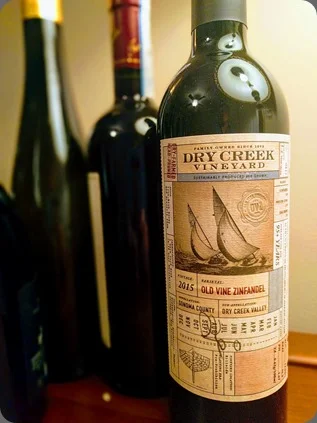
2015 Old Vine Zinfandel, Dry Creek Valley


It’s hard to believe, but true. Dry Creek Vineyard first coined the term “Old Vine” in 1987. Those are two words we love to hear – especially attached to Zinfandel. Old Vine vineyards are usually defined as averaging more than 50 years of age. For this particular bottling, the vines are more than 95 years in age and in some cases, more than 110 years old.

Why does that matter? As vines age, they produce fewer grapes. In the counterintuitive world of winemaking, that’s a good thing. Since there are fewer grapes, each receives a greater concentration of flavor. This bottle has 76% Zinfandel, 22% Petite Sirah and 2% Carignane. It is a delightful example of Zinfandel at its best.

This is a refined drinking experience with layers of cranberries, raspberry and cocoa. We detected a bit of spice and pepper on the finish. It is aged 16 months in French, American and Hungarian with 27% new oak. The aging regimen gives added complexity.

The 2015 Old Vine Zinfandel is a winning wine for any occasion. It retails for $35 with a production of 2,200 cases. It’s a wine we highly recommend.

Full Disclosure: We received these wines as a marketing sample.

Monday, September 3, 2018

Locations Latest Wines Raise The Bar

Our latest tasting shows that the key to winemaking success is location, location, location!

Winemaking Against The Grain


Winemaker Dave Phinney’s Locations brand flies in the face of most winemaking tradition. In most cases, wine regions are all about placing their stamp on a unique style. In France, Burgundy doesn’t want to be confused with Bordeaux. Napa Valley doesn’t want to be confused with Sonoma. Even Rutherford wants wine drinkers to know that its Cabernet is different than neighboring Napa Valley regions.


On the other hand, Locations tries to blend across all the major appellations to produce a wine that represents the country, or state, of origin. The question is, when you break the rules and thousands of years of tradition in pursuit of expressing freedom, does it work?

We uncorked the four latest Locations wines to find out. In our minds the answer is a resounding “yes.”


The Old And New Worlds


The quartet of Locations wine included two from the Old World (countries in Europe) and two from the New (everywhere else). Adorned in their attention-grabbing “bumper sticker” labels, we sampled E5, a Spanish red; F5, French red wine; NZ7, New Zealand Sauvignon Blanc; and WA5, a Washington red wine. Each is priced at $19.99.

Of the many Locations wines we’ve tried over the past few years, E is our favorite. Spanish reds are delicious and the Locations wine boundary-busting blend captures the spirit of the country. It is a blend of Garnacha (Grenache), Tempranillo, Monastrell and Cariñena. Three powerhouse regions are represented: Priorat, Ribera del Duero and Rioja. Also in the blend are grapes from Toro and Jumilla.


Pepper, black raspberry and vanilla flavors swirl in the glass. It has a silky texture and a long, lingering finish.

The entry from France is a blend of Grenache, Syrah and various Bordeaux varieties (we assume Cabernet Sauvignon, Cab Franc and Merlot, maybe a few more). The grapes are sourced from Phinney’s network of growers in Rhone, Roussillon and Bordeaux. That prompts us to ask, “What is Burgundy, chopped liver?”

There is no arguing with the results, though. Grenache and Syrah are a classic Rhone formula. Syrah is also widely grown in Roussillon. The emphasis here is on red fruit, with notes of strawberry and cranberry with just a touch of earthiness. This is a solid and enjoyable wine and a great French value at sub-$20.

We uncorked the NZ at a wine dinner to serve with a spread of appetizers that included stuffed mushrooms. My wife is an extreme Sauvignon Blanc fan with a preference for New Zealand’s Marlborough region. For the NZ edition Locations stayed in one region, but sourced the grapes from three different valleys with different characteristics.

It is 100% Sauvignon Blanc and grapes come from Wairau Valley (known for crisp, grassy flavors), Awatere Valley (bringing the minerality) and Waihopai (with complexity from gravelly soil). This is a great bottle. Some people can get turned off by the extreme acidity in some Marlborough Sauvignon Blanc. But NZ turns it down in favor of a more rounded, yet still crisp mouthfeel.

All the hallmarks are there including bright grapefruit and tropical flavors. The flavors of freshly cut grass add to the refreshing experience.

Pizza and Petite Sirah


Our final bottle, the WA, was popped for a casual evening dinner. We made flatbread pizza – one a Hawaiian style with pineapple and Canadian bacon, and the other a barbecue and chicken affair.

We go bonkers over Washington State wine and this did not disappoint. It is a blend of Syrah, Merlot and Petite Sirah. The producer is coy about the specific wine regions used, just saying it is sourced from “within the state’s best growing regions.” To us, that means it includes Walla Walla Valley, Horse Heaven Hills, and certainly Columbia Valley (which covers most the the vineyards in the eastern part of the state and drifts into Oregon too).

This is an elegant and enjoyable drinking experience. Although it has 15% ABV, it doesn’t taste “hot.” It is smooth and fruit forward with plum and black cherry notes. The Merlot softens the Syrah and the Petite Sirah adds a bit of mystery.

This is the first Locations Washington State blend and we applaud the effort. There are some unique AVAs in Washington, so we’d love to know specifically what’s represented in the blend.

We recently received a news item announcing that Locations has been acquired by E&J Gallo. We hope that the creativity and high QPR (Quality Price Ratio) continue with these wines. Dave Phinney has a magic touch with winemaking. He created the wildly successful Prisoner blend, then later built up the Orin Swift brand – both of which he later sold. Phinney will continue to be the Locations winemaker.

Whatever your location, you’ll like it better with a glass or two of Locations!

Full Disclosure: These wines were received as a marketing sample.