Showing posts with label Stellenbosch. Show all posts

Tuesday, March 16, 2021

Glenelly 2009 Grand Vin, Stellenbosch

Glenelly 2009 Grand VinA new APWASI wine certification means we pop open a special bottle.

South Africa Certified!

For the past few weeks, I’ve been studying South African wine as part of the Asia Pacific Wine and Spirit Institute Certified South African Wine Specialist program. I previously completed the Certified Argentinian Wine Specialist course and now just passed the exam for the South Africa certification.

Keep up with the latest. Follow us on Instagram!

A major wine holiday took place while I was studying, Open That Bottle Night. On OTBN, you are supposed to open a special bottle (instead of letting it gather dust waiting for a super-special occasion). Our selection was the 2009 Glenelly Grand Vin from Stellenbosch. I chose the bottle for a couple of reasons. First, it was timely in light of my APWASI studies. It was also one of the last remaining wines we brought back from our trip to South Africa in 2015.

Memories Of A Safari And The Winelands

It was a special trip that caused us to fall in love with the country, its people, animals, cuisine, and wine. Glenelly has a stylish tasting room (or cellar door as they say in South Africa) and has a wonderful art glass collection. In fact, one of their ranges of wine is called the Glass Collection.

Never Miss A Beat – Follow Vino-Sphere On Facebook

We not only did a tented safari (OK, it was more like "glamping") but also visited Cape Town and the South African wine country. Known as the Winelands, these are perhaps the most scenic wine regions on earth.

South AfricaWinemaking in South Africa dates back to the 1600s when the Dutch settled the area at the continent's tip. It was believed that wine would help prevent scurvy for sailors, so this became a popular stop for ships sailing between Europe and India.

The country ranges from a mild Mediterranean climate to desert conditions, resulting in a wide range of different wines and styles. Since the end of apartheid in the 1990s, there has been a boom in wine quality.

The Best Of Both Worlds

While South Africa's best-known white wine is Chenin Blanc, known locally as Steen, it also produces beautiful Chardonnay and Sauvignon Blanc. For red wines, the signature grape is Pinotage, a unique grape that is a cross between Pinot Noir and Cinsault. Perhaps our favorites are the Bordeaux-style red blends (Cabernet Sauvignon, Cab Franc, Merlot, etc.). The winemaking is a wonderful blend of New World flavors with Old World craftsmanship.

Stellenbosch is known as the Kingdom of Cabernet, and the Grand Vin blend includes Shiraz, Cabernet Sauvignon, Merlot and Petit Verdot.

When we first tasted it at the winery, it was more fruit-driven. In the years since it evolved to have lovely toasted caramel notes with flavors of cooked fruit and black tea. The body remains smooth and supple. Delightful!

Flag of Italy - WikipediaNelle ultime settimane ho studiato vino sudafricano nell'ambito del programma di specialista del vino sudafricano certificato Asia Pacific Wine and Spirit Institute. In precedenza ho completato il corso Certified Argentinian Wine Specialist e ora ho appena superato l'esame per la certificazione Sud Africa.

Mentre studiavo si è svolta una grande festa del vino, Open That Bottle Night. Su OTBN, dovresti aprire una bottiglia speciale (invece di lasciarla raccogliere polvere in attesa di un'occasione super speciale). La nostra selezione è stata il Glenelly Grand Vin 2009 di Stellenbosch. Ho scelto la bottiglia per un paio di motivi. Innanzitutto, è stato opportuno alla luce dei miei studi APWASI. È stato anche uno degli ultimi vini rimasti che abbiamo riportato dal nostro viaggio in Sud Africa nel 2015.

È stato un viaggio speciale che ci ha fatto innamorare del paese, della sua gente, degli animali, della cucina e del vino. Glenelly ha un'elegante sala degustazione (o porta della cantina come si dice in Sud Africa) e ha una meravigliosa collezione di vetri d'arte. In effetti, una delle loro gamme di vini si chiama Glass Collection.

Non solo abbiamo fatto un safari in tenda (OK, era più come "glamping") ma abbiamo anche visitato Cape Town e la regione vinicola sudafricana. Conosciute come le Winelands, queste sono forse le regioni vinicole più panoramiche della terra. La vinificazione in Sud Africa risale al 1600, quando gli olandesi stabilirono l'area all'estremità del continente. Si credeva che il vino avrebbe aiutato a prevenire lo scorbuto per i marinai, quindi questa è diventata una tappa popolare per le navi che navigano tra l'Europa e l'India.

Il paese varia da un clima mite mediterraneo a condizioni desertiche, risultando in una vasta gamma di vini e stili diversi. Dalla fine dell'apartheid negli anni '90, c'è stato un boom della qualità del vino.

Mentre il vino bianco più conosciuto del Sud Africa è lo Chenin Blanc, conosciuto localmente come Steen, produce anche bellissimi Chardonnay e Sauvignon Blanc. Per i vini rossi, l'uva firma è il Pinotage, un'uva unica che è un incrocio tra Pinot Nero e Cinsault. Forse i nostri preferiti sono le miscele rosse in stile bordolese (Cabernet Sauvignon, Cab Franc, Merlot, ecc.). La vinificazione è una meravigliosa miscela di sapori del Nuovo Mondo con l'artigianato del Vecchio Mondo.

Stellenbosch è conosciuta come il Regno del Cabernet e la miscela Grand Vin comprende Shiraz, Cabernet Sauvignon, Merlot e Petit Verdot.

Quando l'abbiamo assaggiato per la prima volta in cantina, era più fruttato. Negli anni successivi si è evoluto per avere piacevoli note di caramello tostato con aromi di frutta cotta e tè nero. Il corpo rimane liscio ed elastico. Delizioso!

Tuesday, August 11, 2020

Reyneke Biodynamic Winegrowing Yields South African Gems

Reyneke Biodynamic Wines

A stranger to South African wine? Whet your appetite with these picks.

Ancient Practices For Modern Wine

Biodynamic methods have been at the cutting edge -- some might say the outer fringe -- of winegrowing for many years. Rather than a new technique, it harkens back to age-old cycles of agriculture.

Keep up with the latest. Follow us on Instagram!

Biodynamic farming, while very similar to organic farming, is unique in that it conceives of a vineyard as an entire ecosystem on its own. Biodynamic practices also incorporate ancient ideas like astrological influences, natural preparations to protect and aid the vines, and lunar cycles. No synthetic chemicals are used in the farming of the grapes, and oftentimes animals like cows, alpacas, and sheep are used to complete the vineyard ecosystem and increase biodiversity.

There are now more than 4,500 certified biodynamic wineries worldwide in more than 50 countries. Reyneke Wines in Stellenbosch has the distinction of being the very first winery certified as biodynamic (by Demeter International) in all of South Africa.

The Reyneke team is led by Johan Reyneke who took over farming activities on the family farm more than 20 years ago and produced the first wine. He gradually moved from conventional farming practices to organic and now to biodynamic principles.

Sustainable Wine Ecosystem

At Reyneke, the farm is seen as an ‘individuality’. It needs to be self-sustainable and self-supporting. Why? If the farm can produce its own fertilizer and compost, this means it’s less dependent on trucking-in fertilizer in clouds of diesel exhausts. If the farm is self-sufficient, their own cow manure ‘costs’ the same every day, no matter the price of oil.

Never Miss A Beat – Follow Vino-Sphere On Facebook

The vineyards are herbicide, fungicide, and pesticide-free. Instead, companion plants are used to out-compete the weeds and natural predators (like ducks) are used to combat pests.

Reyneke Syrah with Seared Duck BreastIs all the care that goes into growing the grapes reflected in the glass? We recently opened a selection of Reyneke wines to find out.

First of all, we are mighty fans of Stellenbosch and South African wines. We find that wines from here have Old World sensibilities with the bold flavors of the New World. Our faith in this great wine region was borne out with the Reyneke wines.

The 2018 Vinehugger Red is a blend of 85% Shiraz and 15% Cabernet Sauvignon. This is an explosion of red fruit and spice flavors with several layers. It’s a smooth wine with light tannins courtesy of 25% aging in used oak barrels. This is amazingly good for $14.99.

The white counterpart is the 2018 Vinehugger White, which is 100% Chenin Blanc. This is a fresh and vibrant surprise for anyone whose love of white wine has been dulled by nondescript Chardonnay. There are flavors of apricot and citrus and lip-smacking acidity. The finish is 80% stainless steel and 20% mature oak barrels. This wine was a favorite as we wrapped up a long, hot day on the patio. SRP is $16.99.

Reyneke also offers its 2018 Chenin Blanc, a top of the line South African Chenin that has captured a slew of awards. The grapes come from vineyards planted in the 1970s and the wine is aged in second use French oak and larger 2,500-litre casks. It is aged on the lees for 10 months to give added complexity. Pear, grapefruit, and melon flavors abound in this delightful wine. SRP is $33.99.

A Spectacular Syrah Wine Dinner

We selected the 2017 Syrah for a special wine dinner. This wine retails for $28.99. A third of the grapes are crushed by foot and all are then fermented in concrete tanks. The wine undergoes malolactic fermentation and gets 14 months in oak and another three months in stainless steel.

This is biodynamic winemaking at its best. All the nuances of the wine are present with rushing blueberry and raspberry fruit notes and a complex undercurrent of savory herbs and pepper. The tannins provide a nice structure without being overbearing.

We had to up our culinary game to match this fine wine. Our meal was a succulent Seared Duck with Date Jus and Parmesan Foam with Smashed Fingerling Potatoes. My diet lately has been pretty regulated with mostly plant-based dishes. For the night, though, we reveled in the rich duck breast with the sweet date sauce. The fingerling potatoes were cooked in duck fat -- oh, the delicious decadence! The Syrah was bold enough to stand up to the richness for a divine pairing of biodynamic goodness and fine dining.

I’ve never been sure how much difference the practices of biodynamic winegrowing really makes. One thing that has always been certain is that when you are meticulous in the details and show care for the earth, the quality and love shine through to the wine. We heartily recommend Reyneke wines!

Full disclosure: These wines were received as a marketing sample.

Friday, July 19, 2019

Eight Cool Rosé Picks To Break Your Summer Heat Wave

Sure, you can go to a movie theater or swimming pool to escape the summer heat. We suggest opening one of these bottles instead.

Heat Busting Rosé

We hosted a recent charity wine tasting at our house to support a local school clothing and supplies drive. Our Sip, Sup and Support event couldn’t have come at a hotter time.

Never Miss A Beat – Follow Vino-Sphere On Facebook

The mercury has been in the mid-to-upper 90s. The heat index has been topping 100 degrees and this weekend it might be more than 110 degrees.

It wasn’t hard to select the perfect wines for our event – delightfully chilled rosé. We found a fantastic variety with a bottle to tickle the fancy of any attendee. Overheating is a thing of the past with these recommended bottles from Provence, Rhone Valley, South Africa, Paso Robles and Italy.

IMG_20190712_195512Miraval Provence Rosé 2018 (SRP $27.99)

Miraval has caught media attention because of celebrity co-owners Brad Pitt and Angelina Jolie. It also has won over critics with its sensational wines. Light salmon in color, it is a blend of Cinsault, Grenache, Syrah and Rolle (also known as Vermintino). Perfectly crisp with a touch of cherry flavor.

Keep up with the latest. Follow us on Instagram!

STUDIO by Miraval Rosé 2018 (SRP $ $18.99)

This offering is from the wider Mediterranean IGP region in France. It blends Cinsault, Grenache, Rolle and Tibouren. Tibouren is a black-skinned grape grown mainly in Provence. It lends a greater body and depth to this rosé. It has more fruit and less acidity than the Miraval Provence. Certainly a winner and great value.

La Vieille Ferme Rosé 2018 (SRP $11.99)

This pastel pink rosé hails from the Rhone Valley and is Cinsault, Grenache and Syrah. Notes of citrus prevail over flavors of currant and cherry. This is an excellent choice for an everyday rosé. Fresh and food friendly. Only $11.99? A super deal.

P1040926 (2)Famille Perrin Côtes du Rhône Reserve Rosé 2018 (SRP $13.99)

This blend of Cinsault, Grenache, Mourvedre, Syrah is made in the saignée method which results in bolder flavors than the direct press method. There is a nice minerality adding to the delicate flavors and balance.

Tablas Creek Patelin de Tablas Rosé 2018 (SRP $27.99)

This Paso Robles rosé was my favorite. Light peach color in the glass, it is a blend of 76% Grenache, 20% Mourvedre and 4% Counoise. Upon the first sip, I proclaimed it “rose-kissed” for the delicate floral flavors. The Grenache is direct-pressed with saignée used on the other two grapes to provide color and texture. Lemon flavors and salinity add to the intrigue.

Tablas Creek Dianthus Rosé 2018 (SRP $33.99)

This electric pink rosé is a blend of three estate-grown varietals, propagated from budwood cuttings from the Château de Beaucastel estate in France’s Rhone Valley. The collaboration with Château de Beaucastel is what makes Tablas Creek a unique and amazing winery. The Dianthus is 51% Mourvedre, 39% Grenache and 10% Counoise. Watermelon, raspberry and spice flavors are delightfully balanced. This was a divine pairing with our shrimp appetizer.

1040918The Wolftrap Rosé 2018 (SRP $11.99)

We pretty much love anything from Stellenbosch in South Africa. The Wolftrap is a blend of 69% Cinsault, 21% Syrah and 10% Grenache. This is a more forceful rosé with red berry flavors leading the way with a touch of citrus and earthiness. A nice complement to our salmon dish.

Tenuta di Fessina Erse Rosé 2018 (SRP $24.99)

Erse was another crowd favorite. Who wouldn’t want to taste a wine with grapes grown in the volcanic soils of Mt. Etna? The grapes are the Italian varieties Nerello Mascalese and Nerello Cappuccio. The wine is deep raspberry in color. The acidity creates a fresh, vibrant wine with a touch of sour cherry and savory notes. This is a bold rosato and you can taste the volcanic influence. A distinctive and enjoyable bottle indeed.

Full disclosure: These bottles were provided as a marketing sample.

Wednesday, January 9, 2019

WIYG–A Round-Up Of Wines We Love

Whew. With guests and special events over the last few weeks, we’ve popped open a lovely assortment of wines. Here’s a look at what we’ve been sipping. What about you? WIYG? (What’s In Your Glass?)

Shadow Ranch 2015 Grenache, El Dorado


Shadow Ranch is a small family owned winery in California’s Sierra Foothills. Built in 1888, the buildings have a Gold Rush era feel. They specialize in small batch, single vineyard wines from high elevation sites in El Dorado County.


Enjoyed this in on Christmas Eve. Has swirling flavors of strawberry and cherry.

Honoro Vera Blanco 2017 Rueda

This Spanish wine is made primarily from Verdejo grapes blended with Viura and Sauvignon Blanc. We love it because of the stunning label and it proved a good match for our shrimp and pasta dish. The wine has a nice crispness, but also nice fruit and some herbaciousness.


Magic Box 2017 Red Blend, Spain
This bottle was a $7 pick-up at Total Wines. It overdelivered on value. It is 90% Syrah and 10% Grenache and 100% fun. Bold fruit flavors and medium plus body belies its low price tag.


Candoni Elviana 2015 Red Blend, Veneto

We enjoyed this bottle with friends during dinner at Garibaldi's in Fuquay-Varina. For our Italian dishes we selected from their outstanding wine list and chose this blend from the Veneto region in northeast Italy. It is a blend of Cabernet Sauvignon, Merlot and Malbec. 

This bottle is soft and silky and paired nicely with four very different dishes ranging from chicken parmesan to my cavatelli in garlic sauce.

Via Romano 2015 Primitivo

This is another bottle from El Dorado County and is a fresh take on Primitivo – the grape also known as Zinfandel. The wine has raspberry flavors and cooking spice and it was a perfect accompaniment to our beef tenderloin meal. Primitivo is an ancient European grape with deep roots in Italy. It can shine  as shown in this wonderful bottle.

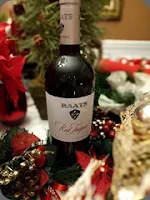
Raats 2014 Red Jasper, StellenboschYes, we love South African wines! We brought this red blend from Stellenbosch to a neighborhood wine tasting. It is a Cabernet Franc based blend (60%) with Cabernet Sauvignon, Petit Verdot, Merlot and Malbec. This is flowing with black cherry and blackberry flavors. It is a full-bodied beauty with solid tannins and notes of dark chocolate.

This is an example of why we love the superb winemaking of South Africa.

Technorati Tags: ,

Monday, November 9, 2015

Glenelly Estate: South African Winery Visit


We visited more than a dozen wineries in South Africa during our recent wine and safari excursion. Perhaps the most unique was Glenelly Estate which combines a love of glass art with French wine.

Stellenbosch: A Shining Star Of Wine

Stellenbosch, founded in 1679, is located within the winelands of South Africa’s  Western Cape Province about 40 kilometers from Cape Town. There are more than 150 to explore in the district. The area is surrounded by majestic mountains and the city itself offers old world charm and historic buildings.
Much of our time in the Stellenbosch area was spent at wineries in the mountainous Helshoogte Pass in the Greater Simonsberg District. We decided to venture down from the mountains to the unique Glenelly Estate.
Check Out Our Winery Reports Page To Plan Your Next Visit!

French Roots Run Deep

The Glenelly Estate is in the Ida's Valley, located in Stellenbosch. Its history dates back to the seventeenth century. Simon van der Stel, Governor of the Cape, gave the land to the Huguenot François Villion. In 1812, the estate passed to Johan Peter de Villiers, and finally in 1911 it became the property of a British Famliy, the Garlicks. They owned it for 92 years until its purchase in 2003 by “Lady May,” May-Eliane de Lencquesaing, who for over 30 years was the owner of the famed Bordeaux Chateau Pichon Longueville Comtesse de Lalande, Pauillac Grand Cru Classé.
Although she wasn’t there, we did toast Lady May. She has great class and a wonderful eye for quality. Before establishing Glenelly, she sold Chateau Pichon to Roederer Champagne for not doubt a good sum. No shortcuts were taken in the beautiful “cellar door” of Glenelly.
While many of the wineries we visited in Simonsberg had a visual focus on the surrounding mountains, Glenelly is nestled in a valley. Panoramic views from the tasting room allow you to view the well-tended rows of vines and the pastoral hillsides.

Artistically Crafted Wines

We walked into the tasting room and beheld a bright and airy scene of white and glass. The winery features a glass museum and many precious pieces of art. The elegant setting foreshadowed a first class experience.
The starting point was Chardonnay, and we sampled the 2013 Glass Collection Unoaked Chardonnay and the 2013 Grand Vin de Glenelly Chardonnay.
The unoaked variety with its light body and lime zest flavors appealed to my wife, the Green Dragon. The Grand Vin Chard has vanilla and butterscotch flavors with a note of toasted almond.

Red Wines With Continental Styling


South Africa does Merlot very well, I reflected while I sipped on the 2012 Glass Collection Merlot. This we found to have a savory spin with plum and spicy notes.
To compare and contrast, we had the 2012 Glass Collection Cabernet Sauvignon. This had spiciness and currant flavors with a touch of mocha.
What is remarkable is that each of these wines (thanks to a favorable exchange rate between the US Dollar and the South African Rand) costs only about $6 US. That’s a phenomenal value. The Glass Collection range also has a 2011 Syrah, which is done whole cluster and has great floral notes.
The signature blend of the winery is the Grand Vin de Glenelly. We dove into the 2009 vintage. The blend features 42% Shiraz, 40% Cabernet Sauvignon, 14% Merlot and 4% Petite Verdot. Deep, dark and rich this wine is very smooth with strands of dark fruit woven with cedar and toast. At 135R (about $11.30 US) we bought a bottle to bring home to the US.

A Salute To Lady May

While most Glenelly wines feature illustrations of historic glass pieces, one stands alone: the namesake Lady May. This bottle is adorned with an artistic rendering of the lady herself. We tasted the 2011 vintage, which is a blend of 85% Cabernet Sauvignon, 15% Merlot and 10% Petite Verdot.
Considered the flagship wine, the 2010 vintage shows more of a delicate side of Cabernet. It is aged 24 months in new French Oak. While it certainly is delicious now, this could age for up to 10 years. It currently is a very ripe and savory wine with tea and raspberry hints.
After sipping the Lady May, we took a short tour to view the glass displays. The art is world class and museum quality. This held particular interest to us since our home base of Toledo is known as the “Glass City.”
Glenelly is a highly recommended visit to South Africa travelers and the reasons are crystal clear. Not only is this a destination for premier wine, but the glass collection alone makes an appealing attraction.
Technorati Tags: ,,

Monday, October 26, 2015

Oldenburg Vineyards: A South African Winery Visit


Oldenburg Vineyards is an independent family run boutique winery located in a spectacular area of South Africa’s Stellenbosch wine region. We were impressed by the stylish winery and knockout wines.

Quest For Rainbow’s End Leads To Oldenburg

During our recent visit to South Africa, we started out searching for the Rainbow’s End, literally, and ended up at Oldenburg Vineyards. Rainbow’s End is a small winery we planned to visit down a gravel road in the Helshoogte Pass in Simonsberg. Our calls to the winery went unanswered and the winery wasn’t accepting drop-ins, so we drove our rental car through a cloud of dust to Oldenburg Vineyards.
The cellar door (tasting room) was designed by architect Simon Beerstecher and allows the stunning views of Oldenburg’s vineyards with the backdrop of the Stellenbosch Mountains to be completely visible while inside the building. The thatched roof provides a traditional Cape Dutch finish. The interior has an open and airy feel.
Never Miss A Toledo Wines and Vines Post – Click To Subscribe

Spectacular Wines To Match The View

At Oldenburg, it would be easy to merely drink in the beautiful and tranquil surroundings. However, we wouldn’t be doing our job if we didn’t sample the wine!
We started with a South African signature grape, the 2012 Chenin Blanc. The wine offered a wonderful balance between freshness and wood notes. The wine is barrel fermented using 50% new French oak. There are citrus notes with some vanilla touches.
Moving to the reds, we sampled the 2011 Syrah, which is aged 20 months in American oak and offers a delightful, velvety body. The taste ripples with black currant and a hint of pepper.
Perhaps the most spectacular wine was the 2011 Merlot. This isn’t any wimpy wine. It has commendable body and structure from 16 months in French oak and nice tannins. We got smokiness and cherries that swirled in a well balanced ruby wine.
On The Watch For Leopards
As we continued our tasting, Tessa told us that at least one leopard has been seen to prowl the area. To fortify ourselves we continued tasting wine and moved to Cabernet.
We tasted two Cabs, the 2010 Cabernet Sauvignon and the 2009 Barrel Select Cabernet Sauvignon. While the 2010 was a perfectly fine Cab, the 2009 shone in comparison. We believe that 2009 was a globally outstanding vintage. The Barrel Select had spice and tannins and is a dark, complex wine. The flavors of mint, herbs and blueberries coat the tongue in a deliciously long finish.

Wrapping Up With The Flagship

The flagship wine of Oldenburg is Rhodium. We sampled the 2012 vintage. Rhodium is a very rare metal and South Africa produces most of the world’s supply. Like the metal, the wine is of South African origin, very low production and a premium product.
The blend is 53% Merlot, 40% Cabernet Franc and 7% Malbec. This is an excellent blend and offers a nice taste of raspberries, black fruit and some herbs. While a nice sipper currently, this should improve with the catalyst of a couple of years of aging.
Oldenburg Vineyards was one of our most enjoyable tasting experiences in South Africa. Expertly crafted wines together with panoramic views and tasteful décor – what more could you ask? Oldenburg should be high on your list for your next wine safari.
Technorati Tags: ,,

Tuesday, September 8, 2015

Neil Ellis Wines Offers Family Of Top South African Wines

The saga of our South African wine expedition continues. High in the mountainous Helshoogte Pass of Stellenbosch, we discover Neil Ellis Wines. An epic tasting ensues.

No Vineyards, No Problem: Négociant Neil Ellis Produces Top-Flight Wines

For much of his career, Neil Ellis produced an impressive array of wines despite having no vineyards of his own. He contracted his grape needs to produce his award-winning Vineyard Select range of wines. Neil Ellis, in light of his success, has become an elder statesman of the South African wine industry while his son Warren has now taken over winemaking duties.
A négociant sources wine from other’s vineyards to create wine. That remains true today for Neil Ellis Wines although they have now added vineyards in Darling and Stellenbosch of their own.
Never Miss A Toledo Wines and Vines Post – Click To Subscribe

Surprise And Refreshment From South African White Wines

One of the biggest surprises during our South Africa trip, was the Sauvignon Blanc. Most of the South African white I had stateside was inexpensive Chenin Blanc. Tessa, our friendly wine ambassador, started us with the Groenekloof 2014 Sauvignon Blanc. It was deliciously grassy with a dash of tropical fruit. A steal at 85R (South African Rand) or about $7 US.
We next ventured into a taste of the 2013 Amica white blend. This is 67% Sauvignon Blanc and 33% Semillon. While the 2014 Sauvignon Blanc was finished in stainless steel, the Amica was barrel aged for some light oaking. The result is a complex wine. There are herbs and citrus flavor notes in a wine with a slightly creamy body. As the Green Dragon, my wife and tasting partner, said: “there is a lot going on in the back end.”

A Spectrum Of Red Wines To Tease And Entice


This was our final stop of the day, so the whites were helpful to recharge the batteries. Neil Ellis has a beautiful “cellar door” but we chose to sit outside with a view of the vineyards and mountains.
We were next treated to an expansive range of red wines. Neil Ellis is one of the few South African wineries to offer a single varietal Grenache. The 2011 Vineyard Selection Grenache is made from 62-year old bush vines. It is purple and plumy in the glass.
The 2013 Aenigma is a Cabernet Sauvignon (69%), Shiraz (27%) and Cinsaut (4%) blend. This a a great blend at a great price (about $6 US). Shiraz is done exceedingly well in South Africa and the Groenekloof 2012 Shiraz is an elegant wine that is aged for two years in French oak.
The 2010 Vineyard Selection Rodanos is an 80/20 Shiraz and Grenache blend. This Rhone style wine is rich, juicy and soft. South Africa’s signature red is Pinotage, a cross between Pinot Noir and Cinsaut. The 2013 Pinotage has a bit of tobacco funk and deep plum flavors.

An American Gets Schooled In South African Cabernet

I must admit, I think the US does some pretty fine Cabernet Sauvignon. Napa Cabs are some of the finest in the world and those from Paso Robles and Washington State aren’t too shabby either. During our trip I was awakened to the fact that South Africa has some premier Cabernet – and they do it in their own unique style.

In the US, the most valuable assets of the country are locked in vaults at Fort Knox. In South Africa, they are stored in the Vinoteque at Neil Ellis. This is where the best and older vintages of their wine is stored.
Tessa “unlocked” these treasure wines for a tasting of some outstanding Cabernet Sauvignon vintages against the current releases.
We started by sampling the 2011 Cabernet Sauvignon. The grapes for this Cab are from the Jonkershoek Valley, the coolest location in Stellenbosch. It spent 18 months in French oak. This is a solid, fruit forward Cab that could age for a couple more years.
Another wine from the current offerings is the 2013 Cabernet Merlot. This is a blend of 65% Cabernet Sauvignon, 25% Merlot and 10% Cabernet Franc. The wine sparkles with bright flavors, aromatic fruit and a nip of spice. This is a great bottle at about $8 US. (I should mention here that due to the exchange rate and buying the wine in country, the price of South African wine on our trip was an unbelievable bargain. I’d expect to pay about $25 for this bottle in the US.)

Tasting South African Cabernet Sauvignon From Last Century

Lest you think that South African Cabernet is weak and one-note wines, Tessa brought out a bottle of 1999 Vineyard Selection Cabernet Sauvignon. Grapes for this baby come from Jonkershoek Valley. The wine was superb from the first sip with a nuance of caramel and herbal notes. There are hints of violet and the taste is youthful despite its 16 years of age. This was our favorite of the tasting and one of the best of our trip.
We closed out with the 1998 Vineyard Selection Cabernet Sauvignon. This wine, sourced from grapes in Stellenbosch, has also aged delightfully. Both the Cabs from last century still have gas in the tank and could age for several more years. The ‘98 had some earthiness and funk that put this one slightly behind the ‘99 in our hit parade.
Neil Ellis Wines is producing wines at the pinnacle of taste and quality. The winery produces several ranges for international sale. We encourage you to try them – but for the authentic experience, visit the winery in Stellenbosch, South Africa.

Tuesday, July 14, 2015

Tokara: South Africa Winery Visit


Continuing the saga of our wine and safari expedition to South Africa…
If you know only one word about South African wine, chances are it is Stellenbosch. Located about 30 miles east of Cape Town, it is the most important wine region in the country of South Africa.
The first part of our wine adventure was spent in the Franschhoek Valley region. After a couple of delightful days there, we motored high into the Helshoogte Pass to our luxurious accommodations at Clouds Estate. Clouds is is sleek, modern B&B with an outstanding restaurant, unparalleled views and even produces its own wine.
Due to the immense size of Stellenbosch District and the large number of wineries, our exploration was limited to the Simonsburg Ward. What a problem to have! There are so many outstanding wineries in Stellenbosch that you could spend weeks, if not months, exploring them all.
One that is certainly at the pinnacle is Tokara. It is an impressive marriage of exquisite art, architecture, wine and scenery. If you travel thousands of miles to South Africa and saw only one winery, Tokara, you would feel it was worth it. Such is the impact of this magnificent wine mecca.
Clouds was conveniently located less than a kilometer away from Tokara, which is nice because Helshoogte Pass is a twisty, turny road you don’t want to navigate after a long day of wine tasting. Even the view from the parking lot is impressive, with the winery silhouetted against soaring mountains and rows of terraced vines on the hillside.
Tokara is the embodiment of owner GT Ferreira’s philosophy that good wine, good food and good art go together to make a good lifestyle. Walking into the wine cellar (as the tasting rooms are called) you pass by one of the impressive works of art on display, a metal sculpture of a tree with words gracing each branch.
The inside is impressive as well, with style and good taste in abundance. After taking in the scene, we settled in at the tasting bar for some wine.
We opened up with a 2014 Sauvignon Blanc, which we found to be soft with citrus flavors. Tokara offers three ranges of reserve wine: Director’s Reserve, Reserve Collection and Collector’s Release. We next explored the 2013 Director’s Reserve White, which is a blend of 70% Sauvignon Blanc and 30% Semillon. This was rich tasting with green, grassy flavors.
We continued the tasting experience with the 2012 Collectors Release Grenache, which features 12% Syrah. This is a reserved, smooth, blend of strawberry flavors. Superb!
Reds in general are outstanding in Stellenbosch and the 2011 Syrah, although from the lower range Reserve Collection, was no exception. It is a delightful, Old World style Syrah, with deep plum colors and briary fruit.
The tasting crescendo continued with the Director’s Reserve 2011 Red. This Bordeaux style blend of Cabernet Sauvignon, Petit Verdot, Merlot, Malbec and Cabernet Franc. This is a wine capable of aging for another three years or more, but offers delicious black cherry and berries for those who can’t wait.
Our report wouldn’t be complete without mentioning the Tokara Deli. For those of you who might think this is a little sandwich shop, think again. It delivers dishes to delight any “foodie” in spectacular surroundings. We dined outside there twice – once by plan and once by chance.
After our first visit, we enjoyed a great lunch accompanied with some chilled rose. The next day we traveled to a nearby winery for a tasting and lunch, at least we thought. The power company had scheduled a rolling blackout, so the restaurant and cellar door were both closed. We hightailed it back to Tokara Deli and this time enjoyed the spectacular mountain views with our meal and a glass of Methode Cap Classique sparkling wine.

Tokara is a feast for the senses. It’s an exhilarating experience for the wine lover, but also for those with a sense of adventure and an eye for art.
It truly is a mountain top experience.

Technorati Tags: ,,

Monday, June 8, 2015

Rustenberg 2008 Peter Barlow Cabernet Sauvignon, Simonberg, Stellenbosch

This bottle of 2008 Rustenberg Peter Barlow Cabernet Sauvignon was one of the gems that came back with us from South Africa after our recent trip. South Africa has more than 600 wineries and is the eight largest wine producer in the world.
We invited our good friends Cabinator and Glorious T over to look at some of our safari photos. We just had to pop open a bottle of SA wine.
Rustenberg Peter Barlow Cab is named to honor the man who bought the historic property and restored it to become an icon in the South African wine industry. It appears on many fine dining wine lists in the country.
We found this to be a surprising wine. It is surprising because the flavor comes from a different direction than, let’s say, a Napa Cab. This wine isn’t overpowered by tannins and has a distinct herbal quality. It is a complex, layered wine. Malolactic fermentation adds to the rich, full taste.
The wine is aged in French oak for 20 months, but the tannins are never center stage. The flavors of black cherry and currant mingle nicely with the herbal qualities. The finish is long and relaxed.
We decanted Peter Barlow and he benefited nicely. It evolved in the glass as we enjoyed reliving our South African adventure.
Rustenberg’s Peter Barlow Cab is surprising in at least two ways: first, the distinctive and delicious herbal flavors, secondly, this bottle cost us less than $25 US at the winery. Highly recommended!
Rating: 5 of 5  Value 5 of 5