Showing posts with label Tempranillo. Show all posts

Friday, March 10, 2023

Viña Ardanza 2016 Reserva, Rioja

A family winery founded in Rioja more than 220 years ago produces this perfect red for your table.

A family winery founded in Rioja more than 220 years ago produces this perfect red for your table. La Rioja Alta, SA, is under its fifth generation of family management and is located in the Rioja Alta region.

We recently had the chance to taste the remarkable Viña Ardanza 2016 Reserva. Grapes from the Rioja Alta subregion sit at a loftier altitude in Rioja and the cooler temperatures produce higher acidity. Grapes ripen more gradually, allowing for more complex flavors.

Tempranillo (80%) is blended with Garnacha. The grapes are hand-picked and transported in refrigerated boxes (it gets hot in Spain!). The Tempranillo is aged for 36 months in American oak and the Garnacha is aged for 30 months.

In the glass, the wine is an intense garnet color. The nose gives a foretaste of what’s to come: rich fruit aromas of stewed cherries. This wine opens up wonderfully on the palate, the raspberry, and red fruit touched with baking savory spices. The oaking is refined and brings subtle vanilla to the soft, round tannins. It is a wine that is elegant and accessible yet powerful and stylish. It’s a wine you don’t want to swallow because you want the enjoyment to continue.

This is a perfect match for roast meats, game, spicy fish casseroles, smoked and aged cheeses, and barbecues. The retail price is about $41 and is a tantalizing value at that figure.

La Rioja Alta, SA, was recently recognized as one of the world’s most admired wine brands. In the late 1980s company expanded with a new winery in the Rioja Alavesa subregion and then into Ribera del Duero, and the home of Albariño, Riax Baixas.

Full disclosure: This wine was received as a marketing sample.

Tuesday, January 31, 2023

WIYG: What In Your Glass? Here’s Our Latest

WIYG? That’s a question we are often asked. Here’s a look at what's in our glass.

Naked Wine Company “Oh! Orgasmic” 2014 Tempranillo

This is an excellent wine. The name is one reason it remained buried in the cellar. You can’t really open this bottle with a group of friends or family. Things could get really weird!

Never Miss A Beat – Follow Vino-Sphere On Facebook

The good news is the wine is delicious and still in its prime drinking window. Plenty of dark, thick, fruit notes.

It comes from a wine region that is trending with us – the Columbia Gorge. A scant 550 bottles were produced. Although the winery is now called Evoke, they still offer the Oh! Orgasmic line and the current vintage has a list price of $80.

Whether it delivers on its name is for you to decide!

Hillinger Secco NV

Hillinger has become my favorite Austrian winery. Mostly I enjoy their unique red blends that include Blaufränkisch, St. Laurent, and Zweigelt.

I was delighted to see this bottle of rosé nestled on a shelf of a local wine shop. The wine is made from Pinot Noir in the same method as Prosecco.

Keep up with the latest. Follow us on Instagram!

Upon opening a tidal wave of froth filled the flutes, just perfect for an unseasonably warm afternoon on the patio. Light strawberry notes match the gorgeous pink color. A touch of kiwi is perfect for this young and fresh wine. A mere $19.

A portion of the sales benefits the fight against breast cancer.

Bennet Lane 2014 Maximus

The Napa Valley blend is labeled as a “red feasting” wine. We popped it open during an evening of appetizers and games with our friends.

Maximus delivered maximum enjoyment! This is a plump, lush wine with a cherry bowl aroma. On the palate, there are dark flavors of chocolate, fig, and dried cherries.

At a $55 price point, it has already leaped onto my list of top red blends to savor. The blend is 86% Cabernet Sauvignon, 7% Syrah, and 7% Merlot.

The winery is home to more than 65 90+ point wines. Maximus is insanely good. Get some for your next feast.


Doña Paula 2021 Velvet Blend Blue Edition


This blend from Mendoza, Argentina, features Malbec, Pinot Noir, and Bonarda. You won’t find many blends with Pinot Noir in them. Now I know why.

This wine didn’t have the expected richness of Malbec, but rather an earthy undertone with a slight cherry. The body is nice and silky. There were tannins and some spices, but overall, I didn’t get it. I have enjoyed other Doña Paula wines, but this one wasn’t a cohesive, enjoyable sip.

Argentina, I love you, but this bottle fell short.

Saturday, October 31, 2020

Hammeken Cellars El Gringo 2019 Dark Red Tempranillo, Castilla

This wine salutes the epic Westerns shot in the Spanish desert of Tabernas.

Showdown At High Noon

Fans of Western movies might be surprised to learn that classics like A Fistful of Dollars and 100 Rifles were filmed all or in part in a Spanish desert. Stars like Clint Eastwood, Raquel Welch and Burt Reynolds tramped those dusty trails.

Never Miss A Beat – Follow Vino-Sphere On Facebook

More recently television shows like Dr. Who and the sixth season of Game of Thrones were filmed there. In an homage to the Western flicks, Hammeken Cellars released El Gringo.

Finger On The Trigger

El Gringo is made with Tempranillo, one of Spain’s best-known red grapes. This is a Vino de la Tierra wine, also known as a wine with protected geographic indications. In short, this is a step down from the DO designation in the Spanish wine quality ladder, but a rung above the plain old table wine. Castilla La Mancha is a huge region in the central part of the country where temperatures can range from 5o Fahrenheit to a blistering 113o.

Keep up with the latest. Follow us on Instagram!

We brought this wine out as we were having a socially-distanced dinner with friends on the patio. The Green Dragon, my wife, called for an easy-drinking red wine to accompany our Three-Herb Bean and Pasta dish.

Spurs That Jangle

I had expected a light-bodied, fairly sedate wine. I should have known better. Like the hombre depicted on the label, the wine is bold and memorable. The alcohol is on the high side at 14%, which isn’t uncommon for wines coming from La Mancha. The wine retails for $15.99.

The wine is 100% Tempranillo, which is sometimes called Cencibel in La Mancha. The grapes are grown on plains and rolling hills that range from 1,600 to 4,900 feet.

In the glass, the wine is an almost impenetrable ruby-purple. The wine is medium to full-bodied. The flavors are deeply extracted, with a fruit-driven core of cooked cherries and crushed berries. Flavor notes of toasted oak, mocha and vanilla enhance the experience.

The script for our tasting had a different ending than the Tabernas Desert Westerns. No one got shot, instead, we enjoyed a long, rounded finish as the sun set below the horizon.

Full disclosure: We received this wine as a marketing sample.

Saturday, November 2, 2019

Ribera del Duero and Rueda Regions Showcase Distinctive Flavors Of Spain

Ribera y Rueda WinesWake up to the possibilities of Spanish wine by exploring the Rueda and Ribera del Duero regions.

Reaching The High Plateau

Hear me, you wine lovers. If your knowledge of Spanish wine is limited to one very popular region, a cavalcade of sensational Spanish wine is passing you by.

Never Miss A Beat – Follow Vino-Sphere On Facebook

We explored Ribera del Duero and Rueda during a recent wine dinner and an online tasting hosted by Snooth and Ribera y Rueda wines. Rueda and Ribera del Duero are sister wine regions located on high plateaus along the Duero River in North-Central Spain, about two hours north of Madrid. The marketing partnership is sensible, since Ribera focuses on complex red wines while Rueda is known for its distinctive white wines.

Tempranillo is the signature grape in Ribera, where winemaking goes back more than 2,000 years. The DO (Denominaciónes de Origen) was founded in 1982 and there were just nine wineries. Today, there are more than 300. Tempranillo, known locally as Tinto Fino, is a hearty, thick-skinned version of its cousin in Rioja. The grape produces robust red wines.

In Rueda, the DO was founded in 1980 and today has about 70 wineries. Rueda is ground zero for Verdejo, Spain’s number one white grape variety. Wine production dates back to the 12th Century when King Alfonso VI offered lands to monasteries. Wine produced here must contain a minimum of 50% Verdejo. The gravel soils are rich in limestone and iron and yield complex, aromatic fruit.

Spanish-Themed Meal Is A Knock-Out

Our culinary team went into overdrive to pair just the right dishes with our four wines. As part of the online tasting, half the participants were sent wine from Ribera del Duero and the other half received wines from Rueda. We were part of “Team Ribera” but to make sure our dinner guests had a well rounded lineup, I purchased a bottle of Verdejo from Rueda.

Keep up with the latest. Follow us on Instagram!

Here’s a glimpse of our menu and wine pairings

Ribera y Rueda menu for SM

Our friend Susan prepared a shrimp dish for openers. As time was approaching for the dinner, I didn’t have the exact name of her dish for the menu card, so it became Camarones de Susana (Susan’s Shrimp in Spanish). The tasty dish was crab stuffed shrimp and was a spot-on appetizer with the Bodegas Garclarevalo 2018 Casamaro Verdejo from Rueda.

Rueda Verdejo and crab-stuffed shrimpThe sandy soils were naturally protected from the phylloxera pest that spread across the region about 100 years ago. The original vines, now 100 to 145-years-old continue to grow and were used in the Verdejo, along with free run juice from younger vines. The wine is 85% Verdejo and 15% Viura.

This is a bright wine, but the acidity is in the background. A lush mouthfeel pairs with refreshing flavors of citrus and peach. Our gang could have easily turned this into a Verdejo party!

More seafood was on deck as we moved into a tasting menu portion of our dinner. We had three small dishes: Pan Roasted Salmon with Tomato Caper Vinaigrette, Salad with Baked Herb Goat Cheese and Pan de Tomate Catalan. This last dish is toasted bread rubbed with garlic and smashed tomatoes. For our pairing we opted for the Bodegas Cepa 21 Hito 2017 Rosado from Ribera del Duero.

Rosé in Spain is called rosado and usually has a bit more body than a typical rosé from France’s Provence region. The Hito is made with Tempranillo and is a pale pink. Red fruit and citrus highlight this wine which has a medium body and was a wonderful accompaniment to the salmon.

Ribera del Duero Rosado and roasted salmon

The Rise Of Ribera Reds

When I visited Spain a few years ago, perhaps the biggest surprise was the brash and bold red wines from Ribera del Duero. Why didn’t I know about them? They were sensational. So I looked forward to our entree which was paired with two very different Ribera reds.

The Green Dragon (my wife and our main chef) really shone with the Braised Short Ribs with Manchego Polenta. She was ably assisted by cousin Betsy, who was in town after attending a conference. The meat fell effortlessly from the bone as the wine reduction sauce melded with the creamy polenta. Wow – and that was before I even tried the wines.

Ribera y Rueda DinnerThe first red was the Valdehermoso 2016 Joven from Bodegas Valderiz. Joven is the Spanish classification for unaged wine designed to be consumed young. This is a biodynamic wine and it is fermented in stainless barrels. This wine has scant tannins to detract from gushers of beautiful red fruit with fresh cherry flavors. Tasty indeed, but our hearty short ribs dish was more ideally matched to our next wine.

The Finca Torremilanos 2016 Los Cantos is 95% Tempranillo and 5% Merlot from biodynamically farmed vineyards. The vineyards are distinguished by the presence of round river stones, or “cantos.”

I was uncertain what to expect since the bottle isn’t listed as a Crianza or Reserva, which indicates minimum barrel aging. I was to learn the wine is aged 16 months in French oak barrels and it brings a true beauty to the wine. One sip revealed a complex wine with beautiful tannins and golden oak notes.  Black cherry and spice round out this perfect pairing for our braised meat dish.

For our finish we had a sweet surprise from our guests Arthur and Mary Branham. Arthur is a winemaker with a sweet tooth. He poured his Barham 2015 Chocolate Raspberry Port to go with our Chocolate Raspberry torte. Bullseye! It hit the mark just right.

Whether you are aiming for a splash of a refreshing white or a deep dive into complex reds, Ribera y Rueda have you covered. The value is outstanding too. Each wine reviewed is $18 or less. Expand your Spanish horizons by sipping wines from these unique regions.

Full disclosure: Some of these wines were received as marketing samples.

Wednesday, June 19, 2019

Faustino V 2013 Reserva Rioja

Faustino V Rioja

Rioja is Spain’s most famous red wine region. The wines are delicious and the Reserva wines turn things up a notch.

Rioja To The Rescue

The Green Dragon knows her wine. But even a knowledgeable wine lover like my wife can use an occasional assist. While searching for a special bottle for my birthday, she stopped in to Great Grapes in Cary and asked for recommendations.

Keep up with the latest. Follow us on Instagram!

That’s one reason we urge people to patronize their local wine shops. If you are purchasing wine at a grocery store or super center, the person answering your wine questions may be the same one stocking bags of Cheese Doodles in Aisle 6. At a wine shop you can expect experience and good guidance on your purchases.

Patio Perfection

The weather here in the Triangle area of North Carolina has been a rollercoaster recently. Intense heat and humidity has alternated with rain and – a week ago – some perfect spring-like weather. We took advantage of the ideal conditions for a cookout with my birthday present wine, the Faustino V 2013 Reserva Rioja.

Never Miss A Beat – Follow Vino-Sphere On Facebook

The Faustino V is a blend of 90% Tempranillo and 10% Manzuelo. Manzuelo is one of the main blending grapes in Rioja and adds racy acidity, but not much in the way of aroma. Tempranillo, on the other hand, is a signature Spanish grape known for making rich wines with aging potential.

Joining Faustino at our dinner table was a perfectly grilled (in my opinion) filet mignon, baked potato and spinach salad. Rioja wines are known for their aggressive aging in American oak. Faustino V is no exception with 16 months in American white oak from Missouri. Reserva wines in Rioja must be aged a minimum of three years with at least one year in barrel and six months in bottles. With that in mind, we decanted the vino before the meal.

Verdict Of The Glass

Faustino V starts as an intense wine with a power that made us do a doubletake. Even with the decanting, the tannins were muscular. A deep maroon in the glass, as we swirled, conversed and ate our meal, we began to appreciate the rich, deep flavors of plum and the sweet oakiness of the barrel aging. The tannins, at first so uninviting, began to melt away and be integrated. My big bites of juicy steak might have had something to do with it.

Bodegas Faustino has 150 years of family winemaking tradition. That tradition has been bottled and delivered up in an appealing 2013 Faustino V Reserva. We rate this Rioja Reserva highly, especially when accompanying grilled red meats.

Tuesday, June 6, 2017

Arínzano: Crafting Wines From The Zenith Of Spain

I travelled thousands of miles to Spain and traversed five different wine regions. Yet in my travels, one prize eluded me – until now – a taste from Spain’s highest wine classification.

Climbing The Spanish Wine Pyramid

When I was studying for the Certified Specialist of Wine designation, each country’s wine laws were presented as a pyramid. Basic table wine was the broad base and as you moved up the pyramid became more narrow and the quality improved. At the top, the geographic area and often the type of grapes and production method are tightly controlled.

Studying the section on Spain, I was surprised to hear about Vino de pago. What the heck was this? I crisscrossed the country and never saw a bottle of pago.

Thanks to a recent Wine Studio education program, I was able to sample the elusive pago wine. My search had a delicious and satisfying ending!

Pago Perfection


Vino de pago, or “estate wine” is a category established to recognize specific single vineyards of distinction that produce excellent wine. It is awarded only to estates that exhaustively demonstrate not only an outstanding and unique climate and terroir, but also winemaking that turns these inherent qualities into extraordinary wines.

Arínzano is the first estate in the north of Spain to receive this honor.

Arínzano is located in the northeast of Spain, between Rioja and Bordeaux (not shabby neighbors!). The Señorío de Arínzano estate has been recognized for the excellence of its vineyards since the 11th century, when the noble Sancho Fortuñones de Arínzano first produced wines on the property. Alas, over time the estate fell into disuse.

The estate was rediscovered in 1988 and analysis confirmed that the climate and soils were perfect for producing exceptional wines. At the turn of the 21st centuries, the King and Queen of Spain rededicated the Arínzano winery, reinstating a tradition more than a thousand years old.

 
Verdict Of The Glass


In pursuit of our wine education, we sampled two Arínzano bottles. We started with the 2012 Hacienda de Arínzano Tinto and then the 2008 Arínzano La Casona.

The Hacienda is 80% Tempranillo, 10% Cabernet Sauvignon and 10% Merlot. We paired this with a Spanish style pork entree with an olive, caper and lemon sauce.

Smooth and elegant, this wine is aged 14 months in French oak. There are no harsh tannins, which you may encounter in Rioja, which favors heavy oaking in American barrels. The Hacienda also offers savory flavors which I dubbed “herbalicious.”

Very surprising to me was the price point. At $19.99, it delivers satisfaction of a wine two or three times the price.

A week later Green Dragon was cooking again, this time serving up braciole with black bean quinoa with the 2008 La Casona.

In the glass it is garnet in color with a clear edge. La Casona is 75% Tempranillo with 25% Merlot. The medium-bodied blend exudes elegance and harmony.

On first approach, there is a bit of heat that rapidly shifts to a silky body. On the palate there is tart cherry, with wafts of mocha and a touch of vanilla. The fruit stands front and center in a way that testifies to the skill of the winemaker.

A wine like this makes dinner an a memorable experience. At about $35, it is an excellent value for one of Spain’s top tier wines.

At last count, there were only 14 pago estates in Spain. This is a very small circle of “grand cru” vineyards. Arínzano delivers the quality that shows why this designation is so exclusive.

Friday, December 2, 2016

Campo Viejo 2014 Rioja

Rioja is one of the most famous wines of Europe. Smooth flavors and low tannins make this a popular wine around the globe.

Star Grape Of Rioja


Rioja was the first Spanish wine region to rise to the highest level of Denominación de Origen Calificada, or DOCa. Today it is one of only two regions to achieve that distinction.

The rise to the top of the Spanish wine world is powered by the Tempranillo grape. Nowhere else are wines crafted with this elegance and flair.

We’ve come to appreciate Tempranillo because it can produce a medium to medium-light bodied wine with some delicate flavor notes. At times heavy, tannic wines can be a drag – especially when it comes to pairing with food.

A Nice Introduction to Ull de Llebre


Ull de Llebre is on of the half dozen or so synonyms for Tempranillo. That’s your wine insider tip of the week. If you are passing through northeastern Spain, you’ll know what to order. Loosely translated, it means “eye of the hare.”

Closer to home, my wife popped open the Campo Viejo with a plate of olives and some cheese. Nice move! In Madrid and Barcelona, tapas and small plates are the rule – along with outstanding Spanish wine.

This Campo Viejo Tempranillo retails for $9.99 and is one of their entry level wines. They also offer Riserva and Gran Riserva versions of Tempranillo which have longer aging requirements. American oak barrels are part of the signature flavor profile of Rioja – but this bottle is very light on the oak.

It offers medium to light body – on par with a Pinot Noir. There are flavors of strawberry, vanilla and spice. In Rioja grapes from the three subregions – Rioja Baja, Rioja Alta and Rioja Alavesa – are traditionally blended together. A regulatory council ensures that all wines in the region follow strict production rules to ensure a consistent Rioja product. The Campo Viejo is an easy drinking wine that pairs well with food and is ideal for casual occasions. It also is perfect for wine lovers who dislike heavy, ponderous wines.

We suggest this bottle of Camp Viejo wine as a launching point for a tour of Tempranillo. It’s a solid value and should entice you to sample different types of Tempranillo (like Crianza or Reserva) and Tempranillo from other regions as well. Tempranillo is one of the world’s greatest grapes – we think you’ll agree.

Full Disclosure: This wine was received as a marketing sample.

Friday, November 11, 2016

Celebrate International Tempranillo Day

It’s been an extraordinary week! No, we’re not talking about the US presidential election. On Monday it was International Merlot Day and now we are celebrating International Tempranillo Day. Depending on your calendar, it is either November 10 or November 12. We decided to split the difference and present this post today.


One Of Our Favorite Grapes


Tempranillo is a top pick for us because of its versatility. It packs a lot of flavor, but has a medium to light body – similar in weight to Pinot Noir but with a different flavor profile. We have a fair amount of Tempranillo growing in the US, but its home is the wonderful wine country of Spain. Tempranillo also represents a great value with a wide assortment of Tempranillo wines available at $15 or less.

The infographic is from our friends at Campo Viejo wines in Rioja.


Fun Facts About #TempranilloDay


  • Spanish Roots. The word “Tempranillo” comes from the Spanish word “temprano” which means “early” since the grapes ripen earlier than other Spanish reds.
  • Flavorful. Wines made from Tempranillo grapes feature flavors of berries, plums, herbs and tobacco.
  • Worldwide Appeal. Although Tempranillo grapes are grown across over 500,000 acres of vineyards throughout the world, the grape originated in the perfectly cool climate of Northern Spain.

Raise a glass in celebration!

Tuesday, May 24, 2016

Cala Blanco 2012 Tempranillo La Mancha


This Spanish Tempranillo provided a welcome break at a recent conference. While the hospitality room was underway, my friend and I stole away to try a stash of wines brought in from a friend from California.

There’s a lot of miles on this wine, because it originates in the Spanish La Mancha region. La Mancha is the largest wine region not only in Spain, but in all of Europe. It encompasses 420,000 acres.

This is 100% Tempranillo, the light bodied red grape that is native to northern Spain. This is a ripe tasting wine, with strawberry smoothness. Cala Blanca, which means “white chalk” is deep red in color with a touch of spiciness.

A better bet for Tempranillo is Ribero del Duero or Rioja, with their cooler climates. The Cala Blanco, however, is an enjoyable glass. Its quality skyrockets when shared with good friends.

Thursday, April 7, 2016

Ancient Wine Region Of Rioja Carries The Banner For Spanish Reds

Wine has been made in the Rioja region for more than 2,500 years. Wines from the Rioja DOC are among the finest and most famous in Spain.


Punishing Weather and Welcoming Wine


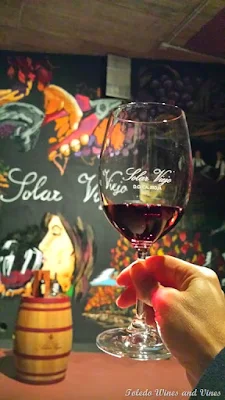
The fog drifted through driving rain as the bus left the grimy industrial city of Bilbao on its way to Rioja. I was traveling to Solar Viejo, one of the Ferrer Family wineries, to see Spain’s most famous wine region firsthand.

There are more than 600 wineries in Rioja, producing 400 million bottles of wine annually. Most of the wine is red and Tempranillo is “king of the vineyard” although other grapes are permitted.

The weather remained a threatening mixture of sunshine and shadow, but we soon entered Rioja. Around us was a rolling landscape of orange, light and dark brown, and dull green colors accented with rows of vines. The horizon was fringed with snow-dusted mountains. Luckily, it was very welcoming inside the winery.

The Solar Viejo Tradition


Bodegas Solar Viejo was founded in 1937 in the medieval town of Laguardia. The name derives from Casas Solariegas, the traditional noblemen’s houses in the town where Solar Viejo wine was first made. Now Solar Viejo is located in the heart of the Alavesa sub-region of Rioja.

Laguardia was established in the 10th Century as a fortress for the kingdom of Navarra. The city has many underground tunnels built for defensive purposes, but which also served as excellent wine cellars.

Today Solar Viejo is a modern winery operation, but maintains close connection with the land and the people. The winery has five hectares of vineyard, but controls 400 hectares. It produces three million bottles annually, which puts it in the mid-size category, at least in Rioja.

Wines of Distinction


Rioja was the first region in Spain (and still only one of two) to receive the designation of Denominación de Origen Calificada (qualified destination of origin). This is the top quality designation in the country. Tempranillo grapes flourish in the clay and limestone soils and the Cantabria mountains protect the region from the cold, wet winds from the north.

There are four categories of wine in Rioja.  The Cosecha label has typically been used for wines within 12-24 months of harvest. (However, it now can also be used for wines that do not want to be constrained by the very strict Crianza, Reserva, Gran Reserva rules each year.) Crianza is at least two years old with at least one in oak. Reserva is select wine three years old with one in oak. Grand Reserva is produced during exceptional vintages and aged for at least two years in oak and three in the bottle.

We were able to taste the Solar Viejo wines accompanied by traditional Navarra dishes. As a starter we had white Navarra asparagus followed by Patatas a la Riojana (Rioja style potatoes). Here I must point out an apparent breakdown in translation. Our delicious potato dish was served with a slender green pepper. I asked is this hot? The response was “oh, no.” Well, can you say “caliente!?” I think I heard some laughter from the kitchen.


A highlight of our visit was small lamb chops roast in a brick oven over sarmientos, small bundles of dried cuttings from the vineyard. Pair this with a Vaza Crianza Tempranillo and it is quite heavenly.

Artistry In The Bottle


Solar Viejo’s Vaza wines are available in the US, including the Crianza and Cosecha Tempranillo. The 2014 Vaza Cosecha is deep cherry in color with a violet ring. It is a great match with everyday food and, in Spain, is a good substitute for a soft drink or beer.

We were able to compare the 2012 and 2013 Crianza side by side and there was quite a difference. The 2012 harvest was dry in spring and summer and the fruit was rich and ripe. In 2013 it was the opposite, with rain and cool temperatures. This is reflected in the glass. The 2013 has vanilla and cinnamon flavors while the 2012 has heavy tannins. 

The Solar Viejo Tempranillo and the Vaza are traditional Rioja wine, Tempranillo rich with vanilla imbued by American oak barrels. Solar Viejo produces a couple of non-traditional wines.

The 2013 Orube (Basque for Solar) is a blend of 80% Tempranillo, 15% Graciano and 5% Garnacha. It spends 12 months in oak, primarily French, and is a more savory wine with complex intensity.

The showstopper for me was the 2011 Orube Vino de Autor. This is the winemakers wine – using 60 to 80-year-old vines from the best vineyards and then selecting only the perfect, flavorful grapes. The winemaker uses malolactic fermentation and the wine is aged in new French oak for 14 months.


“This wine is our own little baby,” said Vanessa Berez of Solar Viejo. We were urged to let the wine open and evolve in the glass. In the tasting room we were able to look out over the stormy Rioja vineyards while sampling Idiazabal cheese. The cheese is “zero kilometer” food coming from a nearby farm.

The Orube Vino de Autor is powerful and complex with notes of black fruit and oak. There is a touch of sweetness and an enveloping finish.

The same could be said for our visit to Rioja and Solar Viejo. Rioja is one of the world’s premier wine regions. While built on centuries of tradition, new styles and creative approaches are emerging to the delight of wine lovers.

As if signaling agreement, a rainbow appeared as we left the winery.

Monday, March 21, 2016

Ribero Del Duero: Spain’s Region Of Extremes Produces World-Renowned Reds

After experiencing a transformation in the 1980s and 1990s, Ribero now produces some of the nation’s best red wine.


A Land Of Contrasts


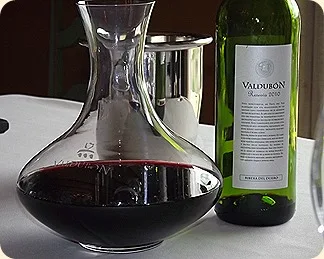
Where on earth are we going, I mused. As our motorcoach traveled north from Madrid to the Valdubón winery in Ribera del Duero we climbed higher into mountains of rocky soil and jagged peaks.

Stone walls edged the fields and lonely horses searched the hillsides for food. Outside the boulder-strewn landscape became a charcoal sketch of grey and white. Snow-clad hills gave way to a half-foot of snow. We soon descended into a valley and the prospect for wineries improved. Looking through my window the ground became the burnt orange of iron rich soil.

It was cold on this March day, as it often is in Ribera del Duero. Temperatures can drop to as low as –20 degrees F and climb to more than 100 degrees in the summer. Despite these demanding conditions, wines from Ribera del Duero (named for the Duero River) are are some of the best Spain has to offer.

Never Miss A Toledo Wines and Vines Post – Click To Subscribe

Valdubón Artistry With Tempranillo


Spain is a country infused with art and design. At Valdubón, one of the prominent wineries in Ribero del Duero and part of the globe-spanning Ferrer Family Wines organization, their Tempranillo is vastly different from that in Rioja. This is due in part to the artistry of the winemakers who select just the right barrels and aging program to meld perfectly with the grapes.


In Ribero, the primary grape is Tinta del País. While this is Tempranillo, it is certainly a different clone than Tempranillo in Rioja. The grapes are smaller, powerful and robust. They have to be to withstand the harsh conditions that include hailstorms. Valdubón focuses on Tempranillo, but also grows small amounts of Merlot and Cabernet Sauvignon.

We began our tasting with the 2014 Tempranillo. The wine spends a short four months in oak and has a fresh, foresty flavor. It cries out to be paired with food and, our host Gloria said, is considered “the wine of the women.” To avoid a left hook to the head from my wife, I’ll rephrase that to say this is the choice of those who like a less robust style.

Three Categories Of Ribero del Duero DO Wine


The categories of wine in Ribero are Crianza, Reserva and Grand Reserva. Crianza must be aged two years with at least one year in oak.

Reserva must be aged three years with at least one in oak. Grand Reserva is only made in exceptional years. The wine must be aged five years and two must be in oak.

The 2010 Reserva was spot on with Valdubón’s philosophy of great quality at a great price. The wine is deep red with a crimson edge, as you swirl, the aroma of dark fruit comes forward. The flavor is rich and complex with a note of rosemary and nuts.

It is aged half in American oak and half in French oak. The Reserva is a perfect match with lamb chops. We decanted this wine and we enjoyed sipping while soaking in the hunting lodge décor of Valdubón with a view of the rolling hills of Spain.

Spanish Wine and Food Pairing


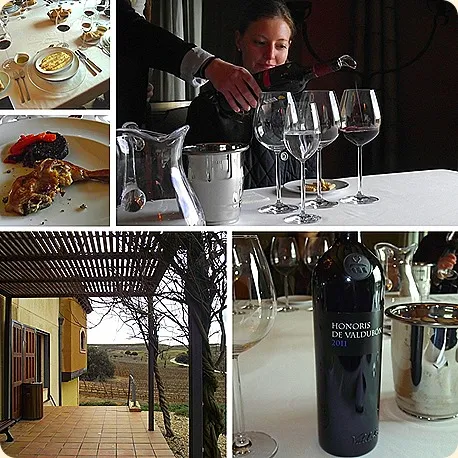
To spotlight the wines further, we sampled them over a gourmet lunch. Our opening course of white asparagus with salmon and a light cheese sauce was a primo match with the 2014 Tempranillo.

We were able to sample two wines that regrettably are not available in the US: the Diez and the 2011 Honoris de Valdubón. The Diez was created for Valdubón's 10th anniversary. The wine has an “edition” but no vintage as it combines the best barrels from different harvests. A blue-ribbon group of winemakers helps select the final blend for the wine. Only 10,000 bottles were made.

Our dining continued with blood sausages served with red peppers. Following closely on its heels was the Honoris. Honoris means recognition, honors or awards. No doubt this wine will receive many.

The wine comes in a stylish bottle of Italian design with embossed lettering and a minimalistic label. We were later shown a special label design that is used for Honoris sales in in China.

No matter where it is sold or in what bottle, this blend of 85% Tempranillo, 9% Cabernet Sauvignon and 6% Merlot is a superior wine. The Cab and Merlot fine tune the Tempranillo into a pleasing richness. It has an aroma of fresh cut wood and savory flavors of rosemary and forest floor. This is a great wine for beef tenderloin or the lamb chops we were served.

If Ribero del Duero isn’t on your radar yet, this is your invitation to try these intriguing reds. The wines of Valdubón are a great introduction – especially the Reserva. They represent a tasty value for those who appreciate quality red wines.

Technorati Tags: ,,

Tuesday, February 16, 2016

Vaza 2014 Tempranillo, Rioja


Stuck in a red wine rut? Tempranillo is making inroads into the American market. Tempranillo wines are medium bodied wine, food friendly and affordable.

Better Than Beyoncé


This Super Bowl was a little different for me. I didn’t have “a dog in the hunt.” My team found dozens of different ways to lose games in the fourth quarter and was eliminated from post-season contention early on.

So, rather than a massive Super Bowl party, Green Dragon and I enjoyed this game from the comfort of our family room. We uncorked a great bottle of Vaza 2014 Tempranillo and enjoyed watching Peyton Manning shock the world.

Rioja Is Always A Winner


While the outcome of the Super Bowl was hotly debated leading up to the game, there is no question about Rioja. Some of the world’s best wines come from this winegrowing region in Spain.

It’s a pleasant surprise to find that Rioja wines can be very affordable and great values. The Vaza Tempranillo has a SRP of only $12. But it is as impressive as the Denver Broncos pass rush.

Never Miss A Toledo Wines and Vines Post – Click To Subscribe

Pizza And Tempranillo – A Winning Score!


For our Super Bowl noshing, Green Dragon whipped up two styles of mini-pizza. We had Hawaiian pizza with pineapple and ham and also a barbecue pizza with chicken and spicy sauce.

The Vaza is very food friendly. There are no heavy tannins. It paired very well with the pizza and also lends itself to fun, informal occasions.

It is refreshing and youthful and is awash with ripe, red berry flavors. Tempranillo and this bottle from Vaza, are great options for entertaining. If you are thinking of a Pinot Noir or a Merlot, Tempranillo is a good option instead.

For a little bit of spare change, you can enjoy wine from one of the world’s great wine regions. Viva Vaza!

Full disclosure: We received this bottle as a marketing sample.

Technorati Tags: ,,

Thursday, October 1, 2015

Viña Zaco 2012 Tempranillo, Rioja


Spain’s flagship wine comes from La Rioja in the northeast part of the country. This much sought after wine has a tradition that reaches back 2,000 years.

Mashing Up Tradition And Innovation

Tempranillo wines are a favorite of ours. The wine is more accessible than heavy Cabernet.The tannins are round and smooth and it goes down oh so easily. When it comes from Rioja, it has bright colors and a bit of spice.
Wines from Rioja haven’t captured as much of the American market as wineries would like. And then there are the elusive Millennials, who it seems are pursued by all winemakers seeking to crack the code.
Vina Zaco has impressive taste, but the screw closure (I think this is the first Rioja I’ve had with one) and the contemporary graphic design of the label are innovative.

Drinkability and Value

Vina Zaco is produced by Bodegas Bilbainas and is named after one of the top vineyards in the Rioja Alta region. The “cascajo,” clay filled  gravelly soil, is ideal for Tempranillo as is the climate that benefits from Atlantic breezes.
The wine is soft on front end, but rallies to an rousing, earthy finish. There are flavor notes of black cherries and herbs. There is a nice toastiness that comes from eight to 12 months in oak barrels.
At about $12, this is a great value. It will pair well with tapas, grilled vegetables and light fare.
Full Disclosure: We received this bottle as a marketing sample.

Friday, November 14, 2014

Tasty Tempranillo Trivia

November 13 was International Tempranillo Day. Thanks to our friends at the Lodi Winegrape Commission, we're sharing the skinny on one of Lodi's most popular and widely planted Spanish grape varieties. Read on for the lowdown on all things Tempranillo...
How it's pronounced: tem-pra-NEE-yoh
How it tastes: Think strawberry, cherry, raspberry and plum; perhaps a touch of blackberry and mulberry. Oak aging adds additional flavors of herbs, mushrooms, leather, tobacco, vanilla and spice. 
What its style is: Medium to full bodied with low to medium acidity and medium tannin.
Where it hails from: Tempranillo is indigenous to Spain where it is the most important grape variety and takes its name frotemprano, which means to ripen early. It has a preference toward chalky or limestone soils. Tempranillo needs cooler, more moderate conditions to achieve adequate acidity but, simultaneously, needs a good amount of heat to achieve sufficient sugar levels. Lucky for us, Lodi's unique diurnal fluctuation (i.e. warm days, cool nights) and soil types fit this grape's bill!
m the Spanish word


What its alias' are: Cencibel, Ojo de Liebre, Tinta de Toro, Tinta del Pais, Tinta Fino and Ull de Llebre in Spain and Aragonêz and Tinta Roriz in Portugal. 
What it pairs best with: Paella, BBQ beef and chicken, braised oxtail, chicken enchiladas, spicy sausage pasta, lamb ragout or pepperoni pizza. Also Cheddar, Manchego, Cotija, or smoked cheeses. 
What its cellar potential is: Most should be enjoyed within a few years of release, but the finest Tempranillo wines (Lodi Tempranillo wines included) can happily occupy your cellar for 10+ years before uncorking.
What Lodi wineries produce it: Bokisch Vineyards, d'Art Wines, Estate Crush, Fields Family Wines, Harney Lane Winery, Heritage Oak Winery, Hux Vineyards, Ironstone, Jeremy Wine Co., Kidder Family Winery, m2 Wines, McConnell Estates Winery, Peirano Estate Vineyards, Riaza Wines, Ripken Vineyards & Winery, St.Amant Winery, St. Jorge Winery, The Dancing Fox Winery, Viaggio Estate & Winery, and Woodbridge Winery. 


Thursday, May 1, 2014

Martin Codax 2011 Ergo Tempranillo, Rioja


Ergo Tempranillo was a great discovery during a recent dinner with friends at Stella’s in Perrysburg. Martin Codax, the Spanish winery that is known mostly for Albarino, produces Ergo. That prompted me to select the wine during this special meal.
The Ergo label, featuring a decidedly contemporary scrawl,  hints at its innards. The wine is a Tempranillo blend, but it is a modern expression of the grape.
I was surprised at the big feel of this wine. Since we had a mixture of seafood and steak (mine) for entrees, I was looking for a medium bodied wine that would work for everyone. Score!
The Ergo was a revelation: an elegant wine at a very reasonable price point. On the palate it offered fresh berries and a dash of spice. Smooth going down, it was the perfect compliment to the evening with friends.
The meal was bittersweet as we bid farewell to our friends Gary and Kelly, who have relocated to Portland. They will now have to suffer living in the center of one of the world’s greatest wine producing regions. Ergo wove the conversation together with warming fruit notes, lush textures and a clean finish.
At $14 or so, this is a nice value pick and pairs very well with a variety of dishes from fish to lighter meat dishes. An enjoyable sip.
Enhanced by Zemanta

Friday, March 7, 2014

Open That Bottle Night 2014 Report: Diverse Wines Delight


This year one of our favorite events just sort of snuck up on us. It’s a holiday of sorts for wine lovers – Open That Bottle Night. That’s the night when you are encouraged to open a special bottle and enjoy with friends. No sense letting a “treasure wine” molder away for a perfect occasion that may never arrive. Pop the cork and savor the moment now!
This year’s OTBN was February 22. Quite frankly, we forgot all about it. Perhaps our brains were frozen over by the sub-Arctic winter. It turned out better than alright because we had an invite to visit tasting team member Dr. J and wife Casey to sample some wines. So we grabbed a bite at Ruby Tuesdays and headed to their house.
I had gotten a Le Nez du Vin wine aroma kit from Green Dragon for Christmas, so I brought that with me. We began the evening by trying to identify wine aromas – some not so common, like boxwood and lychee.
Our wine lineup was as follows:
  • 2009 Bonny Doon Vineyard Muscat Ca' del Solo
  • 2008 Mark Herold Wines Acha Red
  • 2009 Willamette Valley Vineyards Pinot Noir Willamette Valley
  • 2006 Sempre Vive Cabernet Sauvignon Old Vine
I grabbed the Bonny Doon on a whim, wanting to try a white and something different – and we don’t drink Muscat every day. This was our opening act. In the glass the wine is a nice yellow in color. It is just off dry with muted floral tones. Minerality was the main impression on our group of tasters. It was an interesting, but not dazzling wine.
Acha is a Tempranillo blend from Mark Herold. I became a fan of his when I sampled his Flux Grenache blend. When I saw a special deal on Underground Cellar, I picked up three bottles including two Acha.
The blend is primarily Tempranillo, with Grenache, Carignane, Graciano and Petite Sirah rounding out the wine. I was expecting a laid back, light bodied Tempranillo and was surprised by the deep earthy flavors and spicy black cherry notes. The wine also has some serious tannins. Acha is expressive and complex. I’m glad we gotcha Acha!
The Willamette Valley Pinot was the “baby” of the group, being a 375 ML bottle we picked up at a dinner at the winery while in Oregon. It might be diminutive in size, but it was 10 feet tall in flavor.
This is a ruby colored wine that represents America’s best Pinot Noir region very well. It is light in body without being weak. Cranberry, cherry and vanilla  swirl in the glass. Green Dragon tagged this as her favorite of the evening.
From the cellar of Dr. J we selected the Old Vines ‘06 Napa Cab from Sempre Vive. Sempre Vive means “always alive” and this wine surely was. We gave it a good decanting while chatting, enjoying cheese and crackers and tasting through the other wines.
Sempre Vive is a beautiful expression of Napa Cabernet. The bouquet is of fresh berries and on the palate it is nice and velvety. The flavor profile is a pleasing jumble of raspberry and black cherries.
I was surprised to learn that the price on this was about $24. That is an impressive value – especially when the current vintage costs $45. If you see it, buy it!
As we drained the last drops from our glass, yet another chapter was added to the Open That Bottle Night legend…
Technorati Tags: ,
Enhanced by Zemanta

Monday, February 17, 2014

Canyon Wind 2009 Tempranillo, Grand Valley, Colorado


The Canyon Wind Winery was a delicious surprise during our visit to Colorado a couple years ago. In the state for a wedding, we toured the Grand Valley area, known as Colorado Wine Country.
Canyon Wind has a beautiful tasting room and scenic vineyards against the setting of rough, rocky mesas of Palisade, Colorado. The grapes are grown in their high altitude vineyard. The intense sunlight and sunbaked soil produces very expressive grapes. We bought this bottle at the winery, and we’re glad we did.
When we got this bottle in 2011, we were told that it would be the final vintage for their Tempranillo. The vines were scheduled to be torn our and replaced with the more popular Malbec. What a shame!
We opened this bottle at a nice dinner with friends and felt a slight breeze from Colorado as we did. The wine is light in body and has strawberry and spice on the palate. The wine is oaked for 10 months and the oak is integrated into a smooth and lithe drink.
Only 214 cases were produced, so the wine is long gone, like the wind whistling down the brown, dusty desert. This is a superb wine that paired well with pork tenderloin.
Technorati Tags: ,,
Enhanced by Zemanta

Friday, August 2, 2013

Bodega Pirineos 2010 Pico de Aneto, Somontano, Spain

This Spanish wine is a blend of 75% old vine Tempranillo and 25% Parraleta, an old grape variety being preserved through the care of wineries such as  Bodega Pirineos.
Bodega Pirineos is located on the slopes of the Pyrenees Mountains in the heart of Spain’s Somontano wine region. The winery was formed in 1993 to produce and sell wines from the local grape growing cooperative.
I bought this wine not from a cooperative but our tasting team member Dr. J, who had received a large shipment of wine. I’m interested in Spanish wines and Tempranillo is becoming a favorite.
We found this to be a great wine. Not “climb to the top of the bell tower and ring” great, but an easy drinking red with no funkiness, an interesting story and great finish.
The Aneto has loose tannins over smooth red berry flavors. There is a bit of spiciness and, surprisingly, a pleasant touch of sweetness. It’s hard to say what Parraleta is contributing to the mix because I’ve never tasted it separately.
Parraleta seems to be only produced in Somontano. In the 1970s more than 20 percent of the vineyards were planted with Parraleta, but at the beginning of the new century, it had dropped to 0.2%. The wine is low-yielding and fell out of favor with growers.
I paid $10 for this and received at least twice as much value in enjoyment. Raise a glass and help preserve Parraleta!
Rating: 2.5 of 5  Value: 3.5 of 5
Technorati Tags: ,
Enhanced by Zemanta

Monday, June 3, 2013

Villavid 2011 Tempranillo, D.O. Manchuela, Spain


During a recent balmy evening, my wife decided we’d have a cookout and asked me to grab a wine to accompany our grilled steaks. I grabbed this Tempranillo from Bodegas Villavid in the Spanish  municipality of Villarta.
The area is located in Spain’s Castillo-La Mancha, the largest wine region in the world with more than 740,000 acres of vineyards. A much smaller portion of that territory can produce D.O. (designation of origin) wines that brings with it tight controls on production and quality. Unfortunately, the region is unknown to many American wine lovers – but a marketing effort is underway to change that.
The wine tradition in Castillo-La Mancha is longstanding. Author Miguel de Cervantes who penned the masterpiece “Don Quixote,” makes several references to wine including one praising “the wine that put him in the clouds.”
Castillo-La Mancha has limestone soil and more than 3,000 hours of sunshine a year to provide great growing conditions. More than half of the organic wines in Spain come from this area, so the region is committed to sustainable agriculture. Tempranillo is the most important red grape in this region, so I was anxious to taste this bottle.
The Villavid has a medium body and is delicious from the very first sip. In the glass it is a deep red. On the palate it offers rich red fruit and cherry and toffee flavor notes. This an easy drinking wine with a round, smooth texture with light tannins.
Normally I would pick a heartier wine to pair with a steak, but this proved to be a tasteful combination. As dinner wound down and we started a fire in the firepit, the Villavid proved to be a great wine for a summer evening on the patio.
The Man of La Mancha is an enduring classic and now the wines of La Mancha are on their way to world-wide notoriety as well.
Full disclosure: We received this wine as a marketing sample.
Enhanced by Zemanta

Tuesday, January 29, 2013

Monte Real 2005 Reserva, Rioja


Wake up world and enjoy the vibrant wines of Rioja! A typical US wine consumer could easily bypass Spanish wines because of unfamiliarity. That would be a big mistake.
Three of our tasting team members recently had a chance to pop open the 2005 Monte Real Reserva. We found it to be a great ambassador for the wines of Rioja, scoring high in taste, finish and overall drinkability.
This wine from Northcentral Spain is aged for 24 to 30 months in American oak and then is aged in the bottle at least a year before being released to the market. It is 100% Tempranillo from the Cenicero vineyard.
We’re really coming to appreciate Tempranillo. The medium body of the wine fills the void between “big” Cabernets and the delicate thinness of Pinot Noirs.
It’s a beautiful wine with polished tannins and intense cherry flavor notes. Swirls of pepper and spice add to the enjoyment.
Monte Real Reserva is an expressive wine with its red fruit mingled with a delightful earthiness. This is a great choice for barbecued brisket or a roasted leg of lamb.
The cost is quite reasonable, just $24 for a wine you’d be proud to serve your in-laws (if you like them) or your boss. Monte Real Reserva is a smart choice to introduce yourself to the wines of Rioja.
Technorati Tags: ,,
Full disclosure: We received this wine as a marketing sample.
Enhanced by Zemanta