Showing posts with label Wine. Show all posts

Wednesday, March 20, 2019

Willamette Valley Overflows with Dining and Lodging Options

Shrimp and Stoneground Provolone Grits with King Estate Willamette Valley
Pinot Gris at Oregon Electric Station - Photos by Dave Nershi
Planning a trip to Oregon Wine Country? Here's where to stay and eat.

By Dave Nershi, CSW – Publisher

Willamette Valley is a slice of wine heaven nestled 30 miles south of Portland, Oregon. Oregon is the fourth largest producer of wine in the US. Most are small, family-run operations that produce less than 5,000 cases yearly.


The lush valley, is 150 miles long and 60 miles wide, and produces some of the best Pinot Noir in the world. Its agricultural bounty includes hazelnuts as well as hops for the burgeoning craft beer industry. Whether you are visiting Oregon Wine Country’s more than 500 wineries or taking in its other many attractions, we’ve got the scoop on where to stay and eat.

The good news is this scenic locale is overflowing with great lodging and dining options. There is something for every budget and every palate. Here are some top picks from our recent visit.

Abbey Road Farm features silo sleeping accommodations

You've Never Stayed Anywhere Like This Before


Abbey Road Farm in Carlton is home to the Silo Suites Bed & Breakfast. The farm has goats, sheep, chickens and ducks and some of the most unique sleeping accommodations you’ll find in the region.


The five suites are in three recommissioned grain silos and feature foam topped beds, Jacuzzi tubs, luxurious bedding and ambient floor heating. Breakfast by innkeepers and chefs Eric Bartle and Sara Kundelius is sumptuous. Enjoy selections such as huckleberry pancakes, Porchetta and breakfast frittata – prepared beautifully in cozy surroundings with a scenic view.

A salmon starter at Subterra in Newberg
Within a short drive from Carlton is Subterra – A Wine Cellar Restaurant in Newberg. Subterra is a noteworthy dining experience in an unruffled, relaxing cellar setting. Service is impeccable and the wine list is award-winning. The menu is a masterful mix of classic and Northwest contemporary cuisines with an emphasis on farm-to-table ingredients.

You can warm up your palates with small plates such as melted brie and maple bourbon fig jam and the devilishly good crispy pork belly confit with ginger pineapple relish.

Entrée choices includes cassoulet, the hearty French white bean stew, and Seafood Zarzuela. The wine list has ample variety to perfectly pair with each dish. Two selections we especially enjoyed were the 2017 Illahe Willamette Valley Gruner Veltliner and the 2014 Coeur de Terre Vineyard Heritage Reserve Pinot Noir, McMinnville.

Dining In Dundee


Dundee is the location for two other standout dining picks. The Babica Hen Café buzzes with activity and serves up breakfast until 2 o’clock, with eight different waffle choices including Banana Chocolate Crunch and Lemon Berry Almond Crumble. Lunch, featuring an assortment of salads and filling sandwiches, and dinner are also served.

Dundee Bistro spaghetti with halibut


The Dundee Bistro is a gourmet delight that is part of the Ponzi family enterprise that includes Ponzi Vineyards. The bistro menu includes superb pasta dishes and acclaimed pizza as well as classic cocktails, microbrews, Italian coffee and an inspired wine list with an emphasis on local Pinot Noir.

Try the oyster of the day with apple and shallot mignonette sauce for starters with the 2017 Ponzi Vineyards Pinot Gris and finish with the Cascade Natural New York Steak and a hearty red. For a glass of wine with friends, try the adjoining FratelliPonzi Food & Wine Bar and browse the selection of artisan foods including the FratelliPonzi extra virgin olive oil from Michel and Rebecca Ponzi's estate in Italy overlooking the Adriatic Sea.

McMinnville Top Lodging Picks


Youngberg Hill is a premier Willamette Valley destination
You can indulge yourself at Youngberg Hill, a wine country inn and vineyard in McMinnville. Perched on a hilltop with sweeping views of rolling vineyards, the inn is part of a 50-acre estate. The on-premises tasting room features award-winning wines from the organically farmed estate vineyards.

The inn features nine luxuriously furnished guest rooms, many with panoramic views. The breakfast room and wrap around deck are ideal for watching the sun rise over the vineyards. Breakfast selections may include savory French toast or their famed salmon hash.

Quality is impressive with the Youngberg Hill wines. Don’t leave without picking up a bottle of the Aspen Chardonnay and Jordan Pinot Noir. The inn is convenient to 100 different wineries and tasting rooms in Willamette Valley.

Luxurious accommodations at the Atticus Hotel
If you prefer to stay in historic McMinnville, consider the Atticus Hotel. This boutique hotel opened in Spring 2018 and provides a luxury option within walking distance to 18 tasting rooms and 35 restaurants in this vibrant small town. The Atticus rooms feature fireplaces with handcrafted mantles, original pieces from local artists and enough panache to make your stay a memorable one.

An attractive dining option in downtown McMinnville is The Barberry. Located on “America’s Favorite Mainstreet,” the restaurant sources 95% of its ingredients locally. Its mission is to become the best restaurant on the West Coast and it’s the place to come whether you dress up or go casual.

Elegant dining at The Barberry in McMinnville
The menu includes fresh seafood and steaks as well as oysters on half-shell year-round. Wine pairing meals are available, and the wine list is award-winning. The Barberry is also known as a Great Bourbon Bar of America. It has a collection of 225 whiskeys and bourbons. Upstairs the 1882 Grille has a rooftop deck and 15 beers on tap.

Eugene? You Bet


Stellar food and lodging make Eugene a must-visit destination at the southern end of Willamette Valley. The Inn at the 5th is a AAA 4 Diamond award winner located within the historic 5th Street Public Market. With complimentary wine upon arrival, a fireplace in your room, and luxurious amenities, you may never want to leave this urban resort. If you do, you are only steps away from a wine tasting room and boutique shops and eateries.

Inn at the 5th is an urban resort in Eugene
A nearby dining favorite is the Oregon Electric Station, located in a 1912 former train station. It’s easy to get on board with their standout seafood, beef and pasta dishes. Try the Shrimp & Stoneground Provolone Grits with a glass of King Estate Pinot Gris for a perfect pairing. Finish up with the Peanut Butter Bar, with layers of ganache, peanut butter and Oreo cookie crust.

A stylish omelette at Marché 
For French-inspired cuisine, Marché is just steps away from the Inn at the 5th. The menu is based on foods you would find at a farmers market, with the emphasis being fresh and local. Get a jump start on your morning with a breakfast of croissant French toast with caramelized bananas, toasted coconut and crème fraîche. With a cup of Coffee Plant Roaster espresso, you’ll be ready to face the day.

Whatever your plans, there’s a bounty of dining and lodging opportunities in Willamette Valley. For additional information, check the resources at the Willamette Valley Visitors Association.

Monday, November 19, 2018

Brut Force: The Further Fantastic Wine Adventures of Felix Hart

Looking for a holiday gift for a wine lover? Try this madcap romp of a wine buyer mixed up in game of black mail, gun play and organic wine fanatics.


I just finished Brut Force by Peter Stafford-Box and I’m still chuckling thinking about it. In Corkscrew, we were introduced to Felix Hart, a wine buyer for a major supermarket chain. Brut Force continues his legendary escapades delivered with piercing wit, unexpected plot twists and a never-ending fountain of premium wine.


Felix is blackmailed into judging a corrupt wine competition designed to reinforce the primacy of a top Burgundy wine estate’s Pinot Noir. The tasting of French Burgundies versus Pinot Noir from a number of other countries has sales implications in the millions. If it weren’t for the two corpses buried in an unmarked grave, Felix wouldn’t be in such a predicament.

How did the tasting go? I won’t spoil the suspense, but let’s just say the hero ends up hanging from his feet and being dunked headfirst into a barrel of Loire Gamay. Not perturbed by his imminent demise, Felix tells his tormentors that he would prefer Cabernet Franc.

Brut Force is published by Acorn Publishing and is available via Amazon in paperback for $12.99. Interspersed with enough vino to please the wine lover, Stafford-Bow’s razor sharp wit will appeal to anyone who enjoys humorous repartee. Please note that this book isn’t for youngsters or those easily offended. I’m not in either of those categories, so it gets high praise from me.

Technorati Tags: ,,

Wednesday, February 28, 2018

Do Wine Competition Medals Impact The Price Of Your Wine?

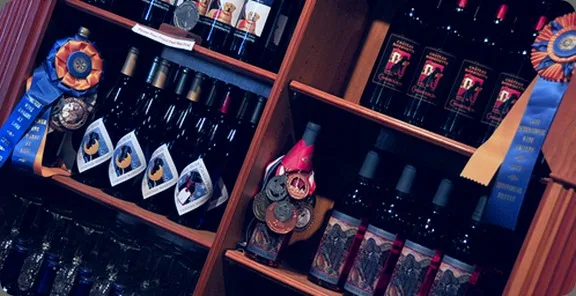
When you visit wineries, no doubt you’ve seen shiny medals on ribbons draped around bottles of wine. A new study by French economists examines whether wine competition awards have an impact on wine price and are indicators of quality.

Susan Sharpless Smith


By Dave Nershi, CSW, Vino-Sphere publisher

Judging A Book By Its Cover


Producers of “experience goods” such as books, movies or wine, all encounter the same problem. How do you demonstrate quality before the book is opened, the movie viewed or the cork popped?

Some information may be gleaned through word of mouth, social media or advertising. A wine consumer also has the information required on a wine label. Even so, hidden characteristics remain.

One way wine producers can inform potential buyers of the quality of their goods is by participating in (and winning medals at) wine competitions. French economists Emmanuel Paroissien of the University of Bordeaux and Michael Visser of University of Paris-Saclay examined the relationship between wine competition medals and the quality and price of your wine. In January, their research was released as an American Association of Wine Economists working paper: The Causal Impact of Medals on Wine Producers’ Prices and the Gains From Participating in Contests. (AAWE Working Papers are circulated for discussion and comment purposes. They have not been subject to a peer review process.)

The Link Between Competition Medals And Increased Wine Prices


Paroissien and Visser used microeconometrics to study individual transactions from a large Bordeaux-based wine broker matched with the records of 11 important wine competitions including winners by medal color. In France, the government greatly limits the amount of marketing and publicity for alcohol. As a result, wine competitions take on added importance. There were 11 wine contests studied, with nine in France and two others in Europe.

The research provides good news for wineries participating in competition. Winning a medal has a strong effect on wine prices. Wine producers who win a gold medal can increase their prices by 13%. Garnering a silver or bronze medal allows a smaller increases, 4.4% and 4.2% respectively. According to Paroissien and Visser, the prestige of the competition makes a big difference, with awards at the most prestigious competitions allowing wineries to augment their prices with the largest markups.

Wine Judging, Medals And Wine Quality


The study by Paroissien and Visser is focused on Bordeaux wine prices. Do the findings translate to the New World? The economists respond, “It’s difficult to say since France is not really comparable to other countries. In the U.S. for example there are much fewer wine contests. How this affects the impact of medals is unclear. But it would be interesting to replicate our methods with other countries and wines.”

Illustrating one difference, French regulations prohibit contests from awarding more than 33% of the participating wines. Some stick closely to this limit, while others are even more restrictive.

There is considerable cost to a wine producer to participate in a contest: entry fee, samples, etc. Is this something a winery, perhaps one with limited finances, should undertake? The research suggests that it is profitable to participate in certain competitions, especially the most prestigious ones, even if the probability of actually winning a medal is small.

While the research shows a strong connection between winning a wine competition and increased wine prices, the linkage between wine medals and wine quality is a different story. The authors comment, “Only a minority of contests attribute medals that are significantly correlated with quality.
These are primarily the ones founded a long time ago, and whose judges are required to evaluate relatively few wines per day.”

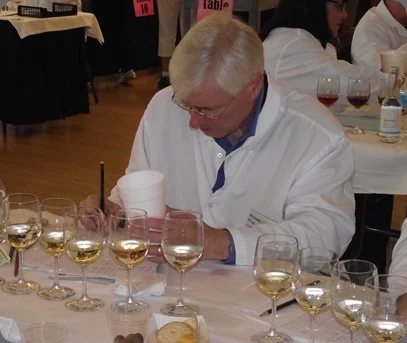
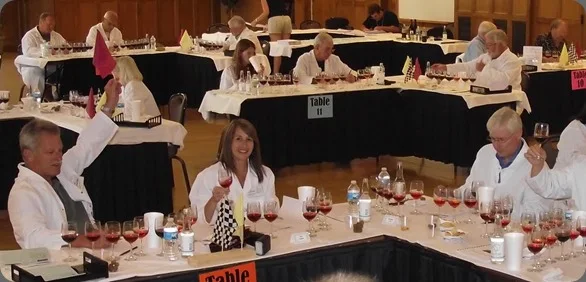
Photo credits: Wine medals - Susan Sharpless Smith Flickr via Compfight cc, Wine judging – Dave Nershi, Vino-Sphere

Thursday, May 19, 2016

What Makes A Great Winery Visit? Here Is Our Trifecta

A winery visit can be spectacular – or a complete bust. What makes the difference? After visiting more than 100 different wineries, here’s our inside scoop.

We Have Reports On More Than 130 Wineries


I just recently glanced at our winery reports page and counted 133 entries. We’ve visited many more than that, probably closer to the 150 mark.

Some of those visits have been memorable – sipping outstanding wine in the dappled sunshine while being caressed by gentle breezes. But some have been memorable for the wrong reasons.
The bad winery visits can remind you of an episode of Kitchen Nightmares with Gordon Ramsey going ballistic after discovering an oozing mess in the walk-in cooler.

Well, what is it that makes a winery visit an experience to savor?

Based on our experience, we consider three factors. If a winery scores big in all three dimensions, you can ink in a big star on the wine trail map – marking it for repeated visits.

In our experience, you need the “three goods:” 1. Good winery grounds and tasting room, 2. Good tasting room staff, and 3. Good wine.

Never Miss A Toledo Wines and Vines Post – Click To Subscribe

Number One: Good Winery Grounds And Tasting Room


Upon arrival, nothing sets the stage like seeing an impressive, quirky or scenic winery building. It gives you good vibrations right from the start. There’s nothing worse than rumbling up to the next stop on the wine trail, looking at your companion asking, “Should we go in, or just turn around?”

Having an awesome tasting room doesn’t mean you will have world class wine, but it shows the caliber of the operation. Chances are that even average wine will taste a lot better in a tasting room with a floor to ceiling window overlooking a lake than in what appears to be a farmer’s converted garage.

One of the nicest tasting rooms we’ve visited is Heron Hill in the Finger Lakes. You are impressed from a half mile away and even more blown away once you are inside. Lamoreaux Landing and Glenora are two other stand-out Finger Lakes establishments. The winery buildings in Niagara-on-the-Lake, Stellenbosch (South Africa), and Lake Okanogan (British Columbia) are also spectacular.

There is also a lot to be said for grounds with picnic tables and scenic views of mountains, vineyards or lakes.

Number Two: Good Tasting Room Staff


Someone save us from uninformed, unhelpful and unpleasant tasting room staff. You’ve made the decision to stop for a tasting and enter the building. The next moment of truth is the tasting room attendant.

In some wineries, like Bully Hill in the Finger Lakes, the staff ARE the attractions – entertaining guests with humorous stories and gags while dispensing detailed knowledge of the winery’s goods. A good staff can also help guide you to the wines you will most enjoy.

On a good day, your tasting room attendant will generate warmth, be a helpful advisor and sell a lot of wine.

The other end of the spectrum includes those who are too busy to tell you about the wine, those who don’t know what is in a particular wine and those who are doing it without a true love of wine.

This factor is probably even more important than an impressive building. At this point you're already invested in making a stop and if you get a bummer of a host, you’ll feel it’s been a waste of time.

Check Out Our Winery Reports Page To Plan Your Next Visit!

Number Three: Good Wine


Excellent wine can supersede almost any other flaw in your winery visit. This is the final piece of the puzzle. If you’re sipping an especially robust Cabernet Franc in a groovy tasting room while the tasting room attendant is telling you an intriguing story about how the owner started the winery, you have hit the trifecta!

If Numbers 1 and 2 are locked in, you have a better than even chance you’ll be tasting some good wine. But there is no guarantee. While we were up in the Niagara Peninsula, we made a stop at a winery that looked very impressive from the road. The building was of a modern design built from local stone. Inside the tasting room glittered as track lighting glinted off racks of bottles in impressive displays.

Unfortunately, the wine was just “mehh”…

Once you have achieved the “three goods,” that is the time to turn to your companions, smile and raise a toast. You are living the good life!

Technorati Tags: ,

Thursday, April 21, 2016

European Startup Wineist Aims To Disrupt Wine Industry

Wineist aims to help people on the go learn about wine and experience the magic that happens outside the comfort zone. Their initial offering was a set of six mini-bottles of wine that range from Navarra to Swartland…


Good Things Come In Small Packages


I receive a fair number of wine shipments. This one, though, was a real surprise. My package from Wineist, a small Euro startup designed to sell wine directly from wineries, brought a smile to my face.


About the size of a box of chocolates, when opened it reveals six 50 milliliter bottles. Each bottle is numbered and corresponds to a description in the “wine carte” booklet. The booklet is illustrated with playful drawings, but also provides solid information about the wine.

Each wine is labeled in two ways, a classification and a “wine perspective.” The wine classifications are: Freshman (light bodied white), Lusher (medium and full-bodied white), Juicer (light bodied red), Bigshot (medium and bold-bodied red) and Sweetie.

The wine perspectives include “Sunny Afternoon,” “Social Rally,” and “Philosophy Feast.” Each of these designations has an icon or color. While we don’t really need those devices, it adds to the fun.

Sampling The Goods


My wife, the Green Dragon, helped me with the sampling. The selection was quite nice:

  • 2014 Ernst Riesling Kabinett, Weingut
  • 2015 Delheim Pinotage Rose, Stellenbosch
  • 2014 Pagos de Araiz, Navarra
  • 2012 Chianti Rufina Cru Basciano
  • 2011 Allesverloren Barnyard Blend, Swartland
  • 2014 Bodegas Lopez Mercier Cal Y Canto

Each wine has a wine description, food pairings, “wine geek info,” winery info and a spot for wine tasting notes. You can also check off three categories: Pour More, One is Just Right, or Not My Cup of Wine.

Battling The Bottle


The first issue was the bottle itself. I’ve encountered these small European bottles before, and they just aren’t well designed. While most of them opened without a hitch, one required a pair of pliers to open and even then it didn’t come entirely off. I pried it open enough to pour.

My second sticking point is the amount of wine. I love wine – and my love is measured at more than 50 ML. The Wineist bottle is 1/15th of a regular 750 ML bottle or about 1/3 of a regular glass of wine. I like to compare tasting notes with Green Dragon, but if we split the wine, it was in danger of evaporating before we had any.

I must admit I don’t know how 50 ML bottles age, but I do know that large format bottles of wine can age longer because less surface area is exposed to air relative to the volume. For whatever reason, our Chianti sample had spoiled and our final Spanish wine didn’t smell good enough to sample.

There were some successes. The Navarra Tempranillo blend and the Pinotage Rose both scored highly with us. I really enjoyed the Backyard Blend, which lived up to its name and reminded Green Dragon of rhino.

Does The Wineist Model Work?


The Wineist packaging looked very cool, but once we started sampling we discovered the size was too small. There is an option to purchase full-sized bottles, but it is hard to pass judgment on the wines based on this very small sip.

We liked all of the tools, text and art that went into the booklet. It lent the experience an air of fun.
The bottles seem problematic. I’m not sure they are guaranteeing the freshest wine and they are difficult to open.

Wineist may have already received some of this initial feedback. The subscription model (which was 15.99 to 17.99 Euros per month) has been at least temporarily shelved in favor of full bottle sales. Here’s the latest word from the Wineist website:
Wineist will now be offering full bottles of wine, being sold directly from the wineries themselves through our webpage. We are becoming a platform where wineries from all over Europe will offer wine directly to the wine lovers! We will eliminate the middle man & high retail margins and offer the best wine for the lowest possible prices to the consumers! The price will be set by the wineries themselves and delivered by them directly to your door step, creating a win – win situation for everybody.  With this innovative approach Wineist will disrupt the world of offering wines as much as AirBnB has changed the world of offering apartments.

The website goes on to say that the subscription model will be transformed into a special wine club for the most loyal Wineist clients.

Wineist has plenty of Euro style and charm. We hope they are a smashing success.

Thursday, February 25, 2016

Survey Results: Wine Drinkers Are Diverse With Appreciation Of New Offerings For More Occasions

In a newly released survey, 35% of survey respondents classified themselves as “wine adventurers."


Frequent Drinkers Stick With What They Know


Whether it’s relaxing at home, dining out at a restaurant or celebrating with friends and family, Americans are enjoying wine at a wider variety of occasions than ever before. The 2015 Gallo Consumer Wine Trends Survey, commissioned by E. & J. Gallo Winery, found that 85 percent of frequent wine drinkers now believe that wine is appropriate for casual and formal settings alike. The survey of 1,000 frequent wine drinkers between the ages of 21 and 64 is a follow-up to the 2014 survey of the same name, which aims to capture the current state of American wine drinking attitudes and behaviors.

The survey found that even while Americans are bringing wine into a growing number of occasions, frequent wine drinkers still stick to what they know. When presented with a list of 40 well-known wine brands across a range of price levels, respondents indicated that they purchased an average of 3.2 brands on a regular basis. However, Americans showed overall interest in a diverse range of wine styles, packaging formats and sizes and also shed light on their perceptions of wine and wine culture.


The Millennial Versus Baby Boomer Experience


An overwhelming 82 percent of all frequent wine consumers enjoy between one and five glasses per week; however, their experience varies significantly by demographic. Millennials are twice as likely to enjoy wine when socializing with friends (22 percent versus 11 percent), whereas baby boomers are fifty percent more likely to reach for wine during a family meal (33 percent versus 22 percent). Millennials are also four times more likely to often select a wine based on its label, more frequently looking for personality and originality.  Baby boomers, by contrast, often look to the label for information such as region of origin and product details.


Wine Tribes


When asked to classify themselves as a type of wine consumer, 35 percent of survey respondents chose “wine adventurer,” indicating a desire to explore options and to have new experiences with wine. Millennials were more likely to categorize themselves as “wine novices” (30 percent), while baby boomers often considered themselves “wine traditionalists” (27 percent) or “wine brand loyalists” (13 percent). Interestingly, only 3 percent of total respondents self-identified as “wine snobs,” making the case that most wine drinkers aspire to enjoy wine on their own terms rather than following a prescriptive set of traditional cultural rules.


Wine Fears Are Minimal


A new area of interest explored in the 2015 survey was common fears among wine drinkers.  Overall, frequent wine consumers didn’t claim to have many concerns; however, four in ten were frightened by the prospect of mispronouncing a wine’s name. Millennials reported a greater level of “wine fear” overall than older drinkers, stating that:  

  • 34 percent feel awkward when asked by a server to “taste” wine at a restaurant
  • 34 percent are afraid their wine selection will be judged by others
  • 31 percent feel uncomfortable talking about wine with others

However, 42 percent of all survey respondents acknowledged that wine is becoming less formal.  By continuing to remove these barriers from the category, the wine industry will welcome new friends and continue its expansion into everyday occasions.


Rosé Any Day


Almost twice as likely to purchase rosé in comparison to baby boomers, millennials are clearly driving purchasing trends for blush wines. Interest among rosé drinkers noticeably swells as early as April (42 percent), peaks in June, July and August (ranging from 70 to 75 percent) and holds strong through September (52 percent). This growing passion for rosé beyond the summer season is indicative of millennials’ interest in a more diverse selection of wine overall.


Portable Packaging


Portability and convenience were notable points of differentiation for a variety of alternative packaging options. In fact, 37 percent of survey respondents identified boxed wine as a convenient option and 54 percent would be open to using casual boxed wine as their “go-to” in the refrigerator.

Similarly, 32 percent of consumers recognized wine in a can as being portable and perfect for picnic or cookout scenarios in which bringing a bottle of wine would be inconvenient.  Among fans of alternative packaging, outdoor events remained the primary occasion for the use of these products, which include 187ml bottles (42 percent), tetra packs (43 percent) and cans (60 percent).

Tuesday, January 12, 2016

Poema Offers Duo Of Red And White Wines

Spanish winery Poema is well known for its sparkling Cava, but this small-production, quality-oriented producer also makes luscious, fruit-forward red and white blends.


You Learn Something New…


If you are like me, the name Poema is very familiar. They make an outstanding Cava that is an outstanding value. I pick up a bottle whenever I have the chance.

What I hadn’t seen until now are other wines from Poema. They are new in the market and I was anxious to see what they were like.

White Blend With Spanish Twist


The Poema 2014 White is a blend of Macabeo and Muscat d’Alsace. Macabeo is the most widely grown white grape in northern Spain. Muscat d’Alsace is regarded to be the best of the Muscat grape family, which has been grown around the world for centuries.

This wine has bright flavors and is low in acidity. Poema White has notes of floral and citrus and a clean taste unclouded by oak.

Never Miss A Toledo Wines and Vines Post – Click To Subscribe

Poema Red A Triple Blend


For the 2014 Poema Red, the winemaker puts together a unique combination. The blend is Cabernet Sauvignon, Garnacha and Tempranillo – a blend I don’t believe I’ve had before.

Poema Red is fruit-forward and an easy drinking wine. Like the Poema White, this wine is best enjoyed soon after its release.

The wine offers pleasing notes of red fruit with traces of spice. It is a light to medium-bodied wine with a tasty but short finish.

Poema, whose name means “poem” in Spanish, is a quality winemaker. Poema Red and White have a suggested retail price of just $11.99 each.
At that price point you can buy them for a song and consider making them one of your every-day drinkers.

Full disclosure: We received these wines as a marketing sample.

Technorati Tags: ,

Monday, December 28, 2015

The Original Wine Of The Month Club In Vintage Form Despite Legions Of Imitators

The Wine of the Month Club has history that dates back to the early 1970s in the dusty upstairs room of a Palos Verdes liquour store…


Yes, There Is An Original Wine Of The Month Club


How did I not know this? There actually is a monthly wine club that is the original and much imitated Wine of the Month Club. I’m very familiar with winery wine clubs and their regular shipments. From my youth I recall the Book of the Month Club and the Columbia Record Club.


For those last two, I believe much of their sales originated from the fact that the books or records kept on coming unless you were wiley enough to, through great effort, cancel the membership. Today there are plenty of wine clubs, many with a unique twist. One offers to help you figure out your wine style and ship you wines that are in harmony. The Turner Movie Channel Wine Club pairs vintage wine with vintage movies. Others specialize in California wines and some from other specific regions.


How It All Started


Acording to Paul Kalemkiarian Sr., he invented the idea of mail order wine in 1972. He points out that many of the competitors mimic the original with newsletters, recipes and free binders.


The company, now owned by son Paul Kalemkiarian Jr., says the difference between the original Wine of the Month Club (WOMC) and everyone else is its history – which allows it to command better quality wines at better prices.


Never Miss A Toledo Wines and Vines Post – Click To Subscribe


Paul Sr. studied Pharmacognosy (study of plant based medicines) at the University of Cairo, Egypt. He then moved to America and got his Masters degree at USC. He began working in a pharmaceutical company and opened his first pharmacy in Inglewood in 1955.


His company grew to a point where he bought and sold 12 pharmacies and had five open at one time.
One of these purchases was key to the origin of WOMC.


A Package Deal


One of the Kalemkiarian pharmacies was located in Malaga Cove Plaza, but oddly enough, there was another drug store in the same plaza. The owner of the drug store owned a liquor store next door. Paul Sr. agreed to buy the pharmacy, but only if the liquor store was included.


The liquor store became Palos Verdes Wine and Spirits. To help patrons who would walk in and say, “My boss is coming for dinner and I need a nice wine,” he started to pick monthly wine selections.


The monthly selections were the root of the WOMC. As time went on, patrons would rely on the monthly selections that were pre-screened for quality, variety and value. Store customers soon wanted their monthly selections delivered.


Hand delivery continued until it was no longer practical. Delivery then moved to UPS. Paul Sr. sold Palos Verdes Wines and Spirits, but retained the mail order rights and trademarked the name “Wine of the Month Club.” The club operated as a freestanding entity and they continued to be the only service of its kind until the mid-80s. Today Paul Jr. is the owner, president and cellarmaster.


Just What Is Offered?


The flagship offering of WOMC is the two-bottle clubs. The two-bottle Classic Series is $454 for a 12-month members and you can also purchase four and six-month options. That comes out to about $38 a month – not bad to have two interesting wines delivered to your door.


Three other series are offered. The Vintner Series, designed for someone who is interested in a variety of grapes and regions, is $589 for 12 months. The Limted Series, their top tier, includes unique wines that have aging potential. The cost is $725 per year. There is also a California Series at a $535 price tag.


The wines listed in the materials are interesting. I am not familiar with most of the wineries producing the monthly selections, but upon checking, these are choices I’d be interested in trying.


The November 2015 Classic club had four offerings. Two were produced by Spur Ranch. Spur Ranch is a brand of O’Neill Vintners, which specializes in bulk wines and private label wines. These wines might be quite good, but there isn’t a Spur Ranch winery.


The Vintner club offered a 2013 Skyline Pinot Noir. Skyline is a brand of the Owl Ridge Wine Services, which is a custom crush pad. Customers provide the grapes and the crush pad provides the equipment and expertise. The wine is produced by winemakers Joe Otos and Chris Loxton. So this could be a limited production gem.


The suggested retail prices for the bottles are very reasonable. Based on the materials I reviewed, wines in the Classic line are under $22, the Vintner line under $25 and the Limited Series under $35. The prices are lower to WOMC members and are quite a deal when reordering.


I’m a sucker for surprises, especially with wine. Receiving two new wines each month, learning about them and (especially) quaffing them is a fun idea for yourself or as a gift. If you are interested in a wine club – here’s the granddaddy of them all, the original Wine of the Month Club.


Full Disclosure: We received the wine basket as a marketing sample


Tuesday, May 26, 2015

Exploring Franschhoek, South Africa’s Food and Wine Capital


Continuing the saga of our wine and safari expedition to South Africa…
Our first stay in South Africa was in Cape Town. After three days there we were off once again, this time to the Cape Winelands, specifically Franschhoek. It was an easy drive in our rental car as the metro area disappeared and vineyards and mountains filled the vista.
Franschhoek, literally “French Corner” was settled by Huguenots, a Protestant religious group that was fleeing persecution in Catholic France.In 1688 a group of 200 Huguenots began settling in what was then called Olifantschoek (Elephant’s Corner). With them they brought their cuisine and winemaking tradition to what is now called Franschhoek. Thank goodness!
Before checking into our accommodations, we headed to the Huguenot Memorial. The memorial symbolizes freedom of religion. The central figure is a woman holding a Bible in one hand and a broken chain in the other. Its setting against the panoramic mountains is just perfect.
We were booked for two nights in the Franschhoek Country House a delightful bed and breakfast that was more like an inn. Our room was in the manor house, which dates back to 1890. It included a private balcony to view the surrounding mountains. There was also an adjacent lounge.
The grounds were idyllic, with a pool, fountains, gardens and their symbol of hospitality, baskets of lemons. Each evening the turndown service included putting hot water bottle bed warmers under the covers. What a nice surprise.
Breakfast, which was included in our stay, was served in a separate building. The cold breakfast buffet was a vast spread a fruits, bread, yogurt, cereal. As we enjoyed that, a made to order hot breakfast was prepared. The location so close to downtown Franschhoek and to numerous wineries was another bonus.

One evening as a respite from our fine dining adventure we took a short walk (although Green Dragon felt it was very long!) to the Stall, a small café near our lodging. We ordered a brick oven pizza and beer – which was a nice way to hit the reset button after a day of wine tasting.
Our last evening at Franschhoek Country House we dined in their acclaimed Monneaux restaurant. We went for their five-course tasting menu paired with five wines. Each course was a visual treat as well as scrumptious. We finished with a late harvest Rickety Bridge Natural Sweet Chenin Blanc to pair with our dessert. Smashing!
As mentioned in a previous post, the strong US dollar makes for amazing values. Our tasting menu with five wines cost us each 495R, which is about $41 US. Such exceptional cuisine would be worth it at twice the price.
There are no less than 36 wineries in and around Franschhoek and many are world-class wineries with spectacular wine, grand architecture, exceptional artwork, scenic views and well-trained staff. The village itself is filled with quaint cafes and interesting shops and is a great location for strolling.
During our visit to Franschhoek, we visited seven wineries: La Petite Ferme, La Bri, Grand Province, Boschendal, La Motte, Moreson and Chamonix. In coming days we’ll provide winery reports on each.

Tuesday, October 7, 2014

The Traveling Vineyard Home Wine Party Experience

By Tasting Team Member Green Dragon
The Traveling Vineyard is a home marketing concept focused on our favorite product – wine! The company, founded in 2001, uses “wine guides” to offer wine through home parties. Recently I attended a Traveling Vineyard party put on by good friend Jeanne English. She considers herself “Not a wine expert, merely a wine enthusiast.”
The evening I was attended was a “girl’s night out” theme. When you get approximately a dozen women together, you can be assured it will be a lively, entertaining evening. I was not disappointed! The women came from a range of wine experience and different palates and there was something for each of them.
The wines are sourced from different locations around the world, with an emphasis in California. They do offer wines from South Africa, New York State and Italy too.
The wines we tried included:
2013 Screaming Goat Gewürztraminer, from Alexander Valley, CA. Although I’m not a big fan of Gewurtz. because I don’t like the rose petal taste some Gewürztraminer has, this was voted the favorite of the group, proving that a wine should not be, as Jeanne stated “yucked, because your yuck can be someone else’s yum.”
2010 Zeffer Hills Chardonnay, Edna Valley, CA. I avoid Chardonnay that is too oaky, but I found this one to be very nice and, if fact bought a bottle. What convinced me was the flavor that not only included lemon and toast, but banana as well. We recently popped open the bottle to pair beautifully with salmon.
2011 Whiskers Red Blend, Lake County, CA. this is a blend of 46% Cabernet Sauvignon plus 39% Merlot and 15% Petite Sirah. This has some black pepper, cherry and black fruit notes. It was enjoyable with soft tannins. It was lighter bodied than expected.
2012 Small Hours Zinfandel, Lodi, CA. This Lodi Zin had flavors of cherry and spice, but missed the mark for me as it was weaker in body than I had hoped.
Fissata is a red dessert wine with a slight frizzante (like a sparkling wine), that comes from Hammondsport in the heart of New York’s Finger Lakes region. It is made from Baco Noir, Catawba and Concord grapes. This was the surprise of the night – in a good way!
Although I didn’t try it there, I ordered a bottle of Tanglewood Backyard Red. This is a winemaker’s blend of 29% Syrah, 17% Malbec, 14% Petite Sirah, 12% Mourvedre, 8% Zinfandel,5% Petit 5% Tempranillo,4% Grenache, 2% Pinot Noir. That’s a lot of different grapes! The bouquet is nice, the body is light and the taste offers some brambly fruit flavors.
This was a fun evening made better by some good wine, courtesy of “wine enthusiast” Jeanne. You can learn more about her business on her Facebook page, www.facebook.com/winewithjeanne .


Friday, October 3, 2014

Simple Wine Storage Tips Can Avoid Damage To Your Vino

This is but one of the racks of wine in the re...

Wine storage is a key to avoiding damaged wine. (Photo credit: Wikipedia)

OK, wine aficionados, today we’re happy to pass along these wine storage tips courtesy of our friends at Underground Cellar.

"I don't have a fancy cellar or wine fridge to protect my wines- how should I store my small-yet-important stash of bottles? I don't want to ruin them before I can drink them!"

Look, most casual wine drinkers are not utilizing a climate-controlled walk-in cellar of any sorts, and many folks don't even have a small countertop wine fridge in the kitchen or dining room.

The thing is, you don't have to spend big money on a fancy wine cooler that's bigger than your kitchen refrigerator or dig a small cave into the hillside next to your house to safely store your bottles of vino.

Here are a few easy yet important tips on keeping your wine from being damaged in your home:

* Consistency of temperature is key. Major temp fluctuation kills wine, and may lead to cork leakage due to the wine expanding/contracting from the wide temp changes. No bueno!

* Keep the wine out of direct light- be it sunshine or direct bright indoor lighting of any kind. There's a reason almost all wine bottles use tinted, colored glass- it's like wine sunglasses to protect the juice inside from damaging UV rays.

* Store your wines on their side, ensuring the cork stays moist. If a bottle is aged for many years upright there's a chance that dry cork could crumble and be a pain in the ass to extract in one piece! I hate trying to fish out cork bits from my precious wine...it's torture.

By remembering these very simple yet very effective storage tips, you can find a suitable spot in your humble abode to keep your wines safe and provide you with a little peace of mind as well.

1) First grab a few crates, racks, or simple storage shelves to hold your bottles. There are many options online, at the wine shop, or hardware store that are cheap and effective.

2) Next clean out that half-full, disorganized, under-utilized closet/pantry space. Reorganize that cluttered basement. Clear out those old golf clubs from underneath the staircase. Make room for your cherished vino collection to move in and find a new, safe home:)

3) Then get your DWSA (Designated Wine Storage Area) identified, prepared, and stocked up. Minor temp fluctuations in your home are normal and just fine. Keeping temps between 55-65 degrees in your DWSA would be ideal, but again as long as things are pretty stable you should be fine.


Monday, September 29, 2014

Wine Tips For A Full-bodied Experience

Slide over, sweaty mug of brutish beer; wine has stepped up its game!
In the past two decades, Zins, Cabs and Chardonnay have soared in popularity among imbibing Americans. Wine, the preference of just one in four in 1992, is now the alcoholic beverage of choice for 35 percent of us, according to a 2013 Gallup poll. At the same time, beer has taken a tumble, from the favorite of nearly half of us to just 36 percent.
“Wine is an adventure in a glass – something other cultures have recognized for centuries,” says Howard Kleinfeld, author (as Howard K.) of “Dial M for Merlot,” www.DialMforMerlot.com, a fun novel about a lovelorn nerd whose world snaps to life with his first wine tasting.
“For a long time in this country, we viewed wine as an elitist beverage. Just to be eligible to uncork a bottle required a scary level of sophistication. I have great respect for connoisseurs and the sommeliers, but if you’ve ever attended a wine tasting, you quickly see wine is actually the great equalizer.”
For those who’ve never visited a vineyard or sipped a Gewurztraminer, Kleinfeld offers these tips to free up your palate -- and your psyche -- for a full-bodied experience.
1.  What’s the best wine?You’ll find all kinds of lists purporting to distill the top 10 or top 100 best wines of the thousands upon thousands of new releases each year. They are a wonderful resource for information and a great starting point, but there is no substitute for personal exploration.
“The best wine is always whatever’s in your glass at the moment,” Kleinfeld says, “unless whatever’s in your glass makes you grimace, in which case …”
2.  Don’t drink it if it doesn’t make you happy.
Life really is too short to not make the most of every moment – and every sensual experience.
“I learned that in 2007 when I was diagnosed with throat cancer at, what I felt was, a very young age,” Kleinfeld says. “I got through surgery, chemotherapy and radiation with the love and support of my family and friends, but I lost my sense of taste for a few years
Cancer-free and with all of his senses intact, Kleinfeld says he has resolved to enjoy every sip of life.
“Don’t waste your time on wine you don’t enjoy. Save it for cooking,” he says. “Drink something that puts a smile on your face. And remember – there are all kinds of smiles.”
3.  Go ahead and shell out $50 or $100 on a wine you just have to taste again.
A lot of us think California and Napa Valley when we think domestic wines, and while The Golden State is the No. 1 producer in the country (followed by Washington, Oregon and New York), every state now has wineries. That means that wherever you are, there’s a wine tasting room within driving distance.
“If you go to a wine tasting and you sample something you absolutely love, something you know you want to taste again – maybe with a steak, which they don’t usually have at wine-tasting rooms, go ahead and buy it,” Kleinfeld advises.
“Forget that it costs three or four times what you (might) usually spend for a bottle of wine. Splurge. See tip No. 2.”
4.  Forget the red with meat, white with fish and chicken rule – unless it works for you.The idea of pairing red wines with red meats has to do with the bolder flavor of both. Fish and chicken tend to have milder flavors, as do many white wines.
“But there are so many exceptions to those ‘rules’ you may as well just toss ‘em,” Kleinfeld says. “They don’t take into account the range of flavors of meat, fish and chicken, especially when you consider all the different ways they can be prepared. And if you’re not a fan of Riesling, for instance, you won’t like it no matter what you pair it with.”
Be an adventurer, he advises. Open a few different varieties of wine when you sit down to eat and explore different pairings.“The entrees and wines you best enjoy together are the perfect pairings for you.”


Friday, September 26, 2014

Zazzol Wine Aerator: A Review


The Zazzol is a wine aerator that aims to improve upon a clever idea. Our testing during a recent grand tasting event was very positive, causing us to remark, “Za-Za-Zazzol!”
There are basically two types of wine aerators. The first is the in-bottle kind which fit snugly into the top of the bottle (like the Soiree) and wine swirls through it on its way to your glass. The second type is a separate unit though which you pour the wine, like Vinturi. There are stands for Vinturi, but most commonly you hold the aerator and pour the wine through it into your glass.
It’s generally accepted that aerators improve the flavor of wine. At least that is my experience from tasting aerated wine side by side with the same wine that didn’t get the treatment.
I’ve used Vinturi for a number of years and have been pleased. I was a bit skeptical when I was asked to review Zazzol. I was pleasantly surprised, though. The Zazzol has a multi-stage design. The wine first hits an umbrella shaped disc that disperses the wine (and looks cool). The wine then pours through a perforated “drizzle plate” that turns the vino into little droplets. Your wine then swirls through a narrow cylindrical opening.
When the wine fills the glass, there is no question it is aerated. It is bubbly with a purple froth (no need to aerate white wine).
I don’t always use the aerator. When time allows, it’s much more civilized to use the decanter. However, when you’re having a glass in the evening, the aerator is the ticket for making a $15 bottle taste like $30 or reviving life into wine that has sat for a day or two.
During our recent Cabernet Grand Tasting, we used the Zazzol on six great bottles of Cab and it performed very well. Zazzol has more style than my beloved Vinturi and also is less messy. The Vinturi sometimes can back up, causing spillage.
Zazzol costs about $40. This is a fine wine accessory and a great gift idea. It has now become my aerator of choice.
Full disclosure: This was received as a marketing sample.

Thursday, September 11, 2014

Annual Island Wine Festival Coming To Put-In-Bay October 4

The Annual Island Wine Festival will be held Saturday, October 4, at Put-In-Bay. Representatives from wineries across the US will be on hand for festival goers to sample more than 400 of their wines. Also featured will be great food, a display on the history of island wineries, winery and grape related merchandise.
Sampling tickets are $1 each with most samples $1 to $2 with some from $4 to $5. Retail sales are available so you can take your favorite bottle home with you. This is a great time to find a wine for Thanksgiving or Christmas dinner.
Heineman's, Put-in-Bay Winery and several other island and Ohio wineries will be participating. A silent auction will be held with items including a vacation package, large bottles of wine, and other fine gifts. The silent auction benefits the Lake Erie Islands Historical Society. The event is scheduled 11 AM to 6 PM at Put-In-Bay Winery.


Tuesday, August 19, 2014

Wine Aficionado Shares Tips for a Full-Bodied Experience

A glass of Oregon Pinot gris

A glass of Oregon Pinot Gris (Photo credit: Wikipedia)

Slide over, sweaty mug of brutish beer; wine has stepped up its game!

In the past two decades, zins, cabs and chardonnays have soared in popularity among imbibing Americans. The preference of just one in four in 1992, its now the alcoholic beverage of choice for 35 percent of us, according to a 2013 Gallup poll. At the same time, beer has taken a tumble, from the favorite of nearly half of us to just 36 percent.

“Wine is an adventure in a glass – something other cultures have recognized for centuries,” says Howard Kleinfeld, author (as Howard K.) of “Dial M for Merlot,” www.DialMforMerlot.com, a fun novel about a lovelorn nerd whose world snaps to life with his first wine tasting.

“For a long time in this country, we viewed wine as an elitist beverage. Just to be eligible to uncork a bottle required a scary level of sophistication. I have great respect for connoisseurs and the sommeliers, but if you’ve ever attended a wine tasting, you quickly see wine is actually the great equalizer.”

For those who’ve never visited a vineyard or sipped a Gewurztraminer, Kleinfeld offers these tips to free up your palate -- and your psyche -- for a full-bodied experience.

1.  What’s the best wine?
You’ll find all kinds of lists purporting to distill the top 10 or top 100 best wines of the thousands upon thousands of new releases each year. They are a wonderful resource for information and a great starting point, but there is no substitute for personal exploration.
“The best wine is always whatever’s in your glass at the moment,” Kleinfeld says, “unless whatever’s in your glass makes you grimace, in which case …”

2.  Don’t drink it if it doesn’t make you happy.
Life really is too short to not make the most of every moment – and every sensual experience.
“I learned that in 2007 when I was diagnosed with throat cancer at, what I felt was, a very young age,” Kleinfeld says. “I got through surgery, chemotherapy and radiation with the love and support of my family and friends, but I lost my sense of taste for a few years.”
Cancer-free and with all of his senses intact, Kleinfeld says he has resolved to enjoy every sip of life.
“Don’t waste your time on wine you don’t enjoy. Save it for cooking,” he says. “Drink something that puts a smile on your face. And remember – there are all kinds of smiles.”

3.  Go ahead and shell out $50 or $100 on a wine you just have to taste again.
A lot of us think California and Napa Valley when we think domestic wines, and while The Golden State is the No. 1 producer in the country (followed by Washington, Oregon and New York), every state now has wineries. That means that wherever you are, there’s a wine tasting room within driving distance.
“If you go to a wine tasting and you sample something you absolutely love, something you know you want to taste again – maybe with a steak, which they don’t usually have at wine-tasting rooms, go ahead and buy it,” Kleinfeld advises.
“Forget that it costs three or four times what you (might) usually spend for a bottle of wine. Splurge. See tip No. 2.”

4.  Forget the red with meat, white with fish and chicken rule – unless it works for you.
The idea of pairing red wines with red meats has to do with the bolder flavor of both. Fish and chicken tend to have milder flavors, as do many white wines.
“But there are so many exceptions to those ‘rules’ you may as well just toss ‘em,” Kleinfeld says. “They don’t take into account the range of flavors of meat, fish and chicken, especially when you consider all the different ways they can be prepared. And if you’re not a fan of Riesling, for instance, you won’t like it no matter what you pair it with.”
Be an adventurer, he advises. Open a few different varieties of wine when you sit down to eat and explore different pairings.
“The entrees and wines you best enjoy together are the perfect pairings for you.”

About Howard Kleinfeld (Howard K)

Howard Kleinfeld is a full-time wine enthusiast, part-time foodie, and first-time author. His new novel, “Dial M for Merlot,” www.DialMforMerlot.com, written under the pen name Howard K, follows a 30-year-old math whiz’s intoxicating journey of wine discovery. Kleinfeld is a longtime singer-songwriter whose compositions/productions for advertising, TV shows and indie films have earned him Emmy, Telly and Addy, awards.