Showing posts with label book review. Show all posts

Monday, July 6, 2020

Rollicking Wine Executive Felix Hart Returns In New “Firing Blancs” Adventure

Firing BlancsI’ve been a fan of Felix Hart, Peter Stafford-Bow’s lusty and adventuresome hero who works for British grocery giant Gatesave, since the publishing of Corkscrew, the first in a series of three Felix Hart adventures. In Firing Blancs, the latest tale published in May, Felix is trotting the globe again, this time to South Africa.

Reading the book without first perusing the promotional material, I was delighted to find the story was located in one of our favorite wine destinations: South Africa. Through the book, we were able to relive some of our favorite stops such as Cape Town, Stellenbosch, Franschhoek, and the Helshoogte Pass. 

After choking his CEO to death (accidentally) during a boardroom presentation, Felix is off to South Africa to try to avoid a public relations disaster. Gatesave’s largest South African supplier has been discovered to have brutal and oppressive working conditions. Felix must somehow work with the recalcitrant winery owner to triple his workers’ pay and earn a certification of fair and humane work practices -- certainly a daunting task.

Working undercover as a representative of the Tears of Pity charity, Felix finds himself assaulted, blackmailed and imprisoned in a sketchy township guesthouse. Our hero bounces from one dire situation to another, eluding the jaws of vicious guard dogs, the clutches of a revolutionary leader and the insanity of the tyrannical new CEO of Gatesave.

Felix and Stafford-Bow handle each situation with panache and hilarious results. This book could not have come along at a better time. We all need a laugh right about now. Firing Blancs is a perfect escape into the wine world of South Africa and an adventure filled with mayhem, some madness and complete fun.

Firing Blancs is published by Acorn Publishing and is available on Amazon for $11.99.

Thursday, January 23, 2020

“Wine Country Table” Highlights Recipes, Regions And Agricultural Bounty Of California

Wine Country TableJanet Fletcher explores recipes that celebrate California’s sustainable harvest

Janet Fletcher is the author or co-author of nearly 30 books on food an beverage. Her latest effort, Wine Country Table: With Recipes that Celebrate California’s Sustainable Harvest by Wine Institute, Rizzoli, 2019, is a delicious look at the wineries, recipes and agricultural bounty that makes California one of the world’s greatest gastronomic destinations.

Keep up with the latest. Follow us on Instagram!

More than a cookbook, Wine Country Table includes fabulous photos by Robert Holmes and Sara Remington that bring the text and recipes to life. In addition to 50 recipes, the book features 23 profiles of wineries and farms that practice sustainable farming.

Napa Valley and Sonoma garner the bulk of international attention, but this book does a balanced job of covering wine regions that stretch the length and breadth of the Golden State. For the Inland Valley area, for example, Heringer Estates of Sacramento Valley and Lucas Winery of Lodi are profiled accompanied by sidebars on Couture Farms asparagus and Enzo Olive Oil Company. Among the recipes in the section are Breakfast Bruschetta, Kale Salad with Red Grapes, Walnuts, and Feta, and Chinese Chicken Soup.

Never Miss A Beat – Follow Vino-Sphere On Facebook

The style of the book invites you to wander through the pages with a glass of California wine. Each recipe has a wine pairing suggestion. The Gilroy Garlic and Potato Soup will pair perfectly with a glass of California Grenache, Carignane or GSM (Grenache, Syrah, Mourvedre) blend. The arresting photo of the soup with a soft-yolk egg on top will have you grabbing a corkscrew and heading to the kitchen.

Wine Country Table is a great purchase for your wine-loving friends or your own coffee table. The list price of the book is $45 and is available on Amazon.

The book was produced in collaboration with Wine Institute, an advocacy group of nearly 1,000 California wineries and affiliated businesses. The organization’s website is a wealth of information about California wine and wine in general.

Monday, November 19, 2018

Brut Force: The Further Fantastic Wine Adventures of Felix Hart

Looking for a holiday gift for a wine lover? Try this madcap romp of a wine buyer mixed up in game of black mail, gun play and organic wine fanatics.


I just finished Brut Force by Peter Stafford-Box and I’m still chuckling thinking about it. In Corkscrew, we were introduced to Felix Hart, a wine buyer for a major supermarket chain. Brut Force continues his legendary escapades delivered with piercing wit, unexpected plot twists and a never-ending fountain of premium wine.


Felix is blackmailed into judging a corrupt wine competition designed to reinforce the primacy of a top Burgundy wine estate’s Pinot Noir. The tasting of French Burgundies versus Pinot Noir from a number of other countries has sales implications in the millions. If it weren’t for the two corpses buried in an unmarked grave, Felix wouldn’t be in such a predicament.

How did the tasting go? I won’t spoil the suspense, but let’s just say the hero ends up hanging from his feet and being dunked headfirst into a barrel of Loire Gamay. Not perturbed by his imminent demise, Felix tells his tormentors that he would prefer Cabernet Franc.

Brut Force is published by Acorn Publishing and is available via Amazon in paperback for $12.99. Interspersed with enough vino to please the wine lover, Stafford-Bow’s razor sharp wit will appeal to anyone who enjoys humorous repartee. Please note that this book isn’t for youngsters or those easily offended. I’m not in either of those categories, so it gets high praise from me.

Technorati Tags: ,,

Monday, October 15, 2018

New Book Brings “Power Rankings” To World’s Greatest Wine Regions

For sports fans, power rankings help sort out the contenders from pretenders. Combining various metrics, pundits can rank teams from worst to first. What if that same idea were applied to wine regions?

43 Wine Regions – A Practical Guide


Michael Biddick is a certified sommelier with an impressive background in information technology. He has a graduate degree in information systems from Johns Hopkins and was contributing editor and writer at InformationWeek and Network Computing Magazine. These might seem like disparate interest areas, but Biddick has melded the two in his latest book, 43 Wine Regions subtitled “A Practical Guide to the Top Regions and Vintages Around the World” (Mascot Books, 144 pages, $24.95).

The book, released earlier this month, is a compact summary of the aspects defining the wines produced in some of the most famous growing areas in the world. Biddick crunched the numbers on climate data, consumer reviews, critic scores and quality systems to come up with his list of the world’s 43 best wine regions.

Biddick evaluated 197 wine regions on four dimensions: Composite Vintage Score, Weather and Climate, Producer Quality & Control, and Sensory Evaluation for the period 2000-2016. Each region could score a maximum of 100 points with the weighting as follows: Vintage (48 points possible), Weather and Climate (16 points), Producer Quality & Control (32 points) and his own sensory evaluation (4 points). Regions scoring 50 points or above made it into the book.

Infographics And Data Visualization


Unlike the power ratings and national rankings devoured by sports fans, Biddick doesn’t organize his results starting with #43 and culminating with the top pick. Rather he organizes the regions geographically and presents a table of his data as an appendix.

Some people (like me) may get the itch to go straight to the rankings.
Each chapter begins with a summary of a country followed by one or more regional profiles. In general, the country profiles present a good overview of a country’s wine history, regulations, wine styles and other interesting tidbits. The regional profiles consist of two pages, one an infographic and the other a narrative discussion of the region.

The infographics pack in quite a lot of information ranging from climate, vintage ratings, major wine grapes and classifications. The narrative blends Biddick’s expert insights with facts about the region.

Are These The Top 43 Regions?


The book provides great capsules of more than 40 great wine regions. 43 Regions is an excellent place to start for wine lovers just beginning to expand their horizons and wondering which wines to taste next. The reader who is familiar with most of these regions will want to focus in on how her or his favorite region stacks up against the rest of the world.

This book isn’t intended to be an in-depth examination of any one region. For example, one page about Tuscany or Bordeaux only grazes the surface of regions about which volumes could be written. Don’t buy this book as your only travel guide to France, for example, but do buy it to find a new favorite wine region or get some insight on those you already love.

Some of the results are head-scratchers. For example, the Middleburg AVA of Virginia is ranked higher than Barossa Valley, Australia, which didn’t even make it into the book. I’m a fan of Virginia wine, by the way, but that does not compute. Likewise, Portugal’s Vinho Verde is rated higher than Oregon’s Willamette Valley and South Africa’s Stellenbosch region. I enjoy a glass of Vinho Verde, but to me it falls magnitudes below Willamette or Stellenbosch.

Of course, many of my favorite regions do get spotlighted and it was enjoyable to get the authors take on these areas. Are the results of 43 Regions controversial? Perhaps so, but in a good way. It’s bound to uncork many a debate over glasses and bottles of wine.

Technorati Tags: ,,

Wednesday, June 27, 2018

Tasting The Past: The Next Must-Read Book For Wine Lovers

A sip of a compelling wine in Israel sent journalist Kevin Begos on a 10-year quest to seek the origins of wine. His tale of discovery is the most interesting wine book of the year.

Obscure Wine Launches Quest


Kevin Begos is a former AP correspondent and a journalist whose beat typically includes science and research. While in Jordan, reporting about medicine in the Arabic world, he opened a bottle of Cremisan Winery and Monastery wine from the hotel minibar and his life was about to take a twist.


Begos is author of Tasting The Past: The Science of Flavor and the Search for the Origins of Wine, which recounts his 10-year journey to dig into the origins of wine and shed light on ancient wine and obscure grapes. He began investigating the mysterious Cremisan vineyard and quickly found himself in a wine-soaked detective story, complete with false leads, DNA evidence and rare grapes hidden in remote plains and valleys across the world. The book was published earlier this month by Algonquin Books and is priced at $26.95 for the hardcover.

The book covers a spectrum of topics interesting to wine lovers such as:
  • How scientists are decoding grape DNA to chart the family tree of wine.
  • How DNA analysis, mass spectrometry, liquid chromatography and other high-tech tools are helping winemakers rediscover rate native grapes and rescue them from the brink of extinction.
  • How archeobiologists in Milan brought Leonardo da Vinci’s lost vineyard back to life.
  • How scientists in Israel are rediscovering native grapes of the Holy Land.

Our Take: A Most Fascinating Wine Book


In short, this is the most fascinating wine book I’ve read in years. I highly recommend it. Vino-Sphere interviewed the author and we share excerpts here.

Vino-Sphere: Why do endangered and ancient grape varieties matter?

Begos:  We’re losing flavors by ignoring the native grapes. There's actually a genetic problem.

Basically we’ve been breeding these same few grapes for hundreds or a thousand years and replanting them from cuttings. Scientist have been telling me that the famous grapes are dangerously inbred and are not evolving resistance to disease and pests the way they should. The Irish Potato Famine happened mostly because one variety of potato was being grown. Similarly, there was a global banana variety grown in the 1950s. Pretty much all the plantations around the world got hit with the same disease and they had to scramble to find a new variety. So it’s actually happened to other crops when you have a monoculture.


Vino-Sphere: How do you feel about the concept of “noble grapes” and that there are a limited number, a dozen or so, grapes that produce really great wine?

Begos: I’ve come to completely disagree. I'll quote the opening passage in my book from my friend Andy Walker, who is a great scientist at the University of California Davis, one of the leading great research schools in the world: “We’re still caught in that trap of saying,  well, there only 10 good grape varieties in the whole world, and that's it. There are wonderful wines to be made everywhere from a huge number of varieties.” He’s someone who's really knowledgeable about wine and genetics and I think he hit the nail on the head.

WWDJD: What Wine Did Jesus Drink?


Vino-Sphere: What did ancient wine taste like? I recently did a class on Italian wines and some say that Primitivo was the wine served at the Last Supper. Could that be right?

Begos: Scientists have actually been able to analyze tiny bits of the stains and remains of ancient wine that exist in tombs and pyramids in Egypt and the Middle East. Wine was often flavored during those times, sometimes with cinnamon or other spices such as myrrh, which is like a pine resin. I really had a revelation during the book. I was talking to an archaeologist at the ancient city of Gott in Israel, which is reputedly where Goliath lived. He pointed out that ancient people in some ways were just like us. There were all different levels of society and different levels of wine. There was one level for the common people. There was even one for slaves.  There was one for very wealthy people, kings, rulers and the pharaohs.  A lot of people have asked what wine would be served at the Last Supper and what would Jesus have drunk in his life. The answer is just like today. It really could vary depending on what was the closest vineyard and it could have been a white wine, a red wine or a very sweet kind of wine. They mixed wine with water back then so we’ll never know exactly which one.  It was interesting to me to make that connection to the past. Just like today people drink all sorts of wines.

Vino-Sphere: How has technology changed how we think about grapes and their origins?

Begos: I never imagined that I’d be writing about DNA analysis of grapes 10 years ago. The cost of analysis of personal DNA has come down so much a lot of people are doing it. It’s is the same thing with grapes. We now can do a family tree of grapes and map the migration of grapes.

Vino-Sphere: What have we learned about ancient people and wine?

Begos: We have more variety than anyone's ever had, but I was surprised to learn how much transportation took place in the ancient world. Egyptians exported wines all the way to Greece and probably Italy, and the Romans exported wine all through various provinces. So while people certainly didn't ship from Australia to the Mediterranean, wine would go hundreds or perhaps even thousands of miles. It turns out that's how winemaking arrived in France. I grew up thinking the French invented winemaking. I’m not really embarrassed about that because there are so many great winemakers there, but the French didn't start making wine until about 500 BC. That's about 5,000 or 6,000 years after people in the Caucus mountains in the Middle East were making it. So the French were real latecomers. Wine was already being imported from Italy or Greece in clay amphora. It was a massive trade. They actually had manufacturing centers where they made these amphora. Tax officials at the ports would stamp them, inspect them for quality and seal them.  Muscat of Alexandria was famous very early on. Thousands of years ago you had salespeople in all these different ports talking up their inventory just like people do today.

Vino-Sphere: What are your thoughts on hybrid grapes? Some people say hybrids can’t make good wine.

Begos: That’s just nonsense historically, scientifically and viticulturally – the whole notion. All grapes have potential.

Vino-Sphere: Can “American” grapes make great wine?

Begos: Yes. The main thing is you don’t want to take Italian food and try to make it taste like French food. For many years French wine was the thing to be emulated, but every region has its native grapes with their own flavors. There are so many more resources than before. The University of Minnesota is zeroing in the genome to breed unpleasant flavors out. There is a purely psychological barrier, which is important. There’s also the question of whether it is the grape or the winemaker. I’m seeing people take more interest in local grapes.

Vino-Sphere: Anything else we didn’t cover?

Begos: Yeast turns out to be far more interesting than we realized. It’s like the bass player in a rock and roll band. It doesn’t get the publicity, but it contributes flavors to wine. Wild yeast varieties help create strikingly different wines. Packaged wine yeast wasn’t sold until the 1960s.

Monday, April 16, 2018

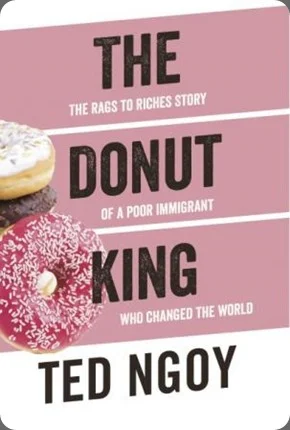
“The Donut King” Details Poor Immigrant’s Stumbles And Triumphs On The Road To Success

Before I touched down on the golden coast of California without a cent to my name, before I made and lost millions of dollars, only to make it all back, and before evil thugs destroyed my beautiful homeland and killed my people, there was a girl who smelled of flowers – Ted Ngoy

A Tale Of Survival And Success


Donuts aren’t the usual fare for this blog, but an unusual story and remarkable man have changed that. “The Donut King: The Rags to Riches Story of a Poor Immigrant Who Changed The World” relates the story of Ted Ngoy, a Cambodian refugee who arrived in Southern California with his family and no money. He began working, first for the church sponsoring his family’s stay and later taking on work as a gas station attendant. Less than a decade later, Ngoy was a multimillionaire at the helm of a chain of independent donut shops. He became widely known as the Donut King.

“If you had told me years earlier that I – a poor Cambodian, living in a war torn country, who barely spoke English – would one day come to the United States and become an expert in every facet of the donut business, I might have laughed at you,” said Ngoy.

I agreed to read the book to see if it would be an editorial fit with the blog. With skepticism, I opened the book. From the first lines, shown above, I was engrossed in Ngoy’s battle for survival, success and redemption.

The Man Who Has Nothing To Lose


“From a young age, I understood that being the long shot – the man who has nothing and therefore nothing to lose – can be an advantage,” says Ngoy. “When you are the long shot, you allow yourself to take chances. And success in life favors those who take chances. My story is one full of chances.”

Overcome with despair when his beloved’s family forbid them to see each other, Ngoy plunged a knife into his stomach. He survived and with persistence,  earned parental consent for marriage.
Ngoy and his family fled Cambodia and the genocide of the Khmer Rouge. Relocating to Southern California he worked at a Winchell’s donut shop and learned the business. There began his climb to the top of the donut world.

At the height of success, his fall from grace came hard after an innocent trip to Las Vegas turned into a crippling vice. He struggled for years with a gambling addition, which eventually cost him his empire and family. This would not be the last time Ngoy lost almost everything. He went from rich to poor not once but three separate times.

Ngoy is a one-time advisor to the prime minister of Cambodia and played an instrumental role in successfully lobbying the US Senate for Most Favored Nation status for Cambodia, which lead to the creation of countless jobs.

“The Donut King” is a great read. You’ll find yourself rooting for the author and wondering how he’ll overcome the many calamities he encounters. Ngoy is using the publication of his memoir to create a seed endowment for an education foundation he is creating, which will provide scholarships to deserving Cambodian children.

The book is available for $14.95 in paperback from Amazon, which also sells a Kindle version.

Tuesday, February 20, 2018

Three Wine, Cheese And Food Books To Savor


Need a good read to tide you over to the spring thaw? We found three three books that should be on your bookshelf now.

The Winemaker Cooks: Menus, Parties and Pairings by Christine Hanna, Photos by Sheri Giblin


I couldn’t use a photo of my copy of this cookbook by Christine Hanna of Hanna Winery and Vineyards in Sonoma. That copy is stained by aioli sauce, noodles and unidentified meal ingredients. We received this book during a recent visit to Hanna’s Alexander Valley tasting room. We had the opportunity to meet Chris Hanna and have a sensational meal overlooking the vineyards.

When we got home, my wife (aka Green Dragon) used the recipes in the book for a wine pairing bash we hosted. The recipes were as promised, “wine country style with its hallmark of casual elegance.”

The book is organized by seasons. Each season has dinner menus followed by recipes, plus there are menus for other occasions, such as springtime brunch, summer dinner under the stars, harvest picnic in the vineyard and holiday open house. The picnic includes recipes for French Lentil, Prosciutto and Pepper Salad as well as Pan-Seared Five-Spice Duck Breast with Balsamic Jus. There are many recipes to try and love – sprinkled with bites of knowledge from the winemaker.

The book is published by Chronicle Books and can be found on Amazon.

The Winemakers of Paso Robles by Julia Perez, Words by Paul Hodgins

This splendid book is one to be savored a chapter or two at a time, like sipping a glass of fine Paso Robles red. Paso Robles is a region that has a long history in wine, reaching back to the 1840s, but in the last two decades it has emerged as the Mecca of ultra-premium California wine. When the AVA was founded in 1983, there were 17 wineries. Today there are more than 200 and over 32,000 acres of vineyards.

The catalyst has been a group of unique and unlikely winemakers. Their stories are told in magnificent photos by Perez and engaging narrative by Hodgins. The book is large (15.7 x 13.5 x 2.3 inches), a perfect size to showcase the insightful portraits and striking shots of the vineyards, wineries and wine.

Winemakers featured include the known, like Justin Baldwin of ISOCELES fame, and little known, like former NFL player Terry Hoage and wife Jennifer of micro-producer TH Estates. The story of Tobin James, the maverick winemaker of the region, is related, detailing how he got his start by making wine from Zinfandel grapes the truck driver was trying to dump. James ended up marrying the truck driver’s daughter.

Fifty-six winemakers are featured. We’d suggest a glass of a Paso Robles wine per chapter. This magnificent book is available at The Winemakers Series or Amazon for $85.

Cheese & Wine: A Guide to Selecting, Pairing, and Enjoying by Janet Fletcher, Photos by Victoria Pearson

Janet Fletcher is a food columnist for the San Francisco Chronicle and winner of two James Beard Awards for her writing. She also makes a mean homemade Ricotta. During a recent visit to Beringer Winery in Napa during the Wine Bloggers Conference we saw her demonstrate cheesemaking.

Her love of cheese and wine shine through this 143-page book. The heart of the book is profiles of 70 cheeses with origins and descriptions as well as suggested wine pairings. The book organizes the cheeses by cheese platter themes, such as “Salute to Spain” and “Aging Gracefully.” There’s also great information on strategies for harmonious wine and cheese pairings, handling and serving cheese, and a convenient table showing cheese options for various wines.

This is a volume that should be on the bookshelf of any wine lover, and off the shelf at your next party. Published by Chronicle Books at $24.95.


Thursday, November 30, 2017

Holiday Gift Ideas: Trio Of New Cookbooks


Looking for a gift for the foodie in your life? Try these tasty cookbook selections.


Taste Of Home 365 Days of Cookies


Yes, the title grabbed my attention. 365 Days of Cookies sounds like heaven to me – although my waistline and wife may not agree.

This cookbook is published by Trusted Media Brands, although cooks will be more familiar with the Taste of Home magazine, which has a circulation of 2.5 million. The book features gorgeous full color photos and a lay-flat spiral-bound format.

There are cookies for all occasions, including Waffle Day (March 25), Rootbeer Float Day (August 6) and, of course, Groundhog Day (February 2). The book is divided into seasons with an ample selection for each. The “most wonderful time of the year” gets special treatment with its own section. Also appreciated are a sprinkling of specially marked “short and sweet” recipes for when from-scratch baking doesn’t fit your schedule.

Never Miss A Beat – Follow Vino-Sphere On Facebook

Some of the selections include: Watermelon Slice Cookies, Pumpkin Spice Cookies, Vanilla Glazed Apple Cookies and Cranberry Swirl Biscotti. The classics to holiday masterpieces are all covered. The 448-page hardcover book retails for $24.99 and might be the sweetest gift of the season.

A Taste Of Latin America by Patricia Cartin


Patricia Cartin’s new book, A Taste of Latin America: Culinary Traditions and Classic Recipes from Argentina, Brazil, Chile, Colombia, Costa Rica, Cuba, Mexico, Peru, Puerto Rico & Venezuela (176 pages, Imagine Publishing) covers a land steeped in history and tradition. Organized by country, each section includes historical background and influence for each nation’s cuisine as well as a look at local customs and ingredients.

There are attractive full-page photos and the range of recipes will appeal to novices as well as seasoned chefs. We like that each dish includes a bold listing of the preparation time and difficulty level. Each dish also has the phonetic pronunciation so you’ll not only cook like a local, but you’ll be able to properly say the dish’s name.

There are tempting options for main dishes, vegetables, sides and desserts. Some selections are Charquican, (a Chilean beef stew), Bolinho de Chuva (cinnamon doughnut holes from Brazil) and Papas a la Huancaina (Peruvian potatoes with spicy sauce).

Cartin is a native Costa Rican and has cooked for the president of Costa Rica at university receptions and she shares her knowledge in this easy to read and use hardcover book. Suggested retail price is $18.95.

Pantry and Palate: Remembering and Rediscovering Acadian Food by Simon Thibault


Pantry and Palate combines narrative by Thibault and stunning photography by Noah Fecks to explore the culinary traditions of Acadia. Acadians were among the earliest Europeans settlers in Canada. They arrived in the 17th century and settled in what is now Nova Scotia and New Brunswick.

Most were expelled from their lands by the English in the 18th century, with the majority fleeing to Louisiana where their cuisine evolved into what we now call Cajun. Thibault takes us through a personal journey of discovery. Sparked by old family recipes in aged notebooks he explores the Acadian foodways, an expression of history, culture and identity.

“Memories of taste are the most powerful,” says Thibault, “and they are linked to our memories of love.” He lovingly explores what he terms the humble, homey, occasionally homely, and very comforting cuisine of Acadia.

Recipes include Fricot aux Poutines Rapees (Chiken Fricot with potato dumplings), Clam Pie and Fring Frangs (potato pancakes). You’ll also find Thibault’s amusing tale of cooking a pig’s head and why he thinks you should cook one too. This fascinating book retails for $34.95, published by Nimbus Publishing Limited in the trade paperback version.

Tuesday, May 30, 2017

Dee Dee and Paul Sorvino Deliver With New Pinot, Pasta, and Parties Cookbook

You may know Paul Sorvino from his roles in Goodfellas and Law & Order or Dee Dee Sorvino from her Emmy-award winning television work. What you may not know is that they can cook up a storm. You’ll know it too after reading their new cookbook.


A Different Type Of Leading Role


Italian American actor Paul Sorvino has a career that has spanned more than 200 roles and four decades. His current role is tasty indeed, as cookbook author with wife Dee Dee, herself an Emmy Award winner as a television personality.

Honestly, they had us at the title: Pinot, Pasta, and Parties. All three elements certainly resonate with the editorial core of Vino-Sphere.

The book shares 80 authentic Italian recipes sprinkled with insightful stores from their life. The book is packed with appealing photographs and there is an emphasis on entertaining, not just cooking. Each recipe also has suggested cocktails.

Pinot, Pasta, and Parties is published by Center Street/Hachette Book Group. It has a list price of $30 and is widely available, including on Amazon.

In order to put it to the test, we cooked a six-course meal using recipes from the book, threw a party and opened an ample number of fine wines. The results were delicious.

Aperitivo And Insalata


We kicked off the evening with our lone Italian wine of the evening: the 2014 Trappolinia Est! Est! Est! di Montefiascone DOC. This wine gained renown, it is said, when a German bishop on his way to Rome was sidetracked when he discovered this delicious wine. In fact, he decided to make Montefiascone his home and never made it to Rome.

The Est! Est! Est!, a Trebbiano-Malvasia blend, was paired with our first Sorvino recipe – Stuffed Artichokes.  Glorious T whipped up this appetizer. She and the Cabernetor were guests of honor at our wine dinner.

This was the perfecting opening act. We continued to explore white wine with our next dish: Panzanella. Green Dragon was the chef for the remaining dishes aided immeasurably by our fried Maria. Maria’s Italian heritage helped keep everything authentic.

Panzanella is a Tuscan bread salad. This was a light an refreshing start to the meal. This was paired with wine from one of our favorite Finger Lakes producers: Hermann J. Weimer. The Weimer 2013 Reserve Dry Riesling was a refreshing accent and a great match with the difficult-to-pair salad course.

We then transitioned into our fish course: Shrimp Scampi. This dish featured a bit of spice and so was a fitting accompaniment to the Riesling.

Parade of Pinot


The title of the book is Pinot, Pasta, and Parties and so we didn’t want to fall short in that category. We rolled out two premier Pinot Noir wines with our Spaghetti Carbanara.

The dish was scrumptious with the cheese, bacon and olive oil meshing into a heart-melting joy. Be sure to flag this recipe in the book for an easy-to-make crowd pleaser. For our first Pinot we uncorked the 2004 Domaine Meo-Camuzet Clos Vougeot Grand Cru, Cote de Nuits. Cote de Nuit is one of the most famous grand cru vineyards in Burgundy. Brick red in the glass, it is light in body on the palate.
The tannins are fully integrated into an earthy elixir of smoke and strawberry flavors. This has a smooth elegance of silk.

I opted to go second with the 2014 Argot “Bastard Tongue” Pinot Noir, Santa Rosa, Sonoma, expecting the New World Pinot to be more robust than the Burgundy. This was a parting gift from a friend and president at my last organization. He described the BT Pinot as “unreal.” Indeed it is!

Made by winemaker Justin Harmon at his custom crushpad, it is loaded with what he terms “pinotosity.” For us this meant concentrated strawberry flavors mingled with complex earthy flavors. It is plush and bursting with ripe fruit. It has a medium body and sent our dinner guests into the stratosphere.

Our culinary centerpiece of the evening was the braciole (bra-SHOLE). This is tenderized beef wrapped and stuffed with a delicious filling of pine nuts, prosciutto, mozzarella and bread crumbs. The braciole is tied into “loafs” and then sliced into a very eye-appealing display.

We paired ours with a 2008 Anderson’s Conn Valley Vineyards Napa Cabernet Sauvignon. This a full-bodied Cab with richness and depth. The oak is subtle with blueberry and black cherry flavors.

The braciole was mouthwatering – but there was even more to come.

Yes, I Can Cook!


For this dish, I chased my wife out of the kitchen and prepared it myself (with the help of Dee Dee and Paul!). The dessert course was Chocolate Coffee Mousse paired with a special treat: Peller Estates Cabernet Franc Icewine from Niagara Peninsula VQA in Ontario.

Served chilled in small glasses it was the perfect sipping companion for the masterfully prepared (in my opinion) dessert!

Cheers to Dee and Paul for their delicious recipes and also to our cooks and guests for our wine dinner. We hope there is a sequel in the future!

Monday, March 6, 2017

Books Explore Italian Wine History And The “Real Italy”


Looking to enjoy the good life in Italia? This pair of books provide entertaining reading on the people and wine.

Living In Italy – The Real Deal


Living In Italy – The Real Deal by Stef Smulders (Barbeque Publishers) relates a rolicking tale of two Dutch guys seeking to relocate to Italy and open a B&B. That simple plan becomes confounded by a colorful cast of Italians ranging from sympathetic to villainous.

In 2008 the author emigrated to Italy with his husband and dog to start the Villa I Due Padroni bed and breakfast. The tale takes place in the northern Italian region of Oltrepò Pavese. The task to transform a fading gray concrete block building into an attractive haven with a swimming pool is beset with minor calamities.

My only trip to Italy found me driving a rental car in the middle of a historic pedestrian-only Roman square. So Stef’s insights are quite relatable and welcome.

Smulders dishes up his tale with equal parts amusement and disbelief while weaving an entertaining tale. The book not only relates their story, but gives keen insight into the essence of Italian character.
Living In Italy  is available through Amazon at $13.95 in paperback.

The Modern History of Italian Wine


The Modern History of Italian Wine, edited by Walter Filiputti (published by Skira) is a feast for lovers of Italian wine. The oversized book is bursting with beautiful photos and thoughtful articles rich in insights on the Italian wine industry.

At 414 pages, this isn’t a book that can be easily read in the course of a evening or two. Rather, it is one to savor and enjoy. I’d suggest it be done with an appropriate glass of Italian wine.

The story of Italian wine is a complex one. I dare say the intricacies far surpass fellow Old World wine powerhouse France. The volume brings the story alive with the people, lands and tales of Italy. It does so in three main sections: 1. The Renaissance of Italian Wine, 2. Italian Wine Innovation, and 3. The Geography of Italian Wine.

Considerable time is spent discussing the Renaissance of Italian wine. During my lifetime (at least my wine-consuming years) Italian wine has always been superlative. I didn’t realize that Italy had to arise from a sea of low-cost, low-quality wines to achieve the notoriety it now enjoys.

The article, The Renaissance of Italian Wine: the People Who Changed History, is particularly interesting. It covers the development of Sassicaia, the first Super Tuscan premium wine that shook the foundation of the DOC system and eventually resulted in an overhaul to the Italian wine system.  Tignanello is also given its due as the wine that changed Chianti and Italy.

Italian wine producers have used innovation to refine the product, which is a deeply artisan one. The book covers scientific and technical advances while highlighting the wines and personalities of superb wine regions like Brunello di Montalcino, Piedmont, Trentino-Alto Adige, and Chianti.

The Excellence of Italian Wine from the 1960s to Today is a look at the best winemakers and wines by the decades. Photos accentuate and beautify this volume. Like a lingering finish on an aged Barolo, the closing chapter on Wineries – New Architecture, is a sensory delight. The design of Italian wineries reflect the sense of style and innovation that have keyed the success of Italy in this post-modern consumer world.

I recommend this for every wine lover’s library. Available on Amazon, The Modern History of Italian Wine retails for about $36.

Monday, December 5, 2016

Top Three Wine Lover Books For Christmas

What do you give a wine lover for Christmas – aside from more wine? Here are three outstanding books they will love!


Corkscrew by Peter Stafford-Bow


This novel is billed as “the improbable but occasionally true, tale of a professional wine buyer.” It is a madcap romp that covers wine adventures from South Africa to Italy to the back alleys of Britain. It follows the cheeky adventures of Felix Hart from his expulsion from school to his rise as wine buyer for a major supermarket chain.

There is a leopard attack, a fatal stampede, human trafficking and enough consumption of high end wine to keep wine lovers flipping the pages to the end. One of the most interesting features is Felix’s efforts to earn the coveted “Minstrel of Wine” certification. This involves tasting and identifying more than a hundred wines and then putting on a performance of classical music. The results are hilarious.

This book gets a big thumbs up from me. Please note that this is not for youngsters or those easily offended. It includes plenty of wine, women and gunplay.

Corkscrew is published by I AM Self Publishing and is available for $12.99 on Amazon or your local bookstore.

Vertical: Passion and Pinot On The Oregon Wine Trail by Rex Pickett


What wine lover doesn’t know Sideways by Rex Pickett? The movie adaptation won more than 350 film critic awards as it followed the adventures of Miles and Jack in California wine country. Some may recall it as the movie that torpedoed Merlot sales.

The good news is that Miles and Jack are back in the saddle, this time taking their antics to Oregon. Times have changed. Miles is now a successful author and Jack is a down on his luck alcoholic with his best days in his rear view mirror.

There are over-the-top moments aplenty, including Miles nearly drowning in a vat of Merlot at the International Pinot Noir festival. Vertical is published by Loose Gravel Press and is available on Amazon or your local bookstore for $14.95 in paperback. As in the original, adult themes abound.

But First, Champagne: a Modern Guide to the World’s Favorite Wine by David White


You’ve gotta love the title – But First, Champagne. We agree with that sentiment and can confidently recommend this book as a good companion as you sip a bottle of bubbly
David White weaves history, winemaking knowledge and information on the region into his attractive hardcover book. Wine lovers will found something not generally included in wine books: detailed narrative on subregions of Champagne including Montagne de Reims, Vallee de la Marne, Cotes des Blancs and The Aube. If you don’t know the three grapes that make up Champagne, shame on you. You can read about Pinot Noir, Chardonnay and Pinot Meunier in the book.

You’ll also find profiles of the regions leading producers and insight into the “grower” Champagne trend. Perhaps my favorite inclusion is the history of sabrage (sabering open Champagne) and a step by step guide to doing it.

Nicely illustrated with photos, this is a great gift for Christmas. But First, Champagne is published by Skyhorse Publishing and sells for $29.99 on Amazon or your local bookseller.

Monday, September 26, 2016

Craig and Kathryn Hall Deliver Entertaining Read With “A Perfect Score”


A Perfect Score – The Art, Soul, and Business of a 21st-Century Winery is the tale of the Craig and Kathryn Hall’s experience building a successful Napa Valley winery.

Planting The Seeds


A good book is usually a companion for me when taking cross country flights. During my recent trip to California, I grabbed a copy of A Perfect Score, by Craig and Kathryn Hall. The book has just been released by Center Street, a division of Hachette Book Group.

I was on the way to the Wine Bloggers Conference and this was ideal reading material to set the mood. It’s easy to blow it with a wine book – either be too technical and dry, or too elementary. A Perfect Score hits the sweet spot, with engaging style and content no matter your wine sophistication. It’s also the tale of a building a successful business from the ground (or should I say soil?) up.

The Start of A Dream


Kathryn and Craig Hall (courtesy HALL Wines)

Kathryn came from a family of wine lovers who owned and worked a vineyard in California’s Mendocino County. Craig, on the other hand, was an entrepreneur with a successful financial company who never drank wine. Kathryn, a successful lawyer, met Craig while she was running for mayor of Dallas.

The book weaves the tale of Kathryn’s time as US ambassador to Austria with the couple’s initial stumbling efforts to break into the Napa Valley wine business. The Austrian connection later resulted in the construction of an wine cellar featuring reclaimed brick from the Hapsburg Empire period.

“As Craig inched his way toward the small town of St. Helena, located in the heart of Napa Valley, he noticed an old winery with the look of a disheveled, ignored child who never has to take a bath.” The purchase of that property and its development enabled HALL wines to expand production and its notoriety.
Photo courtesy of HALL Wines


The Quest For The Perfect Score


The journey of the Halls has them overcoming challenges in the vineyard, financial crisis in the market downturn of 2008, and conflicts with Napa neighbors who would rather not share “their” valley with others. Their insight makes for tasty reading.

A Perfect Score lets you join Kathryn for an early morning tank walk with the winemaker and the leadership team as they discuss developing a brand identity for HALL wines. For Cabernet Sauvignon lovers in particular, you get a fascinating look at how award-winning Napa Cab is produced.

Of course, the crowning achievement is the perfect score of 100 attained by the 2010 HALL Exzellenz Cabernet Sauvignon. The journey to get there I found engrossing. I read almost the entire book on my non-stop flight from Detroit to Sacramento.

Other readers have equally enjoyed the book, which is the number 11 on The New York Times bestseller list to be issued October 2. The hardcover is $26 and it is also available as an eBook or audio book.

Uncork a bottle and enjoy this smooth yet robust book!

Wednesday, November 25, 2015

Tasting Wine & Cheese: Finally A Book That Gets It Right


Is there anything better than a great wine and cheese pairing? You might enjoy a
robust cabernet with the sharp, aged cheddar, or perhaps a crisp Sancerre with a
tangy, creamy chevre.

A Cheesy Book That Isn’t

As you might suspect, we taste a lot of wine around here. It can range from rather elaborate meals or parties to a casual after dinner drink. One of the joys of wine drinking is finding just the right food – or cheese – to accompany it. Cheese is often the go-to appetizer, easy to prepare, available in a range of textures and flavors and conveniently sized for munching and swirling.
Finding the right cheese isn’t as easy as you might suspect. What’s the right cheese to go with Gerwurztraminer? How about with Malbec or Sangiovese?Questions like these often prompted me to pore over the internet hoping for a nugget of wisdom.
Check Out Our Winery Reports Page To Plan Your Next Visit!

Direct Advice, Beautifully Illustrated

Tasting Wine & Cheese by Adam Centamore and published by Quarry Books is as enjoyable as it is indispensible to the wine lover.  Centamore is a Maitre d’ Fromage who also knows his way around a corkscrew.

The book first guides you through how to taste wine and cheese separately. Then he shares his insights on pairing cheese with white, red, sparkling and dessert wines.
Although he confesses to liking  “a plain ol’ wedge of pepper Jack cheese and cheap-o Pinot Grigio” like everyone else, it’s obvious that he has a wealth of knowledge about taste, flavor, aromas and the science of food and wine. He keeps tasting notes on cheeses much like most of us do for wine.
He dispenses capsules of wisdom on how to taste wine, how to create a “rock star” cheese plate, what makes “stinky cheese” stink and the storage of wine and cheese. There is even discussion of the benefits of cork versus screwcap closures. Some interesting factoids:
  • Generally, freezing cheese isn’t a good idea.
  • Honey and marmalades are great condiments with cheese.
  • The temperature of cheese is as important as that of the wine. Keep it room temperature.

Mastering Wine And Cheese Pairing

I found the book fascinating to leaf through. It is one that I know I’ll continue to use regularly as a reference. Tasting Wine & Cheese is beautifully illustrated with mouthwatering photos of wine and cheeses. It is also logically organized like a wine list.
The strength of this publication is its depth. You can get general guidelines for picking cheese to go with Chardonnay, Merlot and Cabernet – but Centamore tells you about pairings for Trebbiano, Torrontes, Gamay, Barbera and even Zweigelt and Primitivo!
Also appreciated is that he gives general suggestions as to the type of cheese, then gives a number of examples from which you can choose. Assyrtiko, which is a Greek wine, for example, pairs well with soft, creamy cheeses. He also provides guidance as to whether a goat, cow or sheep milk based cheese would be the best choice.
Each section has a passage about the wine, a section on “the cheese that loves it” and a “match made in heaven.” There’s a wealth of information and he pairs it well with a comfortable, concise writing style.
We recently hosted a wine dinner focused on Bordeaux style wines from Colorado. Using guidance from the book, I opted for a mild cheddar (rather than my first urge to grab a super sharp cheese) and the wine and cheese melded wonderfully. The book has a price of $24.99 US and you’ll recoup the cost, no doubt, with your first pairing. It is available on Amazon.
Full Disclosure: We received this book as a review copy.
Technorati Tags: ,,

Monday, June 2, 2014

New “Wine and Identity” Volume Explores Branding, Heritage and Terroir

The latest publication in the Routledge Studies of Gatronomy, Food and Drink series is fascinating. Wine and Identity: Branding, Heritage, Terroir, Edited by Matt Harvey, Leanne White and Warwick Frost, 2014, Routledge, is a collection of chapters exploring the new world marketing wine.
In today’s age traditional and newer wine regions are fighting to maintain or expand consumer markets. Branding allows consumers to differentiate one product from another. Wineries and wine regions hope that the target markets will associate their brand with positive experiences.
Harvey, White and Frost approach the subject of wine and identity through three themed sections on branding, heritage and terroir. Chapter authors illuminate concepts through profiles of wineries and regions.
“Global wine markets are dynamic, fluctuating and ultra-competitive,” say the editors in the introduction. “This is in part because wine is very different from other agricultural products. Unlike milk, flour, fruit or vegetables, consumers seek information about where, when and how wine was made, and this is a major factor in their purchase decisions… Wine is distinct in having an identity – a combination of brand, heritage and terroir – and that gives certain wines and wine regions a competitive advantage.”
A chapter about Spain’s Andalucia’s Sherry wines shows how winemakers are attempting to adapt to shrinking demands by moving away from bulk wines to boutique production and pairing their wines with modern cuisine. The effort of Central Otago, on the South Island of New Zealand, to establish a distinct regional image as they emerge as a producer of premium Pinot Noir. The chapter, “Crafting Brand Stories for New World Wine looks at a number of Canadian wineries (including favorites Organized Crime, Blasted Church and Megalomaniac) and their labels and brand stories.
Each chapter would make a great seminar at the Wine Bloggers Conference. There are chapters about wine in Slovenia, Georgia, Malaysia, England and Sao Francisco Valley, Brazil. Others look at the Okanagan Valley, South Africa, and Australia’s Barossa.
This book is highly recommended.
Enhanced by Zemanta

Saturday, March 5, 2011

The Everything Guide to Wine, by By Peter Alig

Wow, what a claim! The Everything Guide to Wine. Does this new publication live up to that expansive title? Well, yes and no. It certainly covers a lot of territory. This is a book that is very wide, but not particularly deep.

The book is in an easy to read format similar to the “Dummy’s Guide To…” series. That means the text gets right to the point with clear section headings and interesting facts in highlighted boxes.

When I first started reading the book I noticed that it left out my favorite red grape variety: Cabernet Franc. “This book can’t be very good,” I thought to myself. But as I continued reading, I was pleasantly surprised with what was included.

For example, there is an explanation of the three-tier wine distribution system, a summary of emerging wine growing regions in China and India, a nice section on matching wine with cheese and a chapter on careers in the wine industry. My opinion of the book rebounded in a big way when I saw the reference to Konstantin Frank, the wine pioneer who introduced vinifera grapes to the Finger Lakes region. (The guy’s a hero!)

The book is updated with new references. I was pleased to see a section on Hardy Wallace and his selection as Lifestyle Correspondent for Murphy-Goode Winery. This was a high profile position that created a national buzz. The winery offered a six-month position at $10,000 a month to blog, use Facebook and Twitter to create an image of a cutting edge winery. Since that time many wineries have hired social media coordinators.

The book is billed as “your one-stop shop for conquering the world of wine-one grape at a time.” The book is published by Adams Media and lists for $16.95. This isn’t designed to be a detailed wine encyclopedia but it is a wide-reaching book that is enjoyable to read a sip at a time.

Author Peter Alig is a Wine Educator at the world-famous Robert Mondavi Winery in Napa Valley, California. There he has hosted and developed relationships with key figures in national and international wine trade and press/media. He also helped launch Robert Mondavi Winery's social media campaign utilizing Facebook, Twitter, and other applications. He studied wine and food at The Culinary Institute of America-Greystone and has a wine certification from the Society of Wine Educators in Washington, D.C. He is currently studying wine marketing at Napa Valley College.


Technorati Tags:

Full disclosure: We received a review copy of this book.